

Akakan Umoh
In households around the world, managing the family finances is seldom simple. Every extra naira matters. A good budgeting app can become the difference between clearing school fees, paying the bills and facing yet another month juggling overspend, and reclaiming control of the household books.
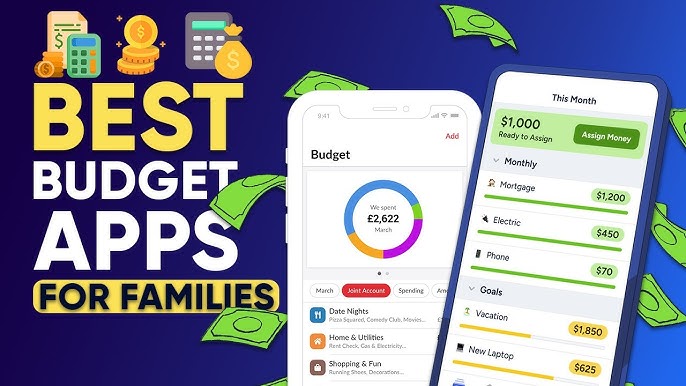
Below are 10 apps that genuinely deliver for families aiming to budget with brains, not just hope. The key is: pick the one that works for your family rhythm and stick with it.
1. YNAB (You Need a Budget)
Why it works: YNAB embraces the “zero-based budget” philosophy—every dollar (or naira) gets a job. That means you assign all income to categories: bills, groceries, savings, fun. It’s deliberately hands-on, which makes it strong for a family committed to financial discipline.
Best for: Families who want to be proactive (not reactive) with their money.
Caution: Learning curve plus subscription cost.
Also read:
- Know Fake loan Apps blacklisted by CBN
- How Nigerian Families Can Survive the Cost of Living Crisis in 2025
- Google parent Alphabet exceeds Q3 revenue estimate
2. EveryDollar
Why it works: From the team behind Dave Ramsey, it follows a straightforward zero-based budgeting style and is simpler than some of the more feature-heavy apps.
Best for: Families who want simplicity, especially if debt payoff is a major aim.
Caution: Free version has fewer automatic features; you’ll need to enter manually unless you upgrade.
3. PocketGuard
Why it works: Sometimes you don’t need to micromanage every expense — you just need to know how much you can spend this month without derailing everything else. PocketGuard gives that “safe to spend” number.
Best for: Busy households, or parents who just want clarity without over-complexity.
Caution: Fewer bells and whistles for long-term goals than some rivals.
4. Monarch Money
Why it works: Offers shared access (so both parents can use), net-worth tracking, and good dashboards for families planning not just monthly budgets but long-term savings.
Best for: Families who are budgeting and wealth-building (savings, investments) over time.
Caution: Premium price tag.
5. Zeta Money Manager
Why it works: Designed with couples and families in mind: shared wallets, joint goals, visibility across accounts. One recent review emphasised its “family-focused design”.
Best for: Households where budgeting together matters (rather than one parent doing all the work).
Caution: Some advanced features still developing, and may focus less on investments.
6. Goodbudget
Why it works: The digital version of the envelope budgeting system: you allocate an amount to each “envelope” (groceries, utilities, fun) which can be shared across devices.
Best for: Families who like the discipline of categories and manual control (especially useful in fluctuating-income households).
Caution: Manual input only in many cases; less automation.
7. Spendee
Why it works: Great for visual thinkers: shared wallets, custom categories, cross-device sync. One list of top budgeting apps for families included Spendee for its shared features.
Best for: Multi-member households (kids included) wanting transparent, collaborative budgeting.
Caution: Some features behind paywall; might be more visual than analytical.
8. Quicken Simplifi
Why it works: Combines ease of use with robust account and expense tracking; families found it useful for seeing “where we’ve been, where we are, where we’re headed.”
Best for: Families migrating from spreadsheets or desktop-based budgets to mobile, but who still value control.
Caution: Fee applies; fewer family-collaboration-specific features than apps built for sharing.
9. Rocket Money
Why it works: Originally subscription tracking and bill-cancelation tool, it has expanded into broader budgeting features. One review labelled it “Best Overall” among budgeting apps.
Best for: Families where overlooked subscriptions or hidden bills are draining funds.
Caution: May still be more utility-tool than full-scale budget planner.
10. Honeydue
Why it works: Free and built for two (or more) people to see shared finances, send reminders, track bills together.
Best for: Couples or families wanting a low-cost, collaborative start.
Caution: Less in-depth for multi-generation families or complex goals.
How to Choose the Right App for Your Family
* Define your priority: Are you trying to just survive the month, pay down debt, build savings & investments, or all of the above?
* Shared vs singular: If both (or all) adults participate, choose an app that supports multi-user or shared budgeting.
* Budgeting style:
- Want high discipline? Try YNAB or EveryDollar.
- Want simplicity and less friction? Try PocketGuard or Honeydue.
- Want full household control and long-term view? Monarch or Zeta.
- Cost vs value: Many apps charge monthly/annual fees. Make sure the value (time saved, clarity gained, overspend reduced) exceeds the cost.
- Ease of setup + maintenance: A budget app only works if the family uses it. If it feels too complex, you’ll likely abandon it.
- Security & bank access: Ensure the app handles your data securely; check whether bank connection is supported in your country (especially important for Nigeria and families using local banks).
- Trial run: Many of these apps offer free trials or free tiers. Use that period to test fit for your family’s habits.
Final Thought
In a world where external costs (food, utilities, school fees) keep rising, families can no longer rely on hope alone. A smart budgeting app is not a magic wand—but it is a tool that brings visibility, control and, crucially, collaboration to the household finances.
Pick one of the 10 above, commit for one month, and use the time to track everything. At the end of that month you’ll have real data—not just feelings—to decide: keep going, switch, or simplify. That’s how budgeting becomes empowerment, not dread.
