
News Commentary
The exploitative estimated billing and manipulative prepaid meter distribution to consumers give consumers a source of concern. Straightnews online writes a comprehensive critique of the what the paper sees as “satanic billing regime’ and offers a reform roadmap to the haranguing mess plaguing our society.
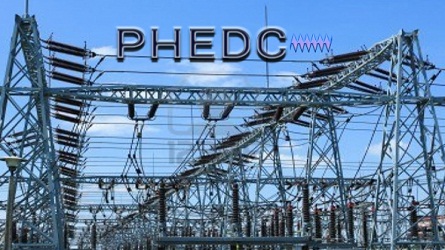
It is a tale as old as the deregulation of Nigeria’s power sector — one riddled with inefficiency, impunity, and a deliberate disdain for the very citizens it purports to serve. At the heart of this lamentable narrative sits the Port Harcourt Electricity Distribution Company (PHED), whose billing practices have, over the years, earned it the justified wrath of countless residents across Rivers, Bayelsa, Akwa Ibom, and Cross River States.
In communities where darkness is more constant than light, where the electric grid seems allergic to consistency, and where transformers lie in terminal coma, PHED’s monthly bills have become a source of unending anguish and anger. This is not just an administrative failure; it is economic sabotage wrapped in corporate arrogance.
Also read:
- Reinvigorating dissolved boards, Commissions in Akwa Ibom
- Behold! The Age Of Digidiots
- Jazzing Up Is Not Taught In Journalism School- Ray Ekpu
The company’s estimated billing system — derisively nicknamed the “satanic billing system” by enraged consumers — has become the stuff of legend. Households that have not seen a flicker of electricity in weeks are slammed with bills as high as ₦50,000. Tenants in two-room apartments receive invoices rivaling those of industrial complexes. Worse still, inquiries at PHED offices are often met with disdain, bureaucratic roundabouts, and a hollow promise to “look into it.”
This billing regime is not only illogical; it is criminally exploitative. It violates the fundamental principle of value-for-payment. How does one explain a system where the less power you consume, the more you are billed — all because you lack a prepaid meter?
Even more troubling is the manipulative rollout of prepaid meters. While touted as the solution to estimated billing, PHED’s implementation of metering has been fraught with suspicious delays, opaque charges, and selective distribution. Meters are often “unavailable” to the average customer but curiously accessible to those with the right connections or willingness to “settle” middlemen.
The Federal Competition and Consumer Protection Commission (FCCPC), established to defend the rights of consumers in the face of corporate malpractice, has thus far been toothless in tackling PHED’s excesses. Thousands of complaints lie unattended in its offices, with victims of estimated billing left without recourse. Consumers are encouraged to file formal petitions, yet few — if any — see resolution.
In effect, PHED operates above reproach, shielded by a system in which regulators and oversight bodies appear more interested in issuing press statements than enforcing actual reform. The failure of the Consumer Protection Commission to sanction PHED or secure refunds for aggrieved consumers emboldens the company’s reckless billing practices. What use is a consumer watchdog that cannot bite — or even bark?
The Nigerian Electricity Regulatory Commission (NERC), whose mandate includes consumer protection, cannot feign ignorance of this rot. Its silence, or at best toothless interventions, increasingly resembles complicity. In truth, the regulator has allowed distribution companies like PHED to weaponize estimated billing against the populace, transforming electricity from a public utility into a parasitic enterprise.
Beyond the economics lies the psychological trauma. Imagine the daily torment of watching your electrical appliances gather dust while still being extorted under the pretense of service. For small business owners — tailors, welders, barbers — PHED’s phantom bills threaten livelihoods, forcing many into darkness or into the arms of noisy, fuel-guzzling generators.
This is not governance. This is not service delivery. This is institutional wickedness.
The Federal Government, despite paying trillions of naira in interventions, subsidies, and bailouts to Generation and Distribution Companies (Gencos and Discos) since the privatization of the sector in 2013, continues to be rewarded with darkness. Clearly, money alone cannot solve a problem entrenched in flawed structure, regulatory weakness, and systemic corruption.
Few months ago, power generation company (Gencos) claimed that Federal Government is owing them N2 trillion for electricity supplied in 2024, plus N1.9 trillion legacy debt- debt inherited from previous administrations. As a result, Nigerian Government budgeted N10 billion in its 2025 Appropriation Act for provision of solar mini-grid project at Presidential Villa at Aso Rock.
If the Nigerian power sector is to be salvaged, cosmetic solutions will no longer suffice. The Federal Government must initiate a comprehensive overhaul based on the following strategic imperatives:
There is need for Audit and Re-Negotiation of Privatization Agreements. Many of the DisCos and GenCos have repeatedly failed to meet performance benchmarks set in their original acquisition terms. It is time to revisit and, where necessary, revoke the licenses of non-performing operators. The sanctity of contract should never protect incompetence or economic sabotage.
We also call for enforcement of Mass Metering — No Meter, No Billing. NERC must mandate all DisCos to achieve full metering within a definitive timeframe. No consumer should be billed without a functional prepaid meter. The Meter Asset Provider (MAP) scheme should be decentralized and digitized to reduce corruption and ensure faster rollout.
Tie Federal Government’s subsidies to Measurable Performance Metrics is necessary. Any financial support to DisCos or Gencos must be conditioned upon transparent service delivery improvements — uptime, voltage quality, fault response, and customer satisfaction. Without this, government funds will continue to feed a bottomless pit.
The Grid and Support Embedded Power Solutions in Lagos, Edo, and Kaduna states should be decentralized to begin implementation of local electricity markets. The FG must accelerate legislation that allows states and private entities to generate and distribute power independently — especially in underserved regions. The national grid has long proven inadequate.
Consumer Protection Agencies should be empowered with legal teeth. The FCCPC must be granted the authority — and funding — to initiate direct enforcement actions against erring DisCos, including PHED. This includes ordering refunds, imposing fines, and prosecuting corporate officers for consumer rights violations.
We seek Public Accountability for PHED and others to enable the Economic and Financial Crimes Commission (EFCC), and the National Assembly, to launch targeted investigations into the billing practices and operational finances of PHED and other notorious DisCos. Nigerians deserve to know where their payments and government subsidies are going.
Establishment of Independent Energy Ombudsman is equally important. Nigeria needs an autonomous, transparent, and publicly accessible electricity dispute resolution body — outside the control of DisCos and regulators — where consumers can seek justice without fear of intimidation or dead ends.
Electricity is not a luxury; it is a fundamental enabler of economic growth, education, healthcare, and national development. The persistent failure of PHED and other power distributors is more than a technical glitch — it is a direct attack on Nigeria’s development goals.
As long as DisCos like PHED are allowed to weaponize darkness and thrive on dishonest billing, the power sector will remain a black hole — devouring public funds, crippling productivity, and frustrating citizens. The Federal Government must now show the political will to drain this swamp and bring sanity to a sector held hostage by profiteers masquerading as service providers.
If Nigeria must rise, the lights must stay on. And those who keep us in darkness must finally be held to account.
 |
|
