

…The Way forward in energy gains, industrial growth and economic transformation
Prince Ukpong Idiong Jr.
From Crude Oil Giant to the Era of Gas Opportunity
The Federal Government’s renewed push to convert gas currently lost through flaring into productive energy presents a significant opportunity for Akwa Ibom State.
For decades, the state has remained one of Nigeria’s foremost oil-producing territories and a critical contributor to the nation’s petroleum economy. Yet, while crude oil has dominated the narrative, another enormous resource has remained largely underutilised: natural gas.
Akwa Ibom’s Oil Legacy and the Resource Beneath the Resource
Since the creation of Akwa Ibom State, petroleum exploration and production have played a defining role in its economy. ExxonMobil has historically been a major operator in the state’s oil and gas sector, while the emergence of other companies, including Seplat Energy, has further demonstrated the continuing attractiveness of the state’s hydrocarbon resources. But the next phase of development should be about looking beyond crude oil and asking how the state’s abundant gas resources can power a new economic future.
Gas Flaring: The Waste That Can Become Wealth
Gas flaring has long represented one of Nigeria’s greatest contradictions. A valuable natural resource is produced alongside crude oil, yet instead of being captured, processed and converted into electricity, cooking fuel or industrial feedstock, part of it is wasted through combustion. President Bola Ahmed Tinubu’s latest directive to the Nigeria Liquefied Natural Gas (NLNG) is therefore significant because it reframes gas flaring as not merely an environmental problem, but an economic opportunity waiting to be captured.
President Tinubu’s Charge: Bring the Resource Home
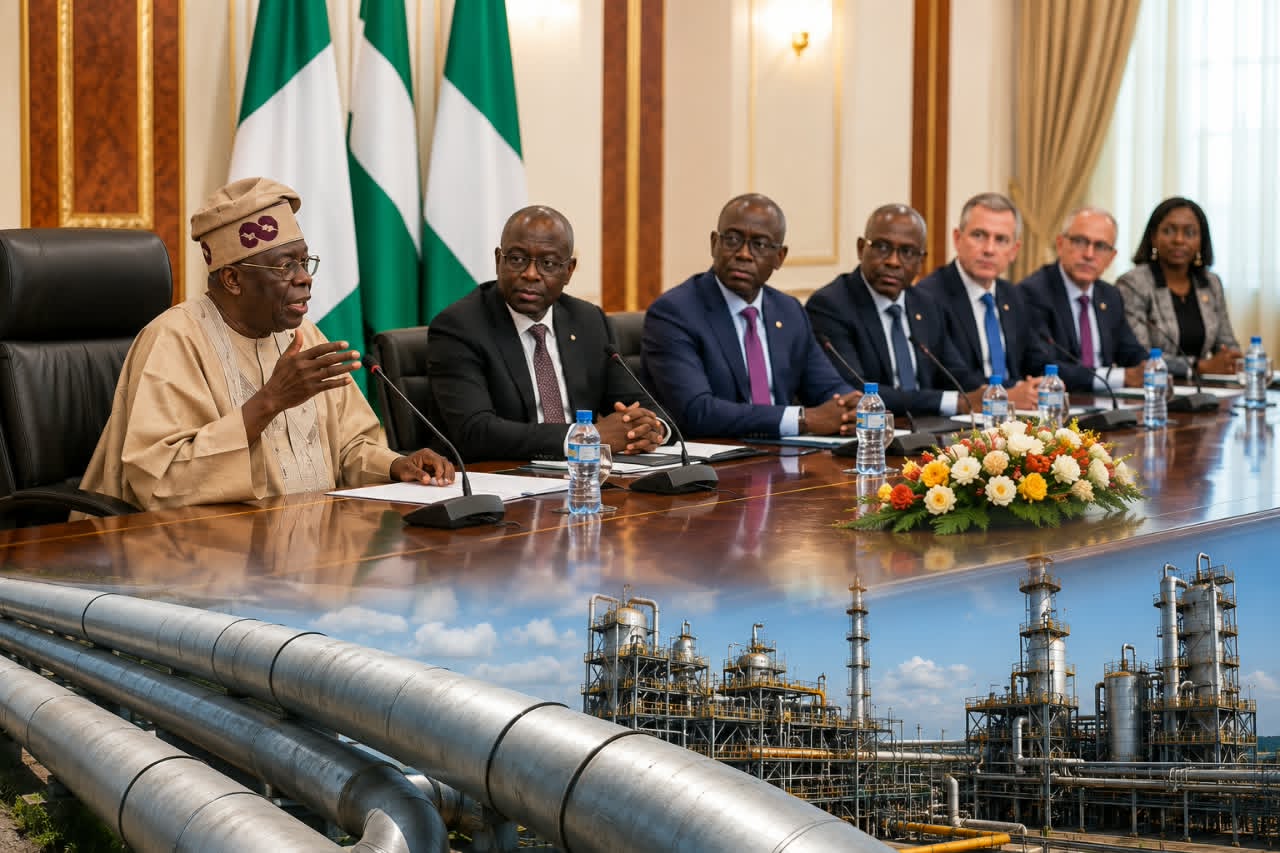
At the State House on August 26, 2026, President Tinubu urged the NLNG Board to ensure that Nigeria derives maximum benefit from its gas reserves rather than allowing them to be flared. The President particularly emphasised domestic utilisation, stressing that the country must transform what could be an environmental liability into something economically beneficial to Nigerian consumers. This emphasis on bringing the benefits of gas “back home” should resonate strongly in Akwa Ibom.
The Akwa Ibom Question: What Happens to the Gas?
The critical question for Akwa Ibom is no longer whether the state possesses gas. It does. The more important question is what happens to that gas after it is produced. If captured gas can be channelled into power generation, industrial production and other energy applications, Akwa Ibom can begin moving from being primarily a source of raw petroleum resources to becoming a centre of energy-based industrialisation.
Gas-to-Power: The First Big Opportunity
The most immediate opportunity is gas-to-power. Nigeria’s businesses and households continue to face serious challenges associated with inadequate and expensive electricity. Akwa Ibom, with its oil and gas endowment, should aggressively pursue gas-based electricity generation. Instead of allowing associated gas to be flared, it can be captured and utilised to generate power for industries, communities and commercial activities.
When Energy Becomes Cheaper, Industry Becomes Possible
Reliable and affordable energy is the foundation upon which industrial economies are built. A stable gas-to-power ecosystem could significantly reduce the dependence of businesses on diesel and petrol generators. For Akwa Ibom’s manufacturers, agro-processors, SMEs, cold-storage operators and technology businesses, improved energy availability could translate directly into increased productivity, lower operating costs and greater competitiveness.
NLNG’s Success Shows the Scale of the Opportunity
The figures presented by NLNG management demonstrate the economic value that Nigeria can derive from its gas resources. According to the company’s Managing Director and Chief Executive Officer, Engineer Adeleye Falade, NLNG has generated more than $150 billion since inception, with shareholders, including Nigeria, receiving approximately $47 billion in dividends. Nigeria holds a 49 per cent stake in the company. These figures illustrate that gas is not simply an energy resource; it is a major economic asset.
Train Seven and a New Chapter of Capacity
The reported increase in NLNG’s operating capacity from four to five trains, following improved crude oil production, is another important development. The planned Train Seven project is expected, according to NLNG management, to increase capacity by about 35 per cent. But increased capacity must also translate into increased domestic energy availability. Nigeria should not only ask how much more gas can be exported; it must ask how much more energy can be made available for Nigerians.
Akwa Ibom Must Connect Gas to Industrialisation
The state should begin developing a deliberate policy for gas-based industrial clusters. Gas can support electricity generation and a range of industrial activities, including fertiliser production, petrochemicals, plastics, glass, ceramics and agro-processing. With adequate infrastructure and investor-friendly policies, Akwa Ibom can transform its gas resources into an industrial ecosystem that generates jobs and attracts new investment.
The SME Economy Must Be at the Heart of the Gas Revolution
The benefits of gas utilisation must not remain confined to major energy companies. Small and medium-sized enterprises should be central beneficiaries. A gas-powered economy could help businesses operate more efficiently, expand production and employ more people. If the ordinary entrepreneur can access dependable energy at a reasonable cost, the impact will be felt across the entire economy.
From Resource Extraction to Value Creation
For too long, Nigeria’s economic model has revolved around extracting resources and exporting them. The new opportunity is to retain more value at home. Akwa Ibom should therefore pursue policies that encourage the processing and utilisation of gas within the state. The objective should be clear: less waste, more energy; less raw-material dependence, more value addition; fewer imports, more local production.
The Ibom Deep Seaport and the Energy Equation
Akwa Ibom’s gas opportunity should also be viewed alongside the state’s wider infrastructure ambitions, particularly the Ibom Deep Seaport. A combination of reliable energy, industrial production, maritime infrastructure and efficient transportation could create a powerful economic corridor. The state must therefore think of energy, industry, logistics and maritime development as interconnected components of one economic strategy.
Host Communities and the Human Face of Gas Development
Any new gas economy must deliberately include host communities. The people living around oil and gas-producing areas should not merely watch resources leave their environment. They should benefit through employment, technical training, local contracting, entrepreneurship and infrastructure development. A successful transition from gas flaring to gas utilisation must therefore be measured not only in megawatts and revenue, but also in improved livelihoods.
The Way Forward: Akwa Ibom Must Move Before the Opportunity Passes
President Tinubu’s directive provides a timely opening for Akwa Ibom to reposition itself for the next phase of Nigeria’s energy economy. The state government should engage the Federal Government, NLNG, NNPC Limited, international oil companies, indigenous operators and private investors to develop concrete gas-to-power and gas-utilisation projects.
The opportunity before Akwa Ibom is bigger than crude oil.
The state can become a place where gas is captured rather than flared, converted into electricity rather than wasted, used to power industries rather than simply exported, and transformed into employment and enterprise rather than remaining an underutilised resource.
The central lesson is simple: what was once considered waste can become wealth.
Akwa Ibom has the resource base. Nigeria has the market. What is required now is vision, investment, infrastructure and deliberate policy.
The era of simply producing oil and watching gas burn should give way to an era where every molecule of valuable gas is treated as an opportunity to power homes, businesses, industries and the future of Akwa Ibom.
Prince Idiong Jr, a public affairs analyst based in Abuja-Nigeria.
