
Aniefiok Christopher
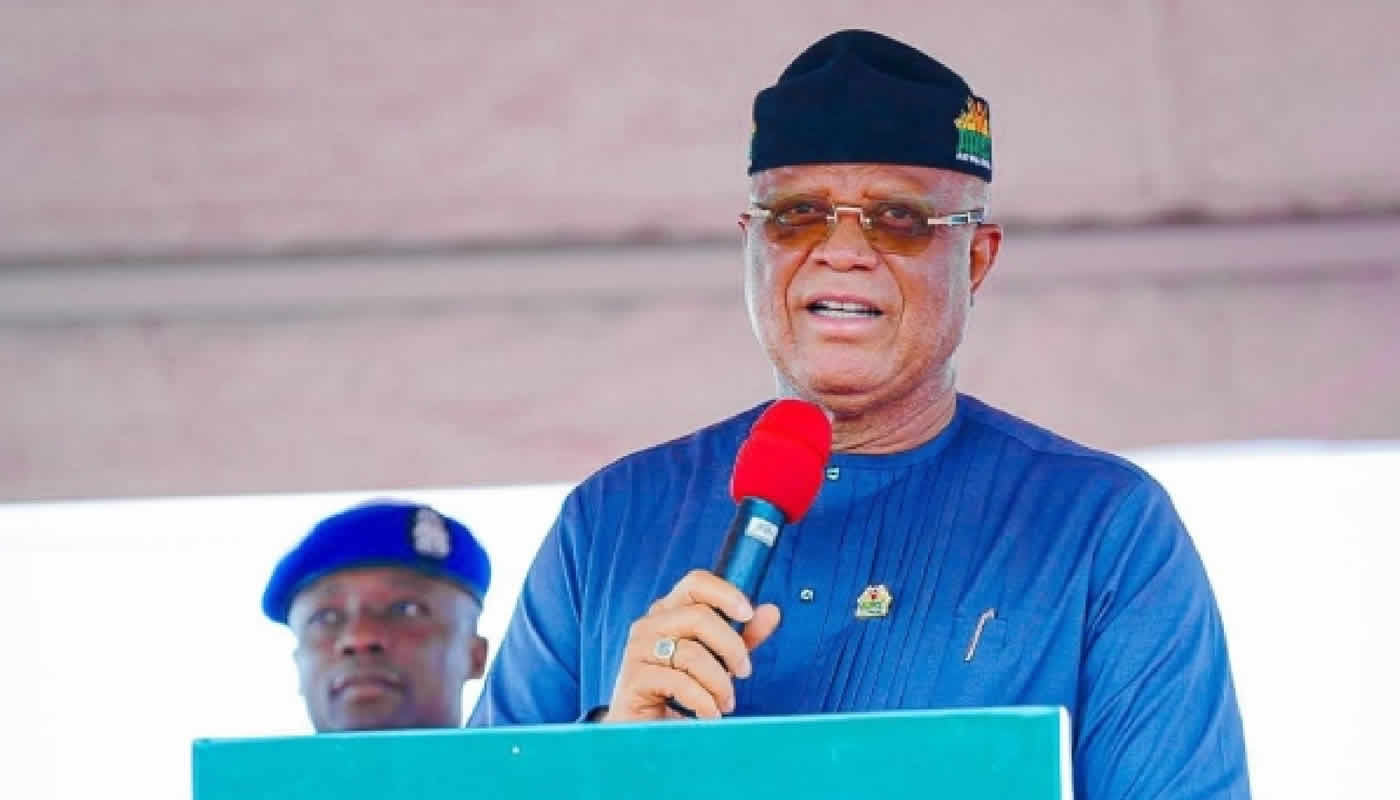
Akwa Ibom Governor, Umo Eno, says the state’s Internally Generated Revenue (IGR) has risen from N2 billion to N7 billion monthly, attributing the performance to the Treasury Single Account (TSA) policy, three months after its implementation.
The TSA policy, introduced on January 1, 2026, mandates all Ministries, Departments, and Agencies (MDAs) to remit all government revenues into a single, centralised account to ensure transparency and accountability.
Speaking during the Government House Monthly Prayer Service at the Latter House Chapel, Eno reaffirmed his administration’s commitment to raising the state’s IGR in the next few months to a financially sustainable point where it can pay workers’ salaries.
“We want to make our state self-sustaining and sufficient. In the next few years, we should be able to raise our IGR to a point where it can, at least, pay our salaries.
“From our TSA, which started a month ago, it’s indeed heartwarming that our IGR has suddenly risen from N2 billion to N7 billion monthly,” he said.
Eno called on MDAs and relevant financial stakeholders to abide by the set rules and standards of the TSA to boost revenue generation, warning that any act of compromise or sabotage would be treated accordingly.
He stated that his administration’s development strides are based on the ARISE Agenda, his economic blueprint, and the needs documents presented to him by people across the state.
“I want to assure Akwa Ibom people that we are still running on the development blueprint that we presented to the state, and we are working tirelessly to ensure that we achieve the goals of the people’s mandate,” he said.
The governor said development is not automatic, adding that his administration is executing projects and programmes sequentially for the sustainable transformation of the state.
How Umo Eno Lifts Akwa Ibom’s Internally Generated Revenue- Nicholas
Akwa Ibom State internally generated revenue (IGR) has risen over the past two decades since 2018.
Emmanuel Nicholas, a public Affairs analyst writes that reported annual IGR increased from about N1.86 billion in 2000 during Obong Victor Attah’s administration to roughly N80.745 billion in 2025 due to the impactful policies and tax reforms of Governor Umo Eno.
‘‘The 2025 total implies a monthly run-rate of about N6.7–7.0 billion , up from roughly N3.0 billion per month in 2019,’’ he noted.
According to him, ‘‘IGR by year data below
– 2000: 1,860,214,675
– 2001: 3,380,190,794
– 2002: 1,888,902,722
– 2003: 2,499,072,964
– 2004: 2,411,084,055
– 2005: 3,538,165,559
– 2006: 5,017,529,180
– 2007: 12,623,821,599
– 2008: 12,091,432,039
– 2009: 12,113,438,230
– 2010: 12,086,460,227
– 2011: 16,554,319,166
– 2012: 17,059,385,909
– 2013: 18,005,802,296
– 2014: 18,715,737,159
– 2015: 18,730,338,859
– 2016: 16,290,953,095
– 2017: 19,513,860,604
– 2018: 28,213,636,273
– 2019: 35,504,936,358
– 2020: 30,610,557,476
– 2021: 31,428,473,176
– 2022: 34,891,640,285
– 2023: 43,186,564,906
– 2024: 75,776,835,681
– 2025: 80,745,290,551(as at September 2025 )
Year-on-year percent changes (rounded)
– 2001: +81.7%
– 2002: −44.1%
– 2003: +32.3%
– 2004: −3.5%
– 2005: +46.7%
– 2006: +41.8%
– 2007: +151.6% (major jump — likely due to policy change, broadened collections or improved reporting)
– 2008: −4.2%
– 2009: +0.2%
– 2010: −0.2%
– 2011: +37.0%
– 2012: +3.1%
– 2013: +5.6%
– 2014: +3.9%
– 2015: +0.1%
– 2016: −13.0%
– 2017: +19.8%
– 2018: +44.6%
– 2019: +25.9%
– 2020: −13.8% (COVID-related disruption likely)
– 2021: +2.7%
– 2022: +2.9%
– 2023 vs 2021: +37.4% over two years
– 2024: +75.5% (very large jump)
– 2025: +6.6%’’
He pointed out that ‘‘Large structural jumps occurred in 2007, 2011, 2018–2019 and particularly 2023→2024. These are linked to a mix of policy reforms, improved revenue administration, digitization and stronger enforcement. Some reforms trace to the administration of former Governor Udom Emmanuel; others, including the Treasury Single Account (TSA) rollout and a new tax law, are associated with Governor Umo Eno.
‘‘And these two regimes of growth is led by a core professional, Sir Okon Okon ,who is the Chairman of Akwa Ibom board of internal Revenue
‘‘The 2024 leap (≈+75% vs 2023) and continued growth into 2025 are responsible for the current monthly run-rate of about N7 billion.
‘‘The 2025 total (N80.745bn) implies a monthly average of about N6.7bn. By comparison, 2019’s N35.505bn implies an average monthly IGR of roughly N2.96bn.
The rise from ~N3bn/month to ~N7bn/month is therefore an increase of about 127% in annual terms (N35.505bn → N80.745bn), an additional ≈N45.24bn per year (≈N3.77bn extra per month).
Growth indices and compound rates
Absolute growth 2000 – 2025:
- N1.86bn → N80.745bn, roughly 43.4× (≈4,240% increase).
- Annualized compound growth rate (CAGR) 2000 → 2025: ≈16.3% per year.
- 2019 → 2025 CAGR (period of recent ramp-up): ≈14.7% per year.
- Indexing example: if 2019 = 100, then 2025 ≈ 227.5 (IGR is about 227.5% of the 2019 base).
Fiscal autonomy: Higher IGR enables the state to finance a larger share of recurrent and capital spending without relying solely on federal allocations.
The incremental ~N45bn since 2019 has helped the state to fund roads, healthcare, education and utilities, supporting productive capacity and employment. Government capital spending typically stimulates local demand, increasing employment and incomes and supporting local GDP growth.
How a Treasury Single Account (TSA) introduced in 2026 helped lift IGR
A Treasury Single Account centralizes government receipts into one consolidated account and is usually combined with reforms to how ministries, departments and agencies (MDAs) collect and remit revenue. The TSA’s likely effects include:
- Eliminating fragmented sub-accounts: Funds previously held in agency or third-party accounts are swept into the single account, reducing unremitted collections and “float.”
- Reducing leakages and improving traceability: Centralized electronic flows make diversion harder and ensure more collections are recorded as official IGR.
- Shortening collection-to-banking time: Faster remittance improves cash visibility and reduces losses from delays or manual processing.
- Incentivizing digital collection: TSA rollouts are often paired with web portals, POS and e-collection platforms that improve compliance and record-keeping.
- Strengthening enforcement and analytics: Centralization makes it easier to monitor revenue heads, identify underperformance and enforce compliance.
- Improving cash management: Consolidated balances can be used to reduce short-term borrowing and banking costs.
Quantifying the TSA effect (illustrative)
If centralization and digitization reduce leakages by, say, 5–15% of previously collected amounts, that translates into several billion naira per year.
On a base of N75.8bn (2024), a 5% recovery equals about N3.8bn yearly; 10% equals N7.6bn yearly. The large step up between 2023 and 2024 (N43.2bn → N75.8bn) predates the 2025 , indicating other reforms (tax policy changes, enforcement drives, digitization and post-pandemic recovery) also contributed. The 2025 TSA has reinforced, stabilized and made these gains more transparent and traceable.
Caveats and attribution
The substantial 2023–2024 jump reflects multiple simultaneous drivers. While the TSA consolidates and accelerates revenue recovery, it is not the sole cause of the multi-year increase that began earlier.
Precise attribution of naira amounts to the TSA requires transaction-level reconciliation across agencies and banks, both before and after the TSA’s implementation.
Policy actions under Governor Umo Eno included:
– Consolidating the single account with robust IT and reconciliation tools: bank/PSP integrations, automated remittances and real-time dashboards.
– Engaging the Ministry of Digital Economy to continue digitizing payments and widening e-collection for taxes, fees and levies to reduce informal collections.
– Broadening the tax base and rationalizing rates through a new tax law, closing exemptions that leak revenue while seeking progressive, growth-friendly measures.
Lastly, Akwa Ibom’s rise from roughly N35.5bn in 2019 (~N3.0bn/month) to about N80.745bn in 2025 (~N6.7–7.0bn/month) represents a major fiscal transformation: roughly a 127% increase over six years and an annualized growth near 14.7% in that period. Major jumps in 2007, 2011, 2018–2019 and especially 2023→2024 reflect the impact of reforms, enforcement and digitization associated with Governor Umo Eno.
The TSA implemented in 2026 helped consolidate those gains by improving remittance discipline, reducing leakages and increasing transparency, thereby supporting the new ~N7bn monthly run-rate.’’
