
Israel Umoh
A Nigerian has attributed the country’s unstable power more to politics than to economics, voicing that ‘‘Electricity reform in Nigeria and probably elsewhere is 99% of politics and 1% economics.’’
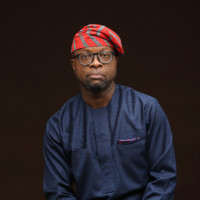
Eyo O. Ekpo, Team Lead, Power Component, UKNIAF, traced ignoble roles by successive administrations to embrace electricity reform hence the numerous power outage and failed electricity supply.
Ekpo, who presented a paper entitled: Nigeria Electricity Sector Journey – Lessons for Akwa Ibom State, during a two-day Akwa Ibom State Electricity Summit 2025 held at Four-Points by Sheraton Hotels, Ikot Ekpene, said ‘‘let me say that we gather here in Ikot Ekpene in a defining moment in Nigeria’s electricity reform journey, a journey that began formally in 2001 with the promulgation of Nigeria’s first national electric power policy.’’
You may read: Don’t make Electricity Summit a talk shop- Eno Tells stakeholders
He pointed out ‘‘And in just a year from now, we’re marking the 25th anniversary of the establishment of that policy. It has been a quarter of a century of reforms, of hopes raised and dashed, of progress made and lost, of lessons painfully learned.
However, as someone who has had the singular privilege of being in the process right from the very beginning of 2001 and walking along the corridors of Nigeria’s power sector reforms, I can say that while we have not truly delivered fully on the promise, it is also true that our electricity reform story is not a one-sided story of failure. It is also a story of resilience, of hard-won lessons and of opportunities that remain firmly, I would say, within our grasp. Your Excellency, our reform journey is one of understanding the political economy of power.’’
According to him, ‘‘Let me begin with one of the simple truth that I have learnt in these 25, 24, 25 years. And it is that electricity reform in Nigeria and probably elsewhere is 99% of politics and 1% economics. That 1%, the engineering, the financing, the tariff modeling, the training and the human capacity development is extremely important, very important.
‘‘But it is the 99%, the politics, the governance, the stakeholder engagement, the hard work of gaining and retaining credibility that makes or breaks reform. This is the lesson of Nigeria’s electricity sector over the past 25 years. And so, you permit me if I just try and trace the timeline.
‘‘In 2001 to 2007, we had the promise of reform. The National Electric Power Policy set out a very bold vision at the time. The Electric Power Sector Reform Act of 2005, which I had the privilege of trying to get the National Assembly to pass between 2001 and 2003, created the Nigeria Electric Regulatory Commission.’’
He recapped ‘‘It mandated the unbundling of NEPA as we knew it then, and I’m sure we all remember NEPA. And it paved the way for privatization. In that period, in early 2003, it was my privilege to have National Assembly pass that act.
‘‘We know the act is 2005, isn’t it? But it was actually passed for the first time in 2003. But for certain reasons that emerged later, President Obasanjo did not assent to the act. And it lapsed at the end of the session of the National Assembly that ended in June 2003.
‘‘The act was not passed again until March 2005. But by then, we had lost the powerful momentum that brought together diverse stakeholders, particularly very credible domestic and foreign operators and investors, to support and participate actively in these reforms. The, shall I say, loss of time was compounded by the decision by President Umaru Yaraduwa in 2007, October, to suspend the implementation of electricity reforms.’’
Ekpo lamented ‘‘And the final blow was his inexplicable wholesale removal of the entire leadership of the Niger Electricity Regulatory Commission, all chairmen and six commissioners, an act that badly damaged the commission’s credibility and independence. Between 2010 and 2015, we had the privatization era. Assets were sold, expectations were raised, but sadly the foundations were weak.
‘‘While the actual process itself of bidding and selling was very transparent, and I know because I was part of it, the quality of the buyers for the distribution companies left a lot to be desired, unlike we had for the generating companies. And the advice from NERC that most of these so-called core investor groups did not pass NERC’s fit and proper test was largely ignored by the National Council on Privatization, yet another example of 99% politics and 1% economics. Let me hasten to add, however, that politically there were two very good reasons for going ahead nevertheless, even if I’m the one saying so myself.’’
X-raying the history of the sector, he observed ‘‘First of all, it wasn’t clear that there were any serious foreign investors willing to take a bet on the Niger Electricity sector. Remember, we had had that gap. When people were interested between 2001 and 2003, there was a huge amount of interest.
‘‘I remember that I went with the then-Vice President Atiku Abubakar, went around the world, Frankfurt, Paris, London, Houston, and we met investors, and we got signed commitments from the likes of RWE, Thames Water, Southwest Power, Aon, Electricité de France. They were interested in participating in the process, but that gap that we couldn’t explain, we lost them, and they left. And they said, well, we’ll sit back and watch what the Nigerians do this time, but we will not jump in.’’
In the speech that drew applause from the audience, Ekpo posited that ‘‘It was also not clear that we had credible Nigerian investors better than the group of preferred bidders for the discourse at the time. What we had at the time was the best that Nigeria had. Second, in 2012, given the uncertainty even then that the government of the day would win the re-election in 2015, it was simply a case of doing it now or never at all.
‘‘In hindsight, given what has happened in these past 12 to 13 years, I believe that the decision to go ahead was justified. But whether this view is correct is a matter that will always generate heated discussion. So with the transactions done and the distribution companies that the discourse handed over to the core investors, yet another, even more serious and major challenge emerged regarding the nature of corporate governance that was brought into the discourse.
‘‘The reality is that while the quality of almost all the preferred bidder groups left a lot to be desired, the same was also true on the public sector side. Instead of focusing on turning around the distribution companies that they took over, the core investors chose to game the system and to take full advantage of a federal government that had been made to think that Nigerians do not want electricity to be commercially priced but prefer it to be subsidized. That’s not true.’’
And the war dogs in NERC and in BPE were conspicuous in their failure to hold these discourse core investors to full account. 2016 to 2023 were the crisis years. The system groaned under liquidity shortfalls, stranded capacity, and weak governance in both the public and private sector responsibilities.
Tariffs were frozen by politics. Post-privatization monitoring was absent, even though the federal government was fully represented on the boards of the discourse. Investments consequently stalled.
Losses grew. Deaths and accumulated liabilities cascaded through the entire value chain. And the entire Nigerian electricity supply industry became an insolvent entity, held up only by generating companies and gas suppliers that delivered energy only out of patriotism and a refusal to do what commercial common sense demanded.
In 2020, as His Excellency the Executive Governor of Akwaebo has pointed out, Nigerian governors under the aegis of the Nigerian Governors Forum recognized very clearly that continuing the old system was a sure road to the permanent collapse of the system built on the back of an increasingly firm and insolvent grid. Their collective action led to the amendment of the 1999 Constitution and the enactment of the Electricity Act, which effectively put an end to the single national electricity market guided, regulated, controlled, and operated centrally out of Abuja. These legislations brought about a major evolution and fully enabled the devolution of electricity powers to the states, a power that had been denied them since 1972 when NEPA was created, even though, as we all know, Nigeria is supposedly a federation.
Nigeria’s electricity sector is now in the era of state electricity markets. And we, gathered in this hall, who are pretty much the cream, the very best of Nigeria’s electricity sector, many of us here who came into our own in the harsh crucible of executing these reforms, we cannot now afford to sit back and watch. Why? Because none of us here comes from or was born in the Federal Capital Territory.
We must never forget that we come from states. And so let me turn, Your Excellency, to the paradox of Akwa Ibom’s abundance and scarcity. These are the facts that would describe Akwa Ibom’s journey.
This state has resident in its territory assets that can quickly scale up to process enough natural gas to generate 2,500 megawatts of electricity daily, 24 hours a day. We have a thermal generation plant in Ibom Power Company Limited that was licensed and constructed to be constructed to deliver 65 megawatts, but in 16 years, in 18 years actually, has not gone beyond its phase one, its phase one nameplate capacity of 191 megawatts. Distribution assets in the state operated by the Port Harcourt Electricity Distribution Company cannot deliver much beyond 380 megawatts, assuming in the first place that energy could even be received by PHED.
And these are with assets, most of which were historically paid for by Akwa Ibom State, but for which the state has not really received any credit or inequity allotments these past 19 years since PHED was established. With a per capita consumption of much less than one kilowatt hour per person and less than 40% of the households in Akwa Ibom State possessing prepayment meters, it is clear that PHED, despite being nominally owned by the four PHED states, has forgotten its core purpose practically from the day it was privatized. This is the paradox of Akwa Ibom, the abundance of resources and the scarcity of supply.
But there’s a new pathway. Akwa Ibom has chosen a new direction. The electricity policy sets the vision of universal access, reliable supply, and a diversified mix of energy sources with gas as a transition fuel.
The electricity law provides the legal backbone for doing so. It establishes the regulator, the State Electrification Agency, and the State Electrification Fund, and devolves regulatory authority from NERC to the Akwa Ibom State Electricity Regulatory Commission, which will soon be established. But the reality is that policy texts do not deliver power.
Only a relentless focus on execution intensity, on credibility and trust, do so. And so, let us look at the strategic priorities for Akwa Ibom. Drawing from experience, I tend to say something that I have been in this country to the University of Haddonox and harrowing experience for university.
And drawing from that experience, the State Electricity Policy, the law and the realities that we have on the ground, I think that there are five strategic priorities that must be addressed by any credible electricity reform in the state. Number one, operationalize the State Electricity Regulatory Commission. Appoint a team of capable, professional, credible commissioners.
Let me say, Your Excellency, like they have in Enugu State. To develop technical and economic regulations and establish a market design that justifies and enables sustained investment into the state electricity market. Importantly, Your Excellency, again, I would say, like Enugu State, protecting this entity and ensuring its independence, similar to the way the Enugu State government has been doing for its regulatory commission, lies at the very heart of enabling this new but vital institution to fulfill its role.
Second, focus on making Akwa Ibom’s blessings work by bringing together the elements of the state electricity value chain into a mutually supporting commercial framework that is focused on serving the state first and foremost. This means recovering Ibom Power Company and restoring it to the promising path on which it started in 2006 and put it into a commercial relationship with the state electricity distribution company.
Thereafter, we can then structure their collective operations to maximize the reach and commercial intensity by bringing in quality management for both companies via a transparent and professionally executed PPP process, improving the corporate governance and utilizing the benefits of state ownership to develop a long-term, cost-effective project financing program.
This commercial value chain, Your Excellency, is the bedrock of the establishment and the growth of the state electricity market. Third, we need to focus also on the off-grid market, the proverbial unserved and underserved communities, the so-called rural areas where the success of the state’s reform program will be recorded in the hearts and minds of the citizenry. In the same professional manner in which the regulator will be established, we need to set up the electrification agency too.
The MOU signed just last week with the IRA is a key element in this aspect of the reform program and utilizing all of Aqua Boom’s energy resource endowments, using the natural gas wherever it is cost-efficient to do so, integrating renewables into the state energy mix, using biomass, wind, and small hydro, wherever it is we can find them alongside natural gas, but doing so in a sustainable, economically sensible manner. Fourth, Your Excellency, as the first three items get done, we must mobilize investment and investors that are eagerly looking for the kind of opportunities that Aqua Boom has to offer. We must structure bankable public-private partnerships.
We must leverage the pool of funding from development finance institutions that have been looking for opportunities to engage with Nigeria’s infrastructure needs, and we must engage with serious decision-makers outside Abuja. Also, we need to attract diaspora and domestic capital, particularly from Nigeria’s pension funds that were designed specifically for the purpose of investing in infrastructure, and have also long awaited credible opportunities to invest the over $150 billion every month that they collect in pension contributions. Perhaps fifth, perhaps unnoticed, but I would say also very paramount, Your Excellency, we must invest in Aqua Boom State into building up human capital, training regulators and policymakers, and being relentless about giving them every opportunity to develop their skills and their experience, thus positioning Aqua Boom as a learning ground for state reform, because reforms are executed and sustained by trained technocrats who have integrity and full political backing.
And that brings me, Your Excellency, to the political economy challenge. Speaking of politics, Your Excellencies and distinguished audience, over the years it has become very clear to me, and I think to my colleagues, some of whom are in this room today, from the trenches, that the greatest challenge we face is not technical, it is political. Will this state government, under Your Excellency, have the courage to allow tariffs that reflect costs while sensibly deploying funding to make capital projects in rural areas cost-effective? Will this government insist on and firmly protect regulatory independence even when politics pressures us? Will we build partnerships across government, with the private sector, with the DFIs, rather than capture reform for patronage? Will it work the talk? I believe Your Excellency has answered this question simply and directly.
You have said, yes, you will, and that is what you have said, and we all heard it today. And so, permit me, with genuine humility, to address our leaders directly. To the federal government represented here by very senior officers from the executive and the legislative branches, the federal government must now become a partner and not a gatekeeper.
Support states like Akwa Ibom and others as they embark on the very hard labor of creating pathways where they were absolutely none before. This means a collaborative and not an aloof and one-sided transition of regulatory responsibility, or shouting at states and telling them that they do not know what they are doing. Instead, the federal government must recognize and act decisively on that recognition that without a reliable national grid, the states will not develop markets with depth.
The two must work together. This means that as states are restructuring their intrastate markets, so also must the federal government restructure the Transmission Company of Nigeria to make it become like the states that are being driven now by commercial intensity. And to the states, I must say that the templates are being written by states like Enugu, like Abia, and of course, Àkwa Ibom State.
Electricity reform is now your responsibility. The states must buckle up and build institutions, train people, design carefully, and never forget that without working hard at gaining credibility, markets will definitely fail. In closing, Your Excellency, I want to remind us not to get caught up in a technocratic bubble.
We must never forget that electricity reform is not abstract. It is about the child who cannot study at night. It is about the patient whose surgery fails without power. It is about the entrepreneur who is forced to shut down because all his profits go into running a generating set. Your Excellency, please never forget that reforms fail when credibility is lost. And credibility will always be high, and reforms will succeed when integrity and execution meet and work with political courage.
Akwa Ibom now has the chance to show Nigeria a new way. Let this summit mark the moment when we turn abundance into supply, potential into prosperity, and policy into power.’’
