
Israel Umoh
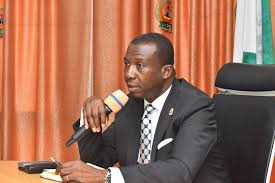
The Executive Chairman of Akwa Ibom Internal Revenue Service, Sir Okon Okon has dismissed fears that Nigeria Tax Reforms would pose threat to the economy like the Year 2000 (Y2K) crisis.
Since Federal Government will commence implementation of the new Tax Reforms from January 1, 2026, the Akwa Ibom State Government had to begin strategic engagement with professional bodies, investors, and business associations in the state.
Speaking during AKIRS engagement with professional bodies and business associations on new Tax Reforms, Okon insisted that the reforms are designed to modernise revenue administration, widen the tax net, strengthen the economy and benefit the less privileged, diffuse the Big Bang Theory or create panic among businesses.
Related News:
- AKIRS Clarifies Impact of Nigeria Tax Reforms on Different Sectors
- AKIRS Unveils Outcomes of Nigeria’s Tax Reforms
- 16 Banks Meet Recapitalisation Exercise Conditions, says CBN
They included members of the Association of National Accountants of Nigeria (ANAN); Institute of Chartered Accountants of Nigeria (ICAN); Chartered Institute of Taxation of Nigeria (CITN); and Nigeria Bar Association (NBA).
Others were the Association of Private Schools Owners, Association of Community Pharmacists, Association of Private Medical Practitioners, among others, at the event held at ICT Conference Room of the Office of the Accountant-General, Idongesit Nkanga Secretariat, Uyo.
‘‘The concern was that when the year 2000 arrived, the year “00” would be misinterpreted as 1900, causing potential system failures, but on the night of 31 December 1999, nothing happened. And normalcy returned.’’
Okon told the people to bury concerns and fears on the tax reforms as such would bring about greater reliefs and benefits to people especially the less privileged and other businesses.
Examining the need for the reforms and key expected outcomes, the Executive Chairman stated that the new national tax reforms will bring far-reaching relief to many Nigerians, boost economic activities, and drive growth and development across the country.
He noted that the anxiety over the tax reforms was unfounded as the new tax regime was designed to correct inconsistencies in the national tax system, check the challenges of multiple taxation, and curtail the activities of non-state actors and nuisance taxes.
Sir Okon, who is member of the Presidential Committee on Fiscal Policy and Tax Reforms, further noted that the existing tax system which was rooted in pre-colonial laws was marked by fiscal imbalance, inconsistent tax framework across jurisdictions, and multiple tax identifiers that adversely affected compliance by individuals and corporate organizations.
A Fellow and Council Member of the Chartered Institute of Taxation of Nigeria (CITN), Okon said the reforms have produced four new tax Acts meant to streamline tax administration in the country, namely, the Joint Revenue Board (JRB) Establishment Act 2025, which replaces the Joint Tax Board (JTB); the Nigeria Revenue Service (NRS) Establishment Act 2025 that replaces the Federal Inland Revenue Service (FIRS); the Nigeria Tax Administration Act (NTAA) 2025; and the Nigeria Tax Acts (NTA) 2025.
These, he noted, come with reliefs for many Nigerians, including low-income-friendly-thresholds fiscalization; personal income tax exemptions for those earning below 1 million annually; lower PAYE for incomes less than 1.7 million monthly; promotion of efficient, unified, tech-driven tax administration; while basic services and commodities such as food, education, health, rents, transport, among others, will attract zero percent VAT.
The measures, he argued, will ease pressure on individuals and families, while the introduction of a national Tax Identification Number (TIN) will encourage compliance, remove bureaucratic bottlenecks in the tax system, free up more revenue for government for development purposes, boost business expansion, create employment opportunities and make for global competitiveness.
The State’s tax helmsman listed some advantages of the new reforms for Akwa Ibom State to direct improvement in the State’s fiscal position as VAT formula has been revised from 50 percent to 55 percent; strengthening of revenue administration and professionalism; eliminate consumption tax, improved business environment, etc.
He stated that part of the ongoing engagements was to dispel misconceptions, help taxpayers see the benefits, and to seek collaboration with critical stakeholders in propagating the right message.

In his remarks, the Commissioner for Information, Dr. Aniekan Umanah, commended Governor Umo Eno for creating enabling environment for robust economic activities and investments in Akwa Ibom State.
Dr. Emmanuel Akpanobong, Chairman, Association of Private Medical Practitioners; representatives from NBA, Community of Pharmacists, and Association of Estate Valuers, among others, all commended President Bola Tinubu for the willpower to inspire the altruistic overhaul of the country’s archaic tax system.
They also lauded the efforts of Akwa State government in the ongoing sensitization of the new tax regime.
