

Nigerian Journalists have called on the Federal Government to replicate similar interventions in other South-South states affected by hydrocarbon pollution.
The Zonal Vice President of the Nigeria Union of Journalists (NUJ), Zone F, Comrade Opaka Dokubo, made the call during a tour of HYPREP project sites in Ogoniland in Rivers State on the sidelines of the South-South Zonal Executive Council (ZEC) meeting of the NUJ held in Port Harcourt.
While acknowledging the progress made so far, Dokubo urged the Federal Government not only to continue implementing the recommendations of the United Nations Environment Programme (UNEP) in Ogoniland, but also to replicate similar interventions in other South-South states affected by hydrocarbon pollution.
You may wish to read:
- Ogoni Clean-Up Exercise: Wike Derides FG Over Delay
- Shell Ready To Pay N45.9b Fine To Ogoni People In 21 Days
- MOSOP Raises Alarm Over Killings In Ogoni Communities
- Ogoni Clean-Up: MOSOP Gives FG Deadline
Dokubo, however, hailed the Federal Government for its gallant effort in implementing, through Hydrocarbon Pollution Remediation Project (HYPREP), the environmental remediation and livelihood restoration of Ogoniland in Rivers State.
He further applauded the management of HYPREP for the milestones achieved in land remediation, shoreline clean-up, mangrove restoration, provision of potable water to about 40 communities, and livelihood empowerment.
Others are the human capital development, construction of legacy infrastructure such as the Centre of Excellence for Environmental Restoration, the Ogoni Power Project, and the Ogoni Specialist Hospital.
“There is so much to commend HYPREP for, and indeed so much to commend the Federal Government for what we have seen here. HYPREP is doing diligent work, and we are satisfied that real progress is being made. As it stands, nothing is left out in this project,” he stated.
Sites visited during the tour included the Mangrove Remediation Site at Bomu Community, Kporghor/Gio Water Scheme, the Ogoni Specialist Hospital, and the Centre of Excellence for Environmental Restoration.
Welcoming the NUJ leaders to the sites, HYPREP’s Director of Technical Services, Prof. Damian-Paul Aguiyi representing the Project Coordinator, Prof. Nenibarini Zabbey encouraged journalists to be objective, commending where necessary and offering constructive criticism to help improve project delivery.
Also speaking, the Head of Communications, HYPREP, Mr. Enuolare Mba-Nwigoh, highlighted the positive outcomes of the project, including biodiversity recovery, planting of over 1.4 million mangrove seedlings, medical outreach and interventions, and robust community-based engagement.
He assured that more projects would be completed before the end of the year.
Ogoni clean-up exercise
The project which started in 2011. Oil was discovered in commercial quantity in Ogoniland in 1958. Today, it comprises four local government areas, Khana, Gokana, Tai and Eleme, and includes 261 communities.
In 2009, the United Nations Environmental Programme (UNEP), prompted by the Nigerian government, launched a scientific investigation into the impact of contamination from oil across the Ogoni region.
Several communities had been polluted by oil companies, particularly Shell Petroleum Development Company of Nigeria (SPDC), and the U.N. agency needed to examine the gravity of the problem and proffer solutions. UNEP, in 2011, published a report showing that pollution from over 50 years of oil operations in the region had “penetrated further and deeper than many may have supposed.”
Entitled Environmental Assessment of Ogoniland, UNEP detailed how its team surveyed 122 km of pipeline rights of way and visited several oil spill sites, oil wells, and other facilities. Its team also inspected over 5,000 medical records and held 264 meetings with community members attended by no fewer than 23,000 persons in Ogoniland.
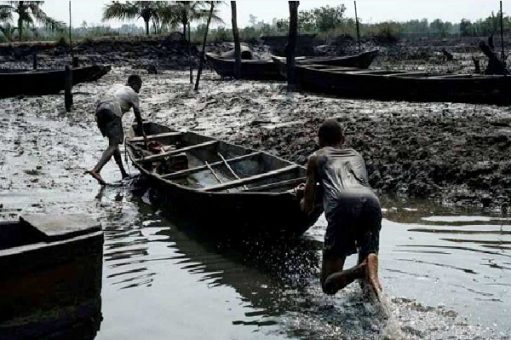
The study eventually found that much of the soil and water in Ogoni was contaminated, and the hydrocarbon pollution had reached the groundwater at 41 sites in excess of local standards. It was also found that surface water throughout the creeks contained hydrocarbons. Fish and aquatic life were disappearing and wetlands “highly degraded and facing disintegration.”
“The overall cost of the clean-up should not be an obstacle to its implementation. Therefore, an Environmental Restoration Fund for Ogoniland should be set up with an initial capital injection of USD 1 billion contributed by the oil industry and the Government. To be managed by the Authority, the Fund should be used only for activities concerning the environmental restoration of Ogoniland, including capacity building, skills transfer, and conflict resolution,” UNEP noted.
Reported by Nsikak Esenowo
