

By Akanimo Sampson
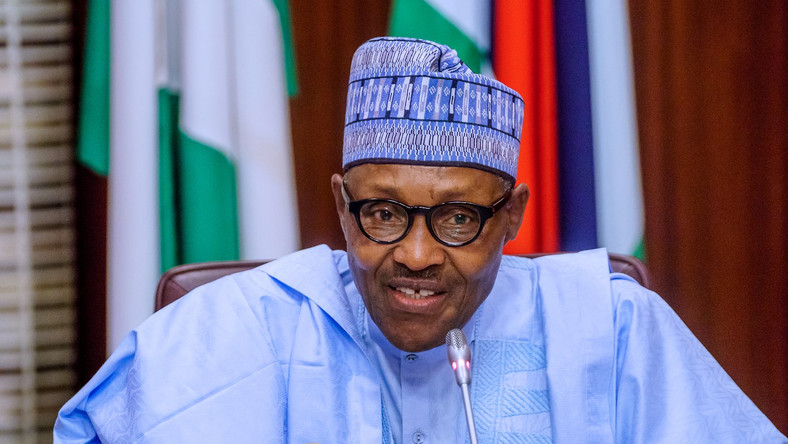
Nigeria under the watch of President Muhammadu Buhari’s All Progressives Congress (APC) administration appears to be facing a suppressed financial crisis. According to Menas Associates, oil companies have become the target of the government’s efforts to boost the country’s badly needed revenues.
Menas has been helping multinational companies operate in the Middle East, Africa, and other emerging markets since the late 1970s. It is a strategic and political risk consultancy providing actionable intelligence for its clients, from country entry strategies, to due diligence, stakeholder analysis, political risk reports, market assessments, problem solving and exit strategies.
The move by the Buhari administration is most likely aimed at raising more funds to meet some of the pressing development challenges of the badly polarised country. Already, the World Bank in its updated October report said while Nigeria has made some progress in socio-economic terms in recent years, its human capital development remains weak due to under-investment and the country ranked 152 of 157 countries in the World Bank’s 2018 Human Capital Index.
The Bank said the country has continued to face massive developmental challenges, which include the need to reduce the dependency on oil and diversify the economy, address insufficient infrastructure, and build strong and effective institutions, as well as governance issues and public financial management systems.
“Inequality in terms of income and opportunities has been growing rapidly and has adversely affected poverty reduction. The North-South divide has widened in recent years due to the Boko Haram insurgency and a lack of economic development in the northern part of the country’’, the Bank said.
Adding, it said, “large pockets of Nigeria’s population still live in poverty, without adequate access to basic services, and could benefit from more inclusive development policies. The lack of job opportunities is at the core of the high poverty levels, of regional inequality, and of social and political unrest in the country.’’
Continuing, the Bank pointed out that oil price volatility continues to influence Nigeria’s growth performance. ‘’Between 2000 and 2014, Nigeria’s Gross Domestic Product (GDP) grew at an average rate of 7% per year. Following the oil price collapse in 2014-2016, combined with negative production shocks, the GDP growth rate dropped to 2.7% in 2015. In 2016 during its first recession in 25 years, the economy contracted by 1.6%.
“Since 2015, economic growth remains muted. Growth averaged 1.9% in 2018 and remained stable at 2% in the first half of 2019. Domestic demand remains constrained by stagnating private consumption in the context of high inflation (11% in the first half of 2019). On the production side, growth in 2019 was primarily driven by services, particularly telecoms.
“Agricultural growth remains below potential due to continued insurgency in the Northeast and ongoing farmer-herdsmen conflicts. Industrial performance is mixed. Oil GDP growth is stable, while manufacturing production is expected to slow down in 2019 due to a weaker power sector performance.
“Food and drink output are expected to increase, likely in response to import restrictions. Construction continues to perform positively, supported by ongoing megaprojects, higher public investment in the first half of the year, and import restrictions.
“Growth is too low to lift the bottom half of the population out of poverty. The weakness of the agriculture sector weakens prospects for the rural poor, while high food inflation adversely impacts the livelihoods of the urban poor.
“Despite expansion in some sectors, employment creation remains weak and insufficient to absorb the fast-growing labor force, resulting in high rate of unemployment (23% in 2018), with another 20% of the labor force underemployed. Furthermore, the instability in the North and the resulting displacement of people contribute to the high incidence of poverty in the North East.
“Without significant structural policy reforms, Nigeria’s medium-term growth is projected to remain stable around 2%. Given that the economy is expected to grow more slowly than the population, living standards are expected to worsen.
“Growth is constrained by a weak macroeconomic framework with high persistent inflation, multiple exchange rate windows and forex restrictions, distortionary activities by the central bank, and a lack of revenue-driven fiscal consolidation results.
“Rising public debt, and increasingly complex policy interventions by the central bank constrain private sector credit growth. External balances are fragile to hot money movements, and fiscal buffers are exhausted, making Nigeria’s economy vulnerable to external risks.
The (Buhari administration) has the opportunity to accelerate the pace of structural reforms to build an institutional and policy framework capable of managing the volatility of the oil sector and supporting the sustained growth of the non-oil economy.
“Bold reforms that could have a significant impact on the economy’s trajectory are the removal of subsidies, elimination of forex and trade restrictions, greater transparency and predictability of monetary policy and increased domestic revenue mobilisation.
“Such reforms would help raise living standards of low-income groups while increasing spending on much needed public services. The signing of the Africa Continental Trade Agreement, after extended deliberations, may also provide some positive momentum over the medium-term.’’
Since 2015, President Buhari has been playing up fighting corruption, increasing security, tackling unemployment, diversifying the economy, enhancing climate resilience, and boosting the living standards of Nigerians as main policy priorities his APC administration seeks to continue to pursue up till 2023.
In the thinking of the administration therefore, a new review of drilling and production regulations is set to place additional financial burden on oil corporations operating in the country.
The new regulations, which Menas Associates says has been seen by it, ‘’appear to indicate sharp increases in several types of oil sector fees and the introduction of new ones. In the new regulations:
- Production platforms will now attract an application fee of a US$100,000 if they have capacities of over 5,000 b/d;
- Refineries, petrochemical plants, gas-based fertiliser plants, and methanol plants with capacities of over 30,000 b/d above or oil equivalent will also attract annual renewal fees of US$2,000 per 1000 b/d or oil equivalent; and
- those below 30,000 b/d will attract annual renewal fees of US$1,000 per 1,000 b/d or oil equivalent.
“Applications for the conversion of an OPL to an OML will now attract a submission fee of $1.00 million while applications for an existing OML will now attract a fee of $1.5 million. Renewal of OML submissions will now also attract a fee of $2.00 million.’’
Menas Associates said of more interest are the fees that are to be charged on applications for the assignment of an interest in an existing asset. ‘’The new regulation states that this will now attract anywhere from 5% to 10% of the ‘transaction purse’ while ‘fees for renewal bonus’ will be 5% of the Net Present Value of the asset.’’
These new fees follow those that the government has proposed in the 2020 Finance Bill — which will come into effect this coming January — that oil company dividend payments will now be subject to a 10% withholding tax. The government has also reviewed the Production Sharing Contract Act which imposes higher fees on deep water offshore production.
According to Menas Associates, “the government is desperate for additional revenue and it sees the international oil corporations as low hanging fruit. The possibility that it will back down on any of these new fees is virtually nil. It will probably wait to see what the outcome of the new fees are before it does anything.
“The first indication on whether the new fees will discourage investment will be seen if next year’s planned licensing round takes place. The level of interest shown in the potential blocks that will be offered for sale will demonstrate how much interest investors have in Nigeria’s oil sector.’’
