

The United States Congress has highly recommended targeted sanctions and visa bans on individuals and entities linked to persecution of Christians in the country.
This was as the Congress decried Nigeria’s security crisis, describing the country as the “deadliest place in the world to be a Christian.”
The Congress also urged sweeping policy measures that extend beyond religious violence to include concerns about Chinese ‘illegal’ mining operations which pay militias money for protection, and Russian military influence.
The position is contained in a joint report delivered to the White House by the U.S. House Appropriations Committee and the House Foreign Affairs Committee after months of hearings, expert testimony and bipartisan congressional visits to Nigeria.
The submission follows President Donald Trump’s re-designation of Nigeria as a Country of Particular Concern (CPC) over religious freedom violations, a move that allows Washington to impose tougher diplomatic and economic consequences
- Lawmakers argue that extremist networks have exploited governance gaps and weak enforcement mechanisms to carry out sustained attacks against Christian communities, particularly in rural and agrarian regions.
Also read
- Christians’ Genocide: China, US Congressman Differ on Military Action against Nigeria
- US Congress Backs Trump’s call for Military Action against Nigeria
- #US Congress Under Pressure To Pass Anti-corruption Law As Part Of COVID-19 Future Response Packages
They warned that continued inaction risks emboldening terrorist actors, deepening humanitarian crises, and undermining U.S. strategic interests in West Africa.
The report recommends: A bilateral U.S.–Nigeria security agreement focused on dismantling jihadist networks and protecting vulnerable communities; Enforcement of appropriations provisions that could withhold certain U.S. assistance pending measurable action against religious violence; Targeted sanctions and visa bans on individuals and entities linked to persecution; Public invocation of CPC presidential directives to name perpetrators.
A section of the report calls for the removal of what it describes as “Fulani militias” from confiscated productive farmlands, so that displaced communities can voluntarily return to their homes.
Lawmakers insist that restoring land rights and enabling the voluntary return of internally displaced persons (IDPs) must be central to any durable peace strategy. They also suggest reviewing economic leverage, including agricultural trade measures, to compel armed groups to disarm.
Nigeria’s farmer-herder crisis, especially in the Middle Belt, has long been driven by land disputes, climate pressures, ethnic tensions and weak local governance — though U.S. lawmakers frame the pattern of violence as increasingly religiously targeted.
Beyond religious persecution, the report raises the alarm about the growing footprint of Chinese mining interests in Nigeria’s solid minerals sector.
Lawmakers expressed concern that poorly regulated mining operations — particularly in lithium and other strategic minerals — may be contributing to environmental degradation, illegal armed protection networks, and local insecurity in mining communities.
It also recommended supporting the new ministry of Livestock, ranching plans and meaningful and reform efforts
The report recommends tighter scrutiny of Chinese-linked extractive activities, enhanced transparency in mining licenses, and safeguards to prevent foreign commercial interests from exacerbating instability.
While the report does not accuse Beijing directly of sponsoring violence, it framed China’s expanding economic influence as a strategic concern intersecting with governance weaknesses in Nigeria’s resource-rich regions.
The committees also urged Nigeria to reconsider its defense procurement relationships with Moscow, arguing that continued reliance on Russian military equipment risks undermining deeper U.S.–Nigeria security cooperation.
Lawmakers recommended that Nigeria diversify toward U.S. defense systems and reduce strategic dependence on Russia, especially at a time of heightened global geopolitical competition.
The report framed the broader insecurity landscape as vulnerable to exploitation by adversarial powers seeking influence in West Africa.
The congressional findings place Nigeria at a sensitive diplomatic crossroads. As Africa’s largest economy and a key regional power, Nigeria remains an important U.S. partner in counterterrorism and trade. However, Washington’s sharpened tone signals growing impatience with what lawmakers describe as insufficient accountability and reform.
Supporters of the report argue that defending religious liberty and confronting extremist violence require decisive leadership and leverage.
Critics, however, cautioned that Nigeria’s security crisis is complex — involving terrorism, banditry, communal conflicts, illegal mining, economic hardship and governance deficits that cannot be reduced to a single narrative.
With bipartisan backing and White House support, the report marks one of the most assertive U.S. congressional interventions in Nigeria’s internal security challenges in recent years — widening the focus from religious persecution to great-power competition, resource control, and the broader struggle for stability in West Africa.
FG Rejects the persecution profile
However, the Federal Government has reaffirmed that there is no religious persecution in Nigeria, dismissing recent claims contained in a report submitted by some United States lawmakers to President Donald Trump.
Minister of Information, Mohammed Idris, made the government’s position known while reacting to the report submitted by members of the US House Committees on Appropriations and Foreign Affairs. The document reportedly followed months of investigations and on-the-ground assessments and outlined findings on alleged persecution of Christians and extremist violence in Nigeria.
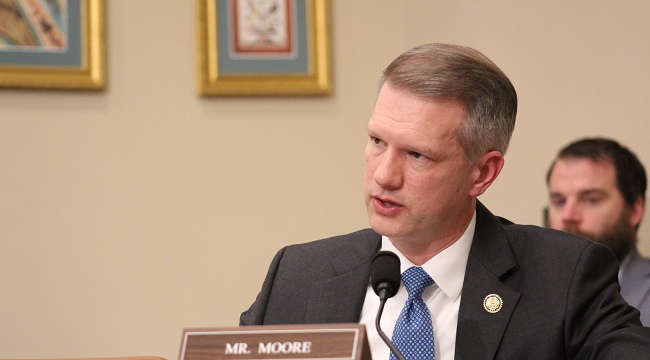
The development came after President Trump redesignated Nigeria as a Country of Particular Concern and directed Congressman Riley Moore and House Appropriations Committee Chairman Tom Cole to spearhead a congressional probe into alleged religious persecution and terrorism-related violence.
Moore later confirmed the submission of the report in a statement posted on his official X account, describing the White House engagement as the culmination of extensive bipartisan work. He said the discussions provided what he called a clearer understanding of insecurity and challenges facing Christian communities in parts of Nigeria.
Responding to the claims, Idris insisted that Nigeria has no policy that encourages or supports religious persecution. He said the government had taken note of the statements and recommendations emerging from engagements within the US Congress.
“Nigeria acknowledges that parts of the country continue to face serious security challenges, including terrorism, banditry, and communal conflicts that have tragically affected many communities,” the minister said. “The Federal Government remains deeply concerned about the loss of lives and destruction of property resulting from these criminal acts, and we extend our sympathies to all victims and their families, regardless of faith, ethnicity, or region.”
He stressed that the insecurity confronting the country is not driven by religious bias or state policy. “It is important to state clearly that Nigeria does not have, and has never had, a state policy of religious persecution,” Idris said. “The violence being confronted by our security agencies is not driven by government policy or religious bias, but by complex security threats, including terrorism, organised criminality, and longstanding communal tensions.”
The minister emphasised that Nigeria’s Constitution guarantees freedom of religion and worship for all citizens and that the Federal Government remains committed to upholding those protections and ensuring equal treatment under the law.
He also reiterated Nigeria’s commitment to maintaining strong relations with the United States. “Nigeria values its longstanding and strategic partnership with the United States,” he said, adding that the country remains open to constructive dialogue and cooperation based on mutual respect and recognition of Nigeria’s constitutional framework and sovereignty.
Idris concluded that the Federal Government would continue engaging international partners through diplomatic channels while focusing on its primary responsibility, protecting all Nigerians.
