

Agency’s Report
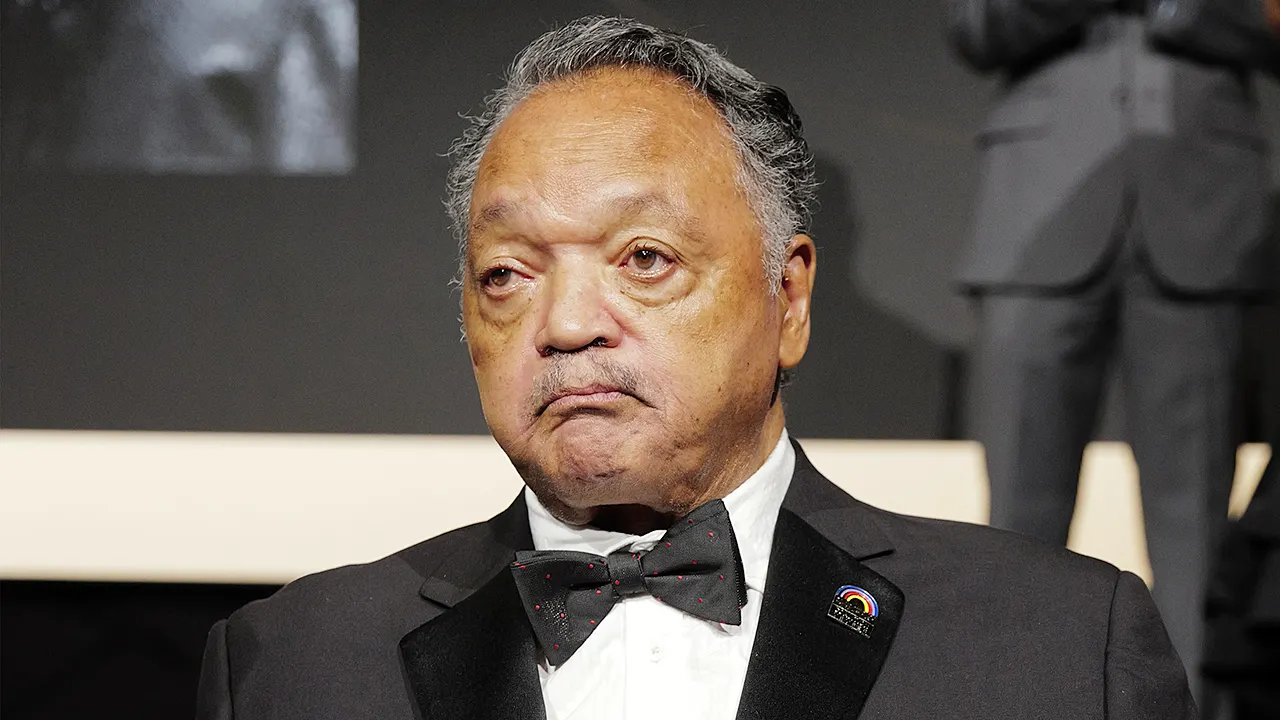
US Democratic Presidential candidate and legendary civil rights activist, Rev Jesse Jackson, one of the nation’s most influential Black voices, died Tuesday morning, his family confirmed in a statement.
“Our father was a servant leader — not only to our family, but to the oppressed, the voiceless, and the overlooked around the world,” Jackson’s family said.
Also read:
- Nigerian Officials have a Culture of Denial – US lawmaker alleges
- US COVID-19 Deaths Top 60,000, Iran Reaches 30,000
- Influential US Secretary of State Dies
“His unwavering belief in justice, equality, and love uplifted millions, and we ask you to honor his memory by continuing the fight for the values he lived by.”
The family did not release a cause of death, but Jackson revealed in 2017 that he had the degenerative neurological disease Parkinson’s.
He was hospitalized for observation in November in connection to another neurodegenerative condition, according to media reports.
During college, Jackson met his future wife Jacqueline, whom he married in 1962 and later had five children with – Santita, Jesse Jr, Jonathan Luther, Yusef DuBois, and Jacqueline Jr. He would later go on to have a sixth child, Ashley, during an extramarital affair with Karin Stanford in the early 2000s.
Jackson first met King, who would become his mentor, at an airport in Atlanta in the early 1960s. King had followed Jackson’s student activism from afar for several years.
A dynamic orator and a successful mediator in international disputes, the long-time Baptist minister expanded the space for African Americans on the national stage for more than six dHe was the most prominent Black person to run for the US presidency — with two unsuccessful attempts to capture the Democratic Party nomination in the 1980s — until Barack Obama took the office in 200mon ground’

He was present for many consequential moments in the long battle for racial justice in the United States, including with King in Memphis in 1968 when the civil rights leader was slain.
He openly wept in the crowd as Obama celebrated his 2008 presidential election, and he stood with George Floyd’s family in 2021 after a court convicted an ex-police officer of the unarmed Black man’s murder.
He later adopted the last name of his stepfather, Charles Jackson.
“I was not born with a silver spoon in my mouth. I had a shovel programmed for my hands,” he once said.
He excelled in his segregated high school and earned a football scholarship to the University of Illinois, but later transferred to the predominantly Black Agricultural and Technical College of North Carolina, where he received a degree in sociology.
No ‘silver spoon’
In 1960, he participated in his first sit-in, in Greenville, and then joined the Selma-to-Montgomery civil rights marches in 1965, where he caught King’s attention.
Jackson later emerged as a mediator and envoy on several notable international fronts.
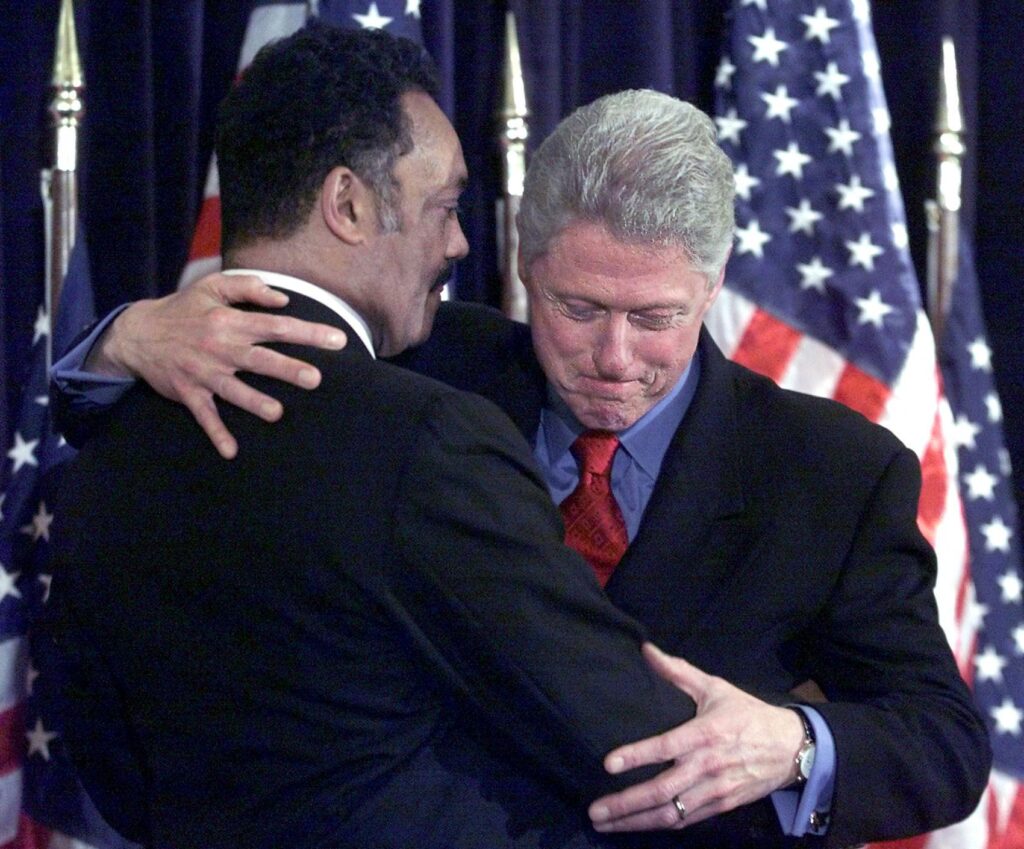
He became a prominent advocate for ending apartheid in South Africa, and in the 1990s served as presidential special envoy for Africa for Bill Clinton.
Missions to free US prisoners took him to Syria, Iraq, and Serbia.
In 1984, Jackson ran as a Democratic candidate for president, becoming the second Black person to launch a nationwide campaign following Shirley Chisholm more than a decade earlier.
“Tonight we come together bound by our faith in a mighty God, with genuine respect and love for our country, and inheriting the legacy of a great party, the Democratic party, which is the best hope for redirecting our nation on a more humane, just, and peaceful course,” Jackson told an audience at the 1984 Democratic National Convention in San Francisco, California.
“This is not a perfect party. We’re not a perfect people. Yet, we are called to a perfect mission. Our mission to feed the hungry, to clothe the naked, to house the homeless, to teach the illiterate, to provide jobs for the jobless, and to choose the human race over the nuclear race.” He lost the Democratic nomination to former vice-president Walter Mondale, with the incumbent Republican president Ronald Reagan ultimately winning the election.
After his first presidential run, Jackson created the National Rainbow Coalition to push for voting rights and social programs. In the mid-1990s, Jackson merged his two organizations together to form the multiracial group Rainbow Push Coalition, which focuses on educational and economic equality. Throughout the years, the coalition has paid more than $6m in college scholarships, and gave financial assistance to more than 4,000 families facing foreclosures so that they could save their homes, according to their website.
Jackson ran for the Democratic nomination for president a second time in 1988, performing strongly but losing out to Michael Dukakis, the Massachusetts governor, who was beaten heavily in the general election by George HW Bush.
In 2000, the then president, Bill Clinton, awarded Jackson the nation’s highest civilian honor, the Presidential Medal of Freedom for his decades of work focused on increasing opportunities for people of color.
Jackson took King’s work forward, staying to the fore in the worldwide civil rights movement through a tumultuous half-century of American history, through to the election of Donald Trump and the rise of Black Lives Matter.
“Dr King believed in multiracial, multicultural coalitions of conscience, not ethnic nationalism,” Jackson said in 2018. “He felt nationalism – whether Black, white or brown – was narrowly conceived, given our global challenges. So having a multiracial setting said much about his vision of America and the world, what America should stand for as well as the world.
“The arc of the moral universe is long and it bends towards justice, but you have to pull it to bend. It doesn’t bend automatically. Dr King used to remind us that every time the movement has a tailwind and goes forward, there are headwinds.
“Those who oppose change in some sense were re-energised by the Trump demagoguery. Dr King would have been disappointed by his victory but he would have been prepared for it psychologically. He would have said: ‘We must not surrender our spirits. We must use this not to surrender but fortify our faith and fight back.’”
AFP
