

Mkpisong Dr. Joseph Rankin
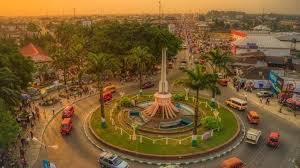
From 1970 to 1987, Uyo was not yet the capital of Akwa Ibom State. It was a divisional and later local government headquarters still a growing town under Cross River State, while Calabar stood proudly as the capital.
Uyo was proudly identified as ”Can-do City” by the late Dr. later Professor Akpan Iquot, a Mass Communications lecturer in The Polytechnic, Calabar. Yet, Uyo carried within its streets a kind of dignity, rhythm, and pride that those who lived it can never forget.
Related news:
- Midnight at Uyo Village Road
- Akwa Ibom Mobilises Uyo Village Road contractor – Works Commissioner
- Petty traders sob over demolition of shops in Uyo
The roads were fewer, the houses smaller, and the economy simpler—but life was balanced. There was hardship, yes, but there was also fairness. Prices matched incomes, families lived with dignity, music gave us joy, and transport carried not only bodies but also the pride of an entire people. To remember those days is to touch a time when life itself made sense.
The Economy of Dignity
The economy of Uyo in the 1980s was not measured in billions or foreign reserves—it was measured in how far one naira could take you, and how much peace of mind it could buy.
Garri was 40 cups for one naira. That single naira could sustain a family for days. Housewives poured it into enamel basins, added water, sugar, or milk if the family was lucky, and called it a meal.
A single room rented for ₦18 per month. Even the junior civil servant could afford it without despair. Families lived close, siblings shared space, but there was dignity in the fact that rent was not a mountain no one could climb.
School fees were modest, uniforms were sewn by local tailors, and foodstuffs in the market were priced in harmony with the earnings of clerks, teachers, and traders.
One small receipt from Hotel Helena on Enwe Street tells the entire story of an era. On August 8, 1985, my brother Ezekiel Ntuk ate a feast: two bottles of Guilder, a small stew, a mineral, gizzard, and meat. The bill came to just ₦9.10. That receipt, written in blue ink, is today a relic. It is not only a piece of paper; it is a testimony that the naira once carried dignity, that ordinary people once lived with balance, and that life itself once matched its promise.
Hotels and Joints: Memory Factories
The hotels and joints of Uyo were more than businesses—they were memory factories. Each had its own character, its own flavor.
Hotel Helena (Enwe Street): Modest, reliable, and known for fair pricing. It was a place where workers went to relax, to eat well, and to feel human.
Metro Hotel (Barracks Road): The hotel whose phone number—085-201451—was etched into memory. It welcomed travelers with consistency, a landmark of reliability.
Golden Palace Hotel (Ukana Offot Street): A hub for traders, families, and civil servants. Its simple lobby carried conversations of contracts, politics, and dreams.
Palace Hotel by Itiam Street, bringing back memories to the Ulaeto’s family.
Lord Motel (Ikot Ekpene Road): Known for its pepper soup, roasted goat, and laughter of men who had returned home from journeys. The smell alone invited you inside.
Bellavista Night Club (Ikot Ekpene Road): Its neon glow painted the night, and its highlife rhythms carried dancers until dawn. For many young men and women, Bellavista was the crown jewel of nightlife.
Unithought Joint (Akpan Essien Street): The beating heart of Uyo’s evening life. Known for its “ready at quicker space” meals, it served hot dog meat and fried plantain, sizzling from the pan to the table, washed down with bottles of Star, Guilder, or Maltina. Students, civil servants, and market women sat together at wooden tables, their laughter rising above the smoke of fried plantain.
These hotels and joints were not just places to eat or drink—they were stages for memory. Many friendships began there, many courtships were nurtured there, and many stories we still tell today were born in their walls.
Music: The Soul of Our Nights
If the hotels gave us a place, music gave us a heartbeat. Uyo in the 1980s was alive with sound—voices, guitars, drums, and harmonies that lit up our nights and shaped our childhood memories.
E.E. Akpan and the Hunters Dance Band: Masters of highlife, their guitars and horns carried dancers into joy.
Afi Usua: A voice of sweetness, carrying Ibibio melodies like stories set to rhythm.
The Doves: Their harmonies were like threads weaving memory into music.
Emmanuel Ntia and Udo Abianga: Masters of rhythm, who gave Uyo its musical backbone.
Mike Umoh: Whose youthful voice and energy captured a generation.
Doris Ebong: A songstress whose voice still echoes in memory.
Bassey Black and Sunny Risky: Who electrified nights with flair and rhythm.
Monday Akpa Utong: Another troubadour who carried Ibibio stories through song.
Udo-Ekarika & His Band: Whose music filled halls, joints, and open grounds alike.
And above all, Professor Samuel Akpabot: The scholar and composer who married Ibibio traditional music with orchestral brilliance, proving that our music belonged not only to us but to the world.
These musicians were not entertainers—they were custodians of culture, narrators of identity, healers of community. Their music told us who we were, reminded us of our roots, and gave our nights a rhythm we still remember today.
Road Transport: Our Pride and Our Stories
Transport in the 1980s was not merely movement—it was pride. For the Ibibio nation, the great transport companies were giants that carried our identity across Nigeria.
InyangEtte Line
Utuks Motors Limited
Usoro & Bros
These names were more than companies—they were legends.
In 1982, I boarded an Inyang Ette Line luxury bus to Lagos. The fare was ₦12, all rights reserved. At Onitsha, Igbo men and boys rushed to see the magnificent buses. One exclaimed: “Nah eeee!” At Ojuelegba in Surulere, Lagos, the entire area was owned by Inyang Ette himself. In Kano, the name Inyang Ette still reigned. These buses were not just transport—they were rolling monuments of Ibibio pride.
And then there was the story of Usoro & Bros. When the state government could not pay salaries, it was Usoro & Bros who stepped in, paying civil and public servants with the strength of their wealth. Think of that! We were not just part of Nigeria’s economy—we were the economy itself.
Calabar By Air: The Fearless Drivers of Uyo Roundabout
Then came the legend of “Calabar By Air.”
After the commissioning of the Calabar–Itu Road, the drivers at Uyo Roundabout began to boast that they could take you from Uyo to Calabar in 20 minutes. If you were born then, you will know I am not lying. Their buses flew so fast that the name “Calabar By Air” stuck in history.
It took the government’s intervention to put an end to this madness, and in that story entered two unforgettable women: Mma Ekpo and Mma Efa. These policewomen were legends in their own right. Drivers feared them, respected them, and even local women spoke of their power. Ask your uncles or aunties—they will tell you: the sight of Mma Efa alone could straighten the back of any reckless driver. They were order in human form.
Water Transport: MV Oron, MV Obudu, and the Ebaches
Besides roads, our waterways carried us. The MV Oron and the MV Obudu were lifelines, ferrying passengers and goods across to Calabar. They were steady, dependable, and respected. Traders, civil servants, and families used them to cross waters, connecting towns and kindred.
And then there were the ebaches (canoes). They were not toys or relics—they were valued. Fishermen trusted them, traders depended on them, and communities thrived by them. Waterways were not secondary transport—they were part of the rhythm of our daily life.
Sports: Dreams on Sandy Fields
In the 1980s, Uyo carried dreams not only in business and music but also in sports.
The Jetimos Football Club of Uyo filled stadiums with chants and dreams. The Etesi’s of Eket gave us heroes whose names stirred pride. Children in sandy compounds kicked makeshift footballs, their bare feet pounding dust, their voices shouting “Jetimos!” with joy. Sports were not about money or contracts—it was about community, pride, and joy.
The Bitter Contrast with Today
Fast-forward to 2025, and the arithmetic has collapsed.
That ₦9.10 meal at Helena now costs ₦8,000 or more.
A bottle of Guilder that once cost less than ₦1 is now over ₦1,000.
A soft drink that once cost 60 kobo is now ₦700.
The minimum wage is ₦80,000 in Akwa Ibom, swallowed in days.
The naira, once nearly equal to the dollar, now trades at over ₦1,600 per dollar at Black market.
Electricity flickers, hospitals demand cash up front, water taps run dry, and the proud legacies of InyangEtte, Utuks, Usoro & Bros, MV Oron, MV Obudu are gone. The Jetimos and Etesi’s live only in memory. The music of Mike Umoh, Doris Ebong, and Bassey Black has faded into nostalgia. Life no longer balances itself—it tilts toward struggle.
When Life Made Sense
Yet, memory lives. And memory is heritage.
We still recall: Helena’s receipt, Metro’s ringing phone, Golden Palace’s lobby, Lord Motel’s pepper soup, Bellavista’s neon glow, Unithought’s fried plantain, E.E. Akpan’s highlife, Mike Umoh’s voice, Doris Ebong’s songs, InyangEtte’s buses, Usoro & Bros’ generosity, Mma Efa’s authority, MV Oron’s steady voyage, Jetimos’ goals.
These were not luxuries. They were life itself. They were proof that Nigeria—and Uyo in particular—once had balance, pride, and dignity.
It was a time when life made sense. Today, it is a bittersweet memory. Perhaps, by remembering, we may find the courage to rebuild—not just the economy, but the spirit of dignity that once defined us.
