

Agency’s Report
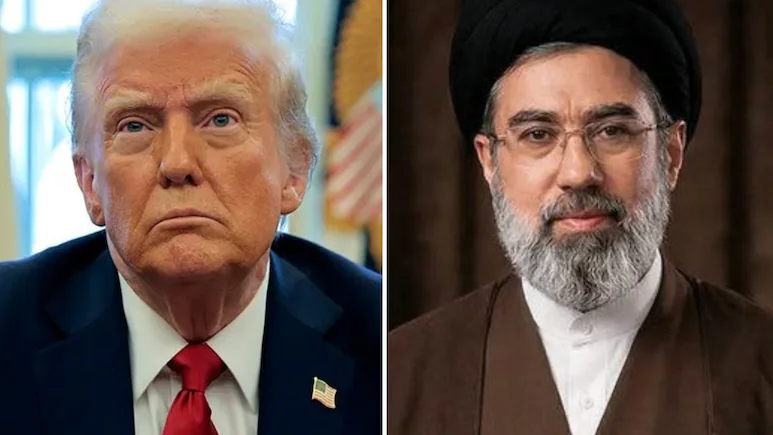
After a month and a half of spiraling conflict in the Middle East, the United States and Iran agreed to a two-week ceasefire on Tuesday – less than two hours before US President Donald Trump’s deadline to wipe out a “whole civilization.”
That threat, which critics warned could be a war crime if carried out, appears to have been staved off for now at the 11th hour. But there remains a gulf between the two countries, who each portrayed the temporary truce as a victory for their nations.
The ceasefire is a starting point for further negotiations, and it remains to be seen what final terms may be included in a proposal to definitively end a war that has upended the Middle East and caused a historic global oil disruption.
Also read: Iran unswayed by Trump’s 48-hour deadline to Reopen Strait Hormuz
Trump announced the ceasefire in a Truth Social post, saying it was made on the condition that Iran agree to reopen the critical Strait of Hormuz, through which a fifth of the world’s oil flows.
The ceasefire had been mediated by Pakistan’s prime minister and its military chief, he said. Iran had put forth a 10-point proposal, which the US views as “a workable basis on which to negotiate,” Trump added.
The next two weeks will allow a final agreement to be drawn up, he said.
In an interview with AFP news agency Tuesday, Trump described the deal as “total and complete victory.” But he would not say whether he would fulfill his prior threats to destroy Iran’s civilian infrastructure if Tehran reneged on the agreement, only saying: “You’re going to have to see.”
And in a later Truth Social post just past midnight, he said the US would be “helping with the traffic buildup in the Strait of Hormuz,” adding: “Big money will be made.”
US sources told CNN that the Trump administration is preparing for potential in-person negotiations, likely in Islamabad – where Pakistan’s prime minister has invited both sides to send delegations.
Israel is part of the ceasefire and will also suspend bombing against Iran, Prime Minister Benjamin Netanyahu’s office said.
It also claimed Lebanon is not part of the ceasefire – contradicting Pakistan’s prime minister, who said it was. Trump made no mention of Lebanon in his statement.
But, Tehran claimed victory in the war that started after US-Israeli strikes on February 28 and said it forced the United States to accept its 10-point plan, including lifting sanctions and accepting its nuclear enrichment.
In a statement, Iran’s Supreme National Security Council said the ceasefire plan would require “continued Iranian control over the Strait of Hormuz, acceptance of enrichment, and lifting of all primary and secondary sanctions”.
Other key demands in the blueprint, offered through mediators in Pakistan, include US military withdrawal from the Middle East, an end to attacks on Iran and its allies, the release of frozen Iranian assets and a UN Security Council resolution making any deal binding.
“It is to be noted that the adoption of such a resolution shall render all these agreements binding under international law and shall constitute a significant diplomatic victory for the Iranian nation,” the country’s Supreme National Security Council said in a statement.
Crucially, the plan also calls for expanded Iranian control over the Strait of Hormuz, a conduit for around a fifth of the world’s oil that has been effectively blocked to maritime traffic since the start of the five-week conflict.
Iran’s 10-point proposal
Amid rising tensions, Iran has submitted a bold 10-point proposal to the United States as a foundation for negotiations to end the conflict.
