

The U.S. military launched more strikes on Iranian targets early Thursday, U.S. Central Command said.
This was hours after President Trump vowed to hit Iran “hard” in a bid to force the country to agree to a deal on the administration’s terms.
CENTCOM said on X that it hit “multiple targets in Iran … in response to Iran’s unwarranted and continued aggression” starting at 5:15 p.m. ET Wednesday. It described the strikes as self-defensive.
Also read
- World Condemns US Bombing of Iran’s Nuke sites
- Any Attack On US Will Be Met 1,000 Times- Trump Tells Iran
- How US spent $11bn on Iran war in six days – Report
The operation targeted key Iranian facilities such as ammunition depots, command-and-control nodes and warehouses, according to two U.S. officials familiar with the airstrikes.
Just after 9 p.m. ET, CENTCON said it had completed the strikes.
Iranian media outlets reported that explosions were heard or air defenses were activated in multiple cities, including Bandar Abbas, a port city in southern Iran that abuts the Strait of Hormuz.
Iran’s military reacted by declaring the Strait of Hormuz closed to all traffic, including oil tankers. Mr. Trump has pressed to reopen the strait, a key oil chokepoint that has been largely closed for months.
CENTCOM denied that the strait is closed, writing on X: “Commercial ships are continuing to transit in and out of the Strait of Hormuz tonight.”
In an interview, Mr. Trump told Fox News’ Trey Yingst that 49 Tomahawk missiles struck targets inside Iran, some of them within 40 miles of Tehran, and U.S. fighter jets struck radar and air defense systems in southwestern Iran. The president also told Fox News he spoke directly with senior Iranian officials on Wednesday.
The President said the bombing campaign will come to an end shortly, according to Yingst, who recounted his conversation during “The Ingraham Angle.” But if Iran does not sign a deal with the U.S., Mr. Trump warned Yingst: “We’ll bomb the s*** out of them tomorrow night.”
Shortly after the strikes, Kuwait said it was intercepting “hostile aerial targets,” and Bahrain activated its emergency sirens. The source of the threats wasn’t clear, but the two U.S.-allied countries have come under fire from Iran in previous flareups.
The latest strikes could put new stress on an already brittle two-month-old ceasefire between the U.S. and Iran, which has prevented most large-scale attacks but hasn’t stopped the two countries from exchanging fire.
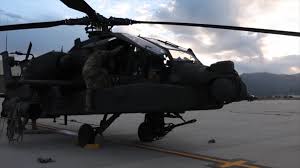
In an earlier salvo on Wednesday, the U.S. struck nearly 20 targets inside Iran in retaliation for Iran’s downing of a U.S. Apache helicopter near the Strait of Hormuz this week.
Iran then launched drones at several U.S. allies in the region. It was the latest flare-up between the two countries, though the Trump administration has insisted the ceasefire is still in place.
For weeks, Iranian and American negotiators have held indirect negotiations on extending their ceasefire, ending a U.S. naval blockade of Iranian ports, reopening the Strait of Hormuz and launching talks on the thorny longer-term question of Iran’s nuclear programme.
But a deal has proven elusive. Iran’s foreign ministry accused the U.S. earlier Wednesday of sending contradictory messages and “damaging the diplomatic process” with the strikes.
Mr. Trump told reporters on Wednesday that “we’re going to hit them hard again today,” accusing Iran of “playing us for suckers” and refusing to strike an agreement with the U.S. He said on social media Iran has “taken too long to negotiate a deal,” and “now they will have to pay the price.”
Defense Secretary Pete Hegseth said the goal of the latest round of strikes is to force Iran to the negotiating table.
“If we need to negotiate with bombs, we’ll negotiate with bombs. And we’re very good at it,” he said.
US ‘Takes Millions of Barrels’ of Iranian Oil, Trump confesses
Already, President Trump has confessed that the United States has been removing “millions of barrels” of Iranian oil from the market, arguing that the action has helped prevent a sharp rise in global energy prices.
Speaking during a public appearance, Trump said the operation had been ongoing for some time but had not previously been disclosed.
“Millions of barrels of oil have come out, and that’s why it’s at $85, $90 a barrel instead of $250.”
The US president said he had refrained from discussing the operation earlier because he did not want to jeopardise it.
“Every night, we took out oil, but now I’m going to tell you because they just figured it out.”
Trump added that he had found it difficult to keep the information private.
“So now that they figured it out, I can tell you it was very hard for me. I wanted to say it so badly, but I didn’t want to ruin it.”
The president also praised the US military, describing it as unmatched globally and crediting it with carrying out the operation.
“We have the greatest military in the world, the toughest military in the world, just the best in every way. Nobody even close.”
Trump said he expected oil prices to fall once the current military operation or conflict comes to an end.
“When it’s over, you will see oil drop to where it was before.”
He did not provide further details about the operation or explain how the oil was being removed, but maintained that US actions had played a significant role in stabilising global crude prices.
