

A Professor of Criminology in the University of Uyo, Aniekan Brown, has called on journalists to avoid the use of stereotyping, inflammatory language, or ethnic profiling in their profession as a way of instilling peace and development in the society.
Prof. Brown, who made the call on Monday, further asked journalists to promote factual, contextual reporting during crises, provide platforms for constructive dialogue and uphold peace journalism principles.
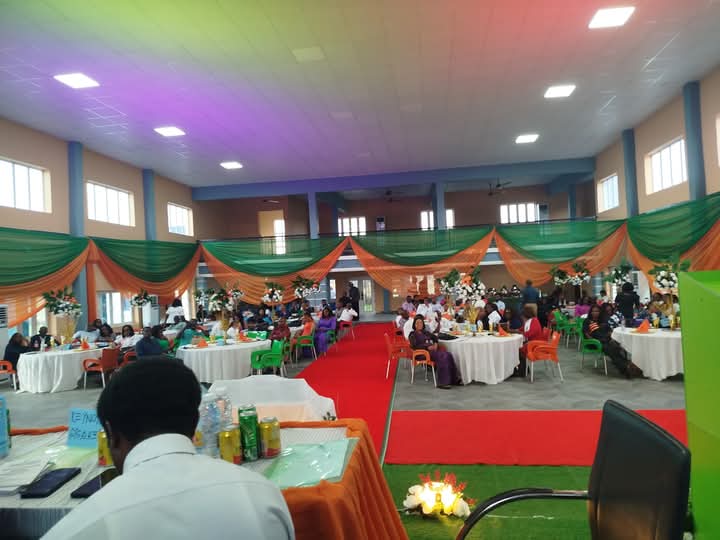
Brown who was a Guest Lecturer during the Information Managers Symposium and launching of the Surveillance Magazine vol.2, organised by the State Information Chapel, Nigeria Union of Journalists, Akwa Ibom Council, Uyo, said as guardians of social stability, they have to de-escalate rather than sensationalise, and verify sensitive information before publishing.
‘‘Traditionally, journalism has been the watchdog of society—exposing truths, upholding accountability, and giving voice to the voiceless.’’
Related News:
- Akwa Ibom Govt, Media Guru Consultant Seal Pact for ultra-modern AKBC studio
- Expand focus of Advocacy group to other health issues- Media Officer enjoins
- ‘Let us Salvage Media in Akwa Ibom Together’ – Journalist urges
The University teacher lamented that the Fourth Estate is under trial, while the profession faces new realities.
Brown observed that the realities include ‘‘Newsrooms under pressure to break stories in seconds, the rise of citizen journalism without gatekeeping, monetized outrage and click-driven content.
‘‘Political actors using the media as battlegrounds, deepfake technologies blurring truth and fiction, and in this environment, professional journalism is no longer just a career—it is a stabilizing force for society.’’
On practical Strategies for journalists in Today’s Environment, he proposed adopting a “Verification First” Culture, using Technology Responsibly, building Strong Ethical Filters in Newsrooms.
Others are engaging in Peace Journal, strengthening Law–Media Collaboration, training Citizen Journalists, promoting Media Literacy in Communities, and promoting Media Literacy in Communities.
To re-engineering Journalism for trust and stability, he called for rebuilding trust and support social harmony, embodying Credibility: rooted in ethics and accuracy; Accountability: To the law, the public, and the profession, and Humanity: Every story impacts a human life.
The Senator representing Akwa Ibom South Senatorial District, Dr. Ekong Sampson, rooted for the pivotal role of journalists in nation-building, describing the professional conduct of Akwa Ibom media community and collaboration with other institutions as a recipe for social stability in the state.
Sampson, speaking on the theme: Journalism, Law and the Ethical Questions: Navigating Professionalism and Social Stability, described journalism as “a very rich intellectual and constantly evolving profession” that demands continuous upgrade an capacity building.
The Chairman, Senate Committee on Solid Minerals Development observed that it was timely and relevant, especially in view of the prevailing insecurity across the country, stressing that one of the most effective approaches to tackling insecurity is through robust collaboration among stakeholders, with the media serving as a bridge.
The National Assemblyman stated that it was of utmost importance for the public and government institutions to embrace and support the media, noting that they possess both the power and reach to influence public perception and promote social cohesion.
Sampson who hailed the State Council of the leadership of the NUJ in the State for its commitment to pursuing big, impactful objectives and for upholding the ethics of the noble profession and particularly described the Chairman of the State Information Chapel as a hardworking leader and a worthy role model who possessed the innovativeness and dedication to strengthen the Chapel’s impact.
Reflecting on the ARISE Agenda of the Pastor Umo Eno led government in the State, Senator Sampson lauded the Governor’s focus on sustainable development and community-focused governance, expressing optimism that with continued collaboration between the government and the media, Akwa Ibom will continue to record remarkable progress.
Delivering a Keynote address, Dean Faculty of Communications and Media Studies, Professor Peter Esuh urged journalists to understand the dual face of their responsibilities, emphasizing that Power of the People is the power of the Press.
Prof. Esuh reiterated the need for balance, fairness and human consideration in reportage insisting that only ethically grounded Journalism can restore order and Public Trust.
In their remarks, the Akwa Ibom State NUJ Chairman, Comrade Nsibiet John and the State Information Chapel Chairman, Edifon Obot thanked journalists for turning out in their numbers for the event, lauding the in-depth knowledge shared by the Senator and the resource persons and optimism that Journalism practice in Akwa Ibom will continually reinforce social stability.
