

Aniefiok Christopher
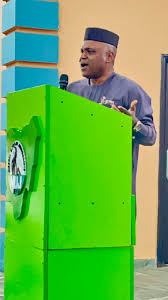
The Akwa Ibom Commissioner for Information, Dr. Aniekan Umanah, has raised alarm over the penetrating influence of Artificial Intelligence (AI) into Journalism, warning journalists against allowing the technology to replace their thinking and editorial judgment.
Umanah, who spoke this in a keynote address at the Leadership Summit for the State Working Committee (SWC) and Chapel Officers mounted by the Nigeria Union of Journalists (NUJ), Akwa Ibom State Council said ‘‘No discussion about the future of journalism can ignore Artificial Intelligence. AI has transformed newsroom operations, accelerated information gathering and expanded access to knowledge.
‘‘Yet, while it is an extraordinary tool, it must never become the master of journalism. Technology should enhance journalistic practice—not replace journalistic thinking. Facts may be generated by algorithms, but wisdom, sound judgment, empathy and ethical responsibility remain uniquely human. Artificial Intelligence can process information, but only responsible journalists can provide context, credibility and conscience.’’
Also read: Ex-Rep Enjoins Journalists to embrace Financial Literacy for Personal Growth
Speaking on the theme: Journalism and Leadership: Balancing Editorial Independence with Government Policies, Umanah observed that ‘‘We are living in an era in which journalism is undergoing perhaps its greatest transformation since the invention of the printing press.
‘‘Artificial Intelligence, digital platforms, citizen journalism, social media influence, economic pressures, misinformation, disinformation and rapidly changing audience expectations are redefining the media landscape. In such an environment, leadership can no longer be reactive; it must be visionary, innovative, courageous and, above all, ethical.’’
He said the theme reminded journalists of the complementary roles of two indispensable democratic institutions—the Government and the Media, pointing out ‘‘Government formulates policies for the development of society, while the media informs citizens, scrutinises public institutions, promotes accountability and stimulates informed public discourse. These roles are different, but they are mutually reinforcing.”
The Commissioner advised the union leaders to reflect on the future especially on five enduring pillars: visionary leadership; editorial independence and press freedom; professional responsibility; strategic partnership; and members’ welfare anchored on institutional sustainability.
According to him, ‘‘These pillars will determine not only the relevance of the NUJ, but also its capacity to remain a respected voice in our democracy. Leadership is far more than occupying an office or holding a title.’’
Umanah reasoned that the defining question before every leader lies in transformational leadership- leadership that inspires rather than intimidates, builds consensus rather than deepens divisions, develops future leaders instead of merely accumulating followers, embraces innovation and pursues solutions instead of amplifying complaints.
Umanah, therefore, suggested institutionalising continuous professional development through the establishment of a Leadership and Media Excellence Academy to equip officers with modern leadership, media management, investigative reporting, digital storytelling, fact-checking, Artificial Intelligence and ethical communication skills.
He again called for developing ‘‘a comprehensive journalists’ welfare and cooperative framework that provides access to affordable housing, cooperative savings, insurance, healthcare support, retirement planning and continuous capacity development. Professional excellence cannot thrive where welfare is neglected, and a structured welfare programme will create sustainable opportunities for partnership between Government, the private sector and the Union.
The Commissioner equally stressed the need to ‘‘give serious consideration to institutionalising the Office of the Media Ombudsman as an independent mechanism through which members of the public can seek clarification, lodge complaints and obtain fair review of genuine grievances. Such an initiative will reinforce public confidence by demonstrating that transparency, accountability and the willingness to correct genuine errors strengthen—not diminish—editorial independence.’’
‘‘Every generation of journalists encounters defining moments. I believe this is ours—the moment to strengthen press freedom, modernise our Union, embrace technology without sacrificing ethics, improve members’ welfare, deepen strategic partnerships, raise professional standards and prepare the next generation of media leaders.
The leadership entrusted to you today is not merely about managing an organisation; it is about shaping the future of journalism in Akwa Ibom State. As you assume this responsibility, remember that leadership is measured not by the offices we occupy, but by the lives we influence, the institutions we strengthen and the legacy we leave behind. Lead with vision, serve with integrity, inspire with humility and collaborate with purpose,’’ he added.
Dr. Onofiok Luke, one-time Speaker of Akwa Ibom State House of Assembly while congratulating the NUJ leadership under Nsibiet John for marking one year in office said ‘‘Leadership is not all about taking an office, but the determination to do things that are acceptable and beneficial to the people. A good Leader must have sound of better decisions and should always show empathy.”
He noted that ‘‘You cannot lead others until you lead yourself especially in the areas of self discipline, self regulation and emotional intelligence., how do you react to anger and provocation?
The ex-member for the House of Representatives urged the union leaders ‘‘Think like a Monk by churning out value based and value driven leadership worthy of emulations and discussion. Don’t be tossed around by every wave of decisions
‘‘It is more beneficial and posterity will judge you well if you write your name in people’s hearts than writing on a magnificent wall that will collapse some day.
‘‘Leaders at all levels must internationally build their leadership capacity to enable them discharge their responsibilities effectively.’’
Also speaking, the Pioneer state treasurer of the union, Comrade Comfort Umanah, called on union leaders to uphold integrity, constitutional governance and financial accountability as essential pillars of effective leadership.
Umanah stressed that every union leader must have a sound understanding of the NUJ Constitution, describing it as indispensable to leadership.
According to her, “For any union leader to effectively coordinate the affairs of the Union and discharge the responsibilities of office, reading and understanding the Constitution of the Union is as indispensable as reading the Bible.”
She warned against the growing tendency among some labour leaders to cultivate artificial lifestyles beyond their legitimate means, noting that such behaviour often results in the mismanagement of union funds and compromises transparency.
Umanah observed that financial honesty remains the bedrock of credible leadership, cautioning that attempts to conceal financial impropriety through delayed audit reports ultimately erode the confidence of members.
Reflecting on the challenges of leading the NUJ in today’s Nigeria, particularly in Akwa Ibom State, she urged union executives to preserve the integrity of the organisation by resisting undue influence from political office holders.
The Managing Director of Redemption FM, Abak, maintained that the NUJ must continue to uphold its role as the “Watchdog of Society” and should never become a propaganda platform for those in authority.
She also advised union leaders to allow the elected Public Relations Officer to perform official communication duties while respecting the professional independence of journalists who choose to hold government accountable.
The veteran journalist further emphasised that leadership requires openness to criticism, divergent opinions and constructive engagement, insisting that accountability, rather than intolerance, strengthens any democratic institution.
Describing struggle as the essence of trade unionism, Comrade Umanah urged the NUJ leadership to always stand in solidarity with legitimate causes championed by labour unions and professional bodies, including the Nigerian Medical Association (NMA) and the Nigerian Bar Association (NBA).
To strengthen the financial independence of the Union, she encouraged members to meet their financial obligations while challenging leaders to develop sustainable internally generated revenue through cooperative societies, investments in Federal Government bonds, fixed deposits and dividend-yielding shares.
Such investments, she posited, would reduce dependence on external patronage and enable the Union to finance its activities without compromising its independence.
Comrade Umanah reminded leaders that political and organisational power is temporary, urging them to leave behind legacies of integrity, accountability and selfless service.
Quoting an Ibibio proverb, Umanah said, Inuen afureke ke anyong, akpọ anyoŋ isọng, underscoring the transient nature of power and the enduring value of honourable leadership.
