
Aniefiok Christopher
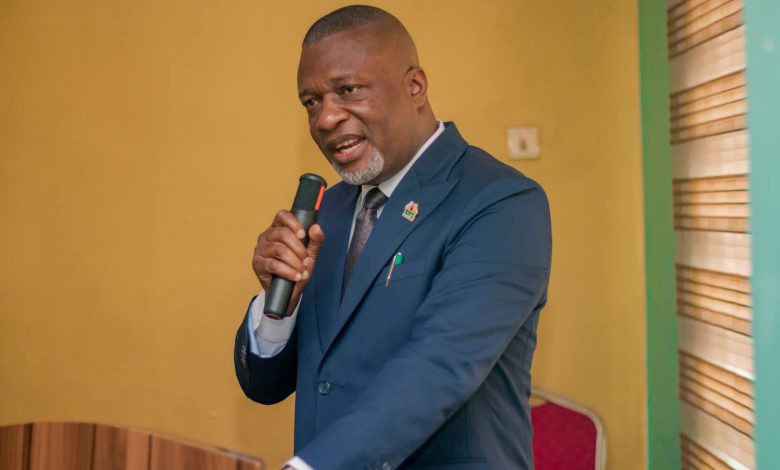
The State Commissioner for Finance, Mr. Emem Bob has flagged gaps in the Akwa Ibom State Taxes and Levies Bill, (Property Tax Bill) 2025, hammering on the need to rework on some critical areas of the draft to benefit the people.
Bob raised some concerns about the bill in his paper presented at the public hearing organised by Akwa Ibom State House of Assembly for stakeholders on the bill entitled: “Bill for a Law to Harmonise and Consolidate the Legal Frameworks Relating to Taxes in Akwa Ibom State and for Other Matters Connected Therewith’’ in Uyo last Wednesday.
‘‘As the supervisory authority over finance-related matters, the Ministry of Finance must not be sidelined in the repeal and re-enactment process. I strongly believe that this oversight role must be retained, maintained, and strengthened, in line with federal practice, to avoid creating parallel structures that could lead to inefficiencies,’’ he pointed out.
He drew attention of the stakeholders to the provisions of the Nigerian Revenue Service Establishment Act, 2025, which clearly establish the oversight role of the Minister of Finance, calling for reinstatement of this status quo omitted in the state bill.
You may also read
- Present new Minimum Wage template- Tinubu directs Finance Minister
- Party Chieftain, Director of Finance in Akwa Ibom freed
- Finance Act 2019 Has Palliatives For The Vulnerable – Finance Minister
Quoting Section 26 of the Law, the Commissioner noted that it ‘‘requires the Service to submit annual reports to the Minister of Finance, who presents same to the Federal Executive Council and National Assembly for transparency and accountability. This provision should be domesticated at the state level.”
According to him, Section 31 ”empowers the Minister of Finance to issue general policy directives to the Service, ensuring alignment with national economic priorities. This policy oversight role should be reflected in the state law.”
Section 4(2) provides that ”the Service may, with the approval of the Minister of Finance, make rules and regulations necessary for effective administration and compliance. This provision should equally be domesticated.’’
He cited that Section 8 stating that the Board of the Service may make rules and issue regulations with the approval of the Minister of Finance, adding ‘‘This should also apply at the state level.’’
On the Board Composition and Governance issues, he explained that Section 7 of the Nigerian Revenue Service Act provides for ex-officio board members, including representatives of the Minister of Finance, National Planning, and the Attorney-General.
Accordingly, he suggested that the state law should include: Commissioner for Finance, Commissioner for Economic Planning, Attorney-General of the State and Commissioner responsible for Digital Economy (given the relevance of TSA and Ibom E-Remit).
‘‘The inclusion of directors from within the Service should not be at the expense of relevant MDAs, as such inclusion does not exist at the federal level.
‘‘At the federal level, all board members except the Executive Chairman and Executive Directors serve on a part-time basis. The state bill should align accordingly: Executive Chairman, three appointed members (one per senatorial district), and Board Secretary should be full-time,’’ the Commissioner stated.
Ex-officio members should be part-time.”
Speaking on the appointment of Secretary to the Board and establishment of a Legal Directorate, Bob said ‘‘the federal law allows the Secretary to the Board to be a lawyer, chartered accountant, or chartered secretary, not below the rank of Assistant Director. The state bill should not limit this role to lawyers alone.
‘‘The Office of the Board Secretary should be separate from the Legal Adviser, as practised at the federal level.
‘‘A distinct Directorate of Legal Services should be established within the Service.’’
Commenting on funding provisions, he said since the state bill proposes a funding range of 10% to 15% of total revenue collected and the federal law provides 4% of total revenue (less petroleum royalties), Bob, however, opined ‘‘We recommend a downward review to ensure sustainability and fiscal balance.’’
The Finance boss called on the legislators to rework on the draft to ensuring Ministry of Finance is properly aligned, integrated, and strengthened in the new law to guarantee effective oversight, accountability, and efficient revenue administration in the state.
