

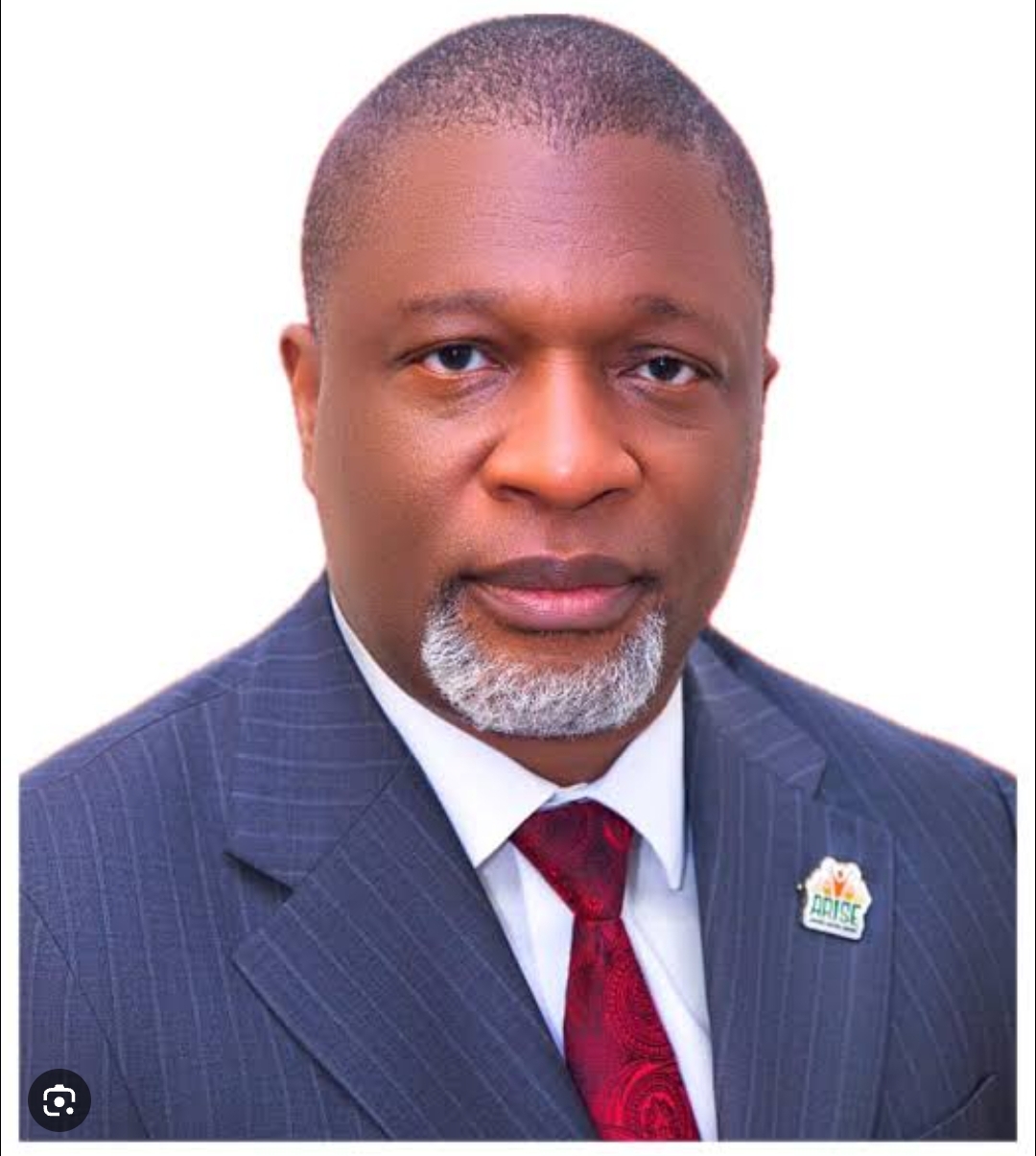
Aniefiok Christopher
The Akwa Ibom State Commissioner for Finance, Mr. Emem Bob, has come under heavy criticisms after deliberately citing some sections of the Nigerian Revenue Service Establishment Act, 2025 to replace some provisions of the Nigeria Tax Administration Act, 2025.
The action raised eyebrows within government and legal circles, with critics questioning a Commissioner as a key figure in the revenue generation circle for such deeply concerned advocacies, misapplying some self-serving but outdated provisions of Nigerian Revenue Establishment Act enacted in January 2025 in place of some provisions of Akwa Ibom State Taxes and Levies Bill, (Property Tax Bill) 2025 domesticated from Nigeria Tax Administration Act, 2025 with January 1, 2026 as implementable date.
Analysts say the action blurs constitutional boundaries and could undermine the legal foundation of the state’s property tax framework.
Also read: Finance Boss Flags Gaps in Akwa Ibom State Taxes and Levies Bill, (Property Tax Bill) 2025
As debate intensifies, stakeholders are calling for clarity and accountability, warning that misapplication of tax laws could expose the state to legal challenges and erode public confidence in its fiscal reforms.
Bob sparked the controversy and confusion in a paper he presented at the public hearing organised by Akwa Ibom State House of Assembly for stakeholders on the bill entitled: “Bill for a Law to Harmonise and Consolidate the Legal Frameworks Relating to Taxes in Akwa Ibom State and for Other Matters Connected Therewith’’ in Uyo last Wednesday.
Under NRS, he said Section 4(2) provides that ”the Service shall, with the approval of the Minister of Finance, make rules and regulations as, in its opinion, are necessary or expedient for giving effect to the provisions of this Act and for the the due administration of its provisions, and such rules and regulations shall provide compliance requirements and may include consequences for non-compliance in line with relevant laws.’’
The Commissioner accepted the domestication of the provision at the state level.
Quoting Section 26 of the NRS, the Commissioner noted that it ‘‘The Service shall, not later than 30 June each year submit to the Minister of Finance, a report of its activities during the immediate preceding year and shall include in such report the audited accounts of the Service. The Minister shall present same to the Federal Executive Council and National Assembly.’’
The Commissioner affirmed that the provision be domesticated as a state law.
According to him, Section 31 ”The Minister of Finance may, after consultation with the Executive Chairman, give written directions to the Service on general policy matters and the general Service shall comply with such directions….
The Commissioner said ‘‘This policy oversight role should be reflected in the state law.”
In Section of the Law, the Service states: ‘‘(7) The Board shall consist of –
(a) the Executive Chairman who shall be the Chairman of the Board; and
(b) the following ex-officio members –
(v) a representative of the Minister responsible for Finance not below the rank of a Director,
(iv) a representative of the Minister responsible for National Planning not below the rank of a Director
(iii) a representative of the Attorney-General of the Federation not below the rank of a Director,
(iv) a representative of the Minister responsible for Petroleum and Gas Resources not below the rank of a Director,
(v) the Governor of the Central Bank of Nigeria or a representative not below the rank of a Deputy Governor,
(vi) the Chairman of the Revenue Mobilisation} Allocation and Fiscal Commission or a representative who shall be a Commissioner representing one of the States of the Federation,
(vii) the Comptroller-General of the Nigeria Custom Service or a representative not below the rank of Deputy Comptroller-General,
(viii) the Registrar-General of the Corporate Affairs Commission or a representative not below the rank of a Director, and
(viii) Executive Directors appointed by the President under this Act.
(2) Notwithstanding the provisions of subsection
(1) the President may appoint six members to represent each geopolitical zone of Nigeria on the Board, subject to such individuals possessing academic or professional qualifications and expertise in Taxation, Accountancy, Economics or Fiscal Policy, Human Resource Management, or Information Technology, provided that such appointments shall ensure diversity of academic or professional qualifications and expertise in the listed fields.
(3) All members of the Board, except the Executive Chairman, and the Executive Directors shall serve on a part-time basis.
(4) The supplementary provisions set out in the First Schedule to this Act shall have effect with respect to the proceedings of the Board and other matters mentioned therein.
At the State level, the Commissioner suggested domestication of law to the state law to include: Commissioner for Finance, Commissioner for Economic Planning, Attorney-General of the State and Commissioner responsible for Digital Economy (given the relevance of TSA and Ibom E-Remit).
‘‘The inclusion of directors from within the Service should not be at the expense of relevant MDAs as such inclusion does not exist at the federal level.
‘‘At the federal level, all board members except the Executive Chairman and Executive Directors serve on a part-time basis. The state bill should align accordingly: Executive Chairman, three appointed members (one per senatorial district), and Board Secretary should be full-time,’’ the Commissioner stated.
Ex-officio members should be part-time,” Bob added.
Under the Nigeria Tax Administration Act, 2025, the Law states in ‘‘89.(1) There is established for each State Service a Management Board (State Board) which shall have overall supervision of the State Sefvlce as specified under this Act.
(2) A State Board shall comprise –
(a) the Executive Chairman of the State Service who shall be the Chairman of the State Board;
(b) directors from within the State Service;
(c) a director from the State Ministry of Finance;
(d) three other persons appointed by the State Governor on their personal merit, each representing a Senatorial District in the State, who shall possess relevant experience and knowledge in taxation and other related fields; and
(e) the Legal Adviser to the State Service, who shall serve as Secretary to the Board.
(3) The Secretary of the State Board shall summon a meeting of the State Board whenever the business requires its attention or on the request of the Chairman or any member of the State Board.
(4) Five members of the State Board, one of whom shall be the Chairman or a Director, shall constitute a quorum.
(5} A majority decision of the members on any matter obtained by the Secretary in written correspondence shall be treated in all respects as it were a decision of the State Board in an actual meeting unless any member has requested the submission of the matter to such meeting.
