
By Aniefiok Christopher
The Federal Government is owing Ibom Power Company in Akwa Ibom State over N28 billion as at July 2025, thus crippling its operations.
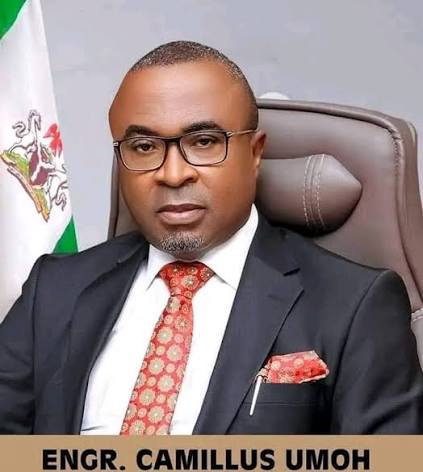
Speaking during an exclusive chat with journalists in Uyo at the weekend, the Acting Managing Director of, Engr Camillus Umoh said this was part of about N6 trillion owed power generation companies (GENCOS) by the Nigerian government.
Umoh admitted that the liquidity crisis in the nation’s power sector has taken a tow on the company, refuting claims of a drop in the company’s generating capacity.
“Presently, because of the unfortunate liquidity issue in the Nigerian electricity supply industry, there’s not been gas supply to Ibom Power, despite the fact that our two turbines are very much available to generate,” he hinted.
Related news:
- Akwa Ibom owes Accugas N40b for gas supply to Ibom Power Company
- Akwa Ibom to ruffle feathers in Ibom Power Company
- Exclusive: Rumbles in Ibom Power Company Ltd over alleged “Illegal Dealings” (1)
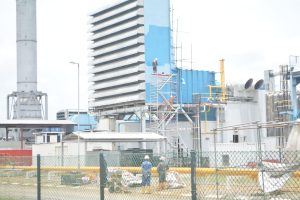
According to him, the last endurance check carried out by the Nigerian Electricity Regulatory Commission (NERC) indicated that its biggest Gas Turbine (GT3) alone generated about 105 megawatts, out of the three turbines with a combined capacity of 191 megawatts.
“So why has Ibom Power not generated, again? I reiterate that due to no fault of Ibom Power, but because of the combined issues like lack of liquidity in the ecosystem, lack of gas supply to the GENCOS, hence we’ve not been able to generate” he quipped.
The former Commissioner for Power explained that the liquidity crisis has posed serious threat to the nation’s power sector, a situation that has created lots of problems for most players in the sector’s value chain, including the non-supply of gas from a third party contractor, Acugas Savannah.
Recall that the Nigerian Electricity Regulatory Commission (NERC) had months ago revealed that GenCos have received less than 40 per cent of the value of their 2024 invoices, leading to severe liquidity crisis, which has left them struggling to meet financial obligations, sustain operations, and procure essential spare parts.
The M.D expressed concern that most electricity consumers in Nigeria are illegally bypassing their prepaid meters and consuming power without payment, thereby compounding the problems in the sector, as utilities already struggling with poor revenue collection, now face widespread energy theft and issues of vandalism.
‘‘Meter bypassing is undermining the financial stability of the sector. To guarantee optimum electricity supply, Nigerians must be willing to play active roles in the sector and make deliberate efforts to curb theft and leakages within the system.
“Just this morning, we had a meeting with the Presidential Power Sector Debt Recovery Committee, headed by the Minister of Finance and Coordinating Minister of the Economy, on the fact that GENCOS, of which Ibom Power is one of them, are collectively owed N4 trillion as at December 2024, and Ibom Power alone is owed about N28 billion.”
Speaking further, he said the money as at July 2025 has risen to about N6.3 trillion, wondering which sector in the Nigerian economy would be owed that quantum of money and are still expected to function optimally in business.
“Whilst we completely connect with the painful realities of the epileptic power situation as it is, but because it is a collective issue, not just the evidenced direct players alone, but with the handiwork of charlatans among us in our communities, who repeatedly vandalize our facilities, we are suffering a double jeopardy” he lamented.
He, however, enumerated that communities in Ikot Abasi, Ikot Ekpene and Obot Akara are out of power for weeks because electricity towers, some linked to critical units that ought to be 24/7 on power, have been vandalized, thereby creating more problems for the system.
“Gentlemen, it’s a very pathetic situation, a situation that is not desired in this country, but that’s the unfortunate, aggregated situation we’ve found ourselves as citizens of Nigeria. It is a big pain, an undesired situation that is very painful, because you have salaries to pay, you have physical elements to run with,” the Acting M.D explained.
According to him, experienced personnel from Akwa Ibom, which was the first state that built its own power generating plant, has exported her much needed manpower to other plants in the country, because of the situation the company had found itself. “At least four of the nation’s generating companies are manned by personnel trained and had earlier carrier start at Ibom Power.”
The situation, he noted, has prevented investors who would have come into the power space to make a name, to change conductors, change the cables, towers and transformers, cannot make that system, because you cannot continuously fund a system that cannot guarantee you a return on investment.
Engr Umoh stated that the new State law on electricity has made it mandatory for all new buildings that must be connected to the national grid, must of necessity have a metre, because that’s the only fiscalisation instrument and equipment that guarantees the return of investment.
To address the problems, the M.D who spoke in company of Ibom Power’s Administrative Manager, Ms. Imaobong Akpabio, said the State Government during her first electricity summit, has already developed a roadmap, action parties identified and timelines agreed upon and further steps taken including the constitution of the State Regulatory Electricity Committee to commence the recruitment process.
He listed the commitment of the State Government to tackling the issues in the sector as a boost to surmounting the power challenges in the State, adding that such means a lot the future of steady power supply in the State.
Describing Power as a condition precedent for development, the former Commissioner who has spent nine months on the saddle as the M.D of Ibom Power, explained that power has a multiplier effect on all other forms of development indices like education, health, and good standard of living.
To him, the power problems in State are surmountable, all that is required is patience, collaboration and sincerity of purpose and that starts with the citizens owning electricity metres in their houses, because that’s the only way to guarantee that the payments for electricity are returned back to the investment.
Citing the example of the telecom sector, where mobile networks installations had commenced from mega cities down to the rural areas, Engr Umoh said same applies to power, that is expected to radiate from users that can pay premium prices to those at the rural areas.
He explained that electricity infrastructures like the Aba-Itu Line, constructed 45 years ago have been overwhelmed by the developments in Akwa Ibom State, which recently marked her 38th anniversary, emphasizing the need for an extra-ordinary maintenance of the facilities, which has worst still been repeatedly touched by vandals.
This, he said, is necessary to ensure that the lines can supply power the way it was intended. According to him, some of these issues are currently being tackled, but in a very slow pace due largely to the illiquidity of the system.
He used the occasion to call on the citizens to be disciplined and participate fully in protecting government infrastructure including transformers among other equipment.
