

…Back Six-Month Paid Maternity Leave, Ban on Unbranded Edible Oil
Catherine Akpan
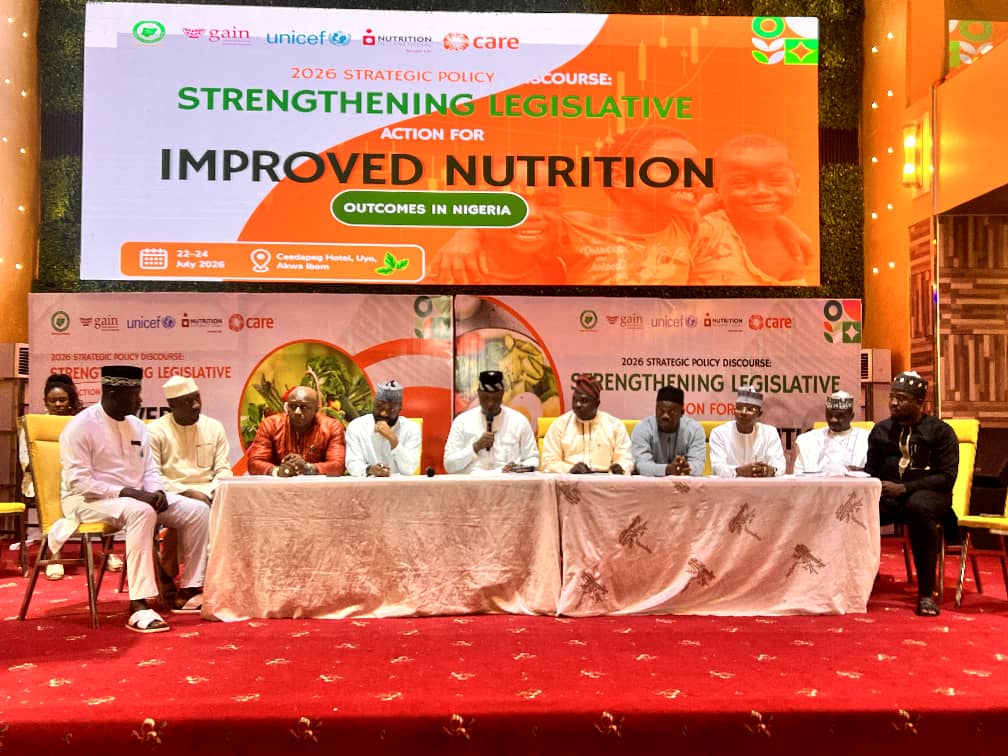
Participants have resolved to back legislative and fiscal measures aimed at addressing the growing burden of malnutrition in Nigeria, endorsing key reforms including a six-month paid maternity leave policy and a nationwide ban on unbranded, unfortified edible oil.
The resolutions, reached at the end of a three-day Strategic Policy Dialogue on Advancing Nutrition Priorities, held in Uyo, Akwa Ibom State, were further resolved by participants to be committed to stronger policy frameworks and sustainable financing mechanisms to improve nutrition outcomes across the country.
The meeting was convened by the Civil Society Scaling-Up Nutrition in Nigeria (CS-SUNN), in collaboration with UNICEF and other development partners, bringing together lawmakers, policymakers, government officials, civil society organizations, and development partners from six focal states – Kano, Kaduna, Niger, Lagos, Nasarawa, and Bauchi.
Also read: Lawmakers, Stakeholders Unite Against Malnutrition in Nigeria
The communiqué, unanimously adopted at the close of the meeting, was endorsed by legislative leaders, government officials, and stakeholders, including the Chairperson of the CS-SUNN Board of Trustees, Dr. Mbang Adah, and the Speaker of the Bauchi State House of Assembly, Dr. Abubakar Suleiman.
Participants acknowledged that malnutrition has become a major public health challenge and a significant impediment to Nigeria’s human capital development and economic growth.
They stressed that addressing the crisis requires coordinated legislative action, stronger fiscal commitments, and effective policy implementation.
The stakeholders emphasised that combating malnutrition demands a synchronized, multi-sectoral approach involving the health, agriculture, education, and social protection sectors. They also endorsed the initiative to deepen nutrition governance across Nigeria’s 774 Local Government Areas as a strategic framework for harmonizing resources and interventions nationwide.
According to the communiqué, the engagement was designed to strengthen the knowledge and capacity of state legislators, relevant legislative committees, and public officials to better understand nutrition evidence and effectively discharge their budget review and oversight responsibilities.
Participants called for the regular production and dissemination of objective analyses on nutrition financing, budget allocations, fund releases, expenditures, and implementation gaps to promote transparency, accountability, and sustainable domestic financing.
They also recommended inclusive stakeholder consultations and evidence-based discussions on maternity protection, institutional arrangements for nutrition within Ministries, Departments, and Agencies (MDAs), and the effective implementation of food fortification standards.
Delivering a keynote address, the Chairman of the House of Representatives Committee on Nutrition and Food Security, Dr. Chike Okafor, described malnutrition as a greater economic threat than oil pipeline vandalism and power outages combined.
He noted that nutrition should not be viewed merely as a social welfare issue but as a critical economic investment.
Quoting World Bank estimates, Dr. Okafor stated that Nigeria loses up to $2.5 billion annually to malnutrition through reduced productivity, increased healthcare costs, and lost human potential.
According to him, every $1 invested in nutrition generates about $16 in economic returns, resulting in healthier children, improved educational outcomes, a more productive workforce, and accelerated economic growth.
Dr. Okafor lamented that 32 percent of Nigerian children under five are stunted, 7.1 percent are wasted, while 58 percent of women of reproductive age suffer from anaemia, underscoring the urgent need for decisive legislative intervention.
Delegates reaffirmed that adequate nutrition is a fundamental human right and an essential prerequisite for national development, health equity, and improved cognitive outcomes. They equally reiterated that investments in nutrition rank among the highest-return development interventions globally.
The retreat reviewed existing nutrition policies and identified weak implementation, inadequate statutory enforcement, and poor institutional coordination as major obstacles to progress.
One of the key legislative priorities adopted was urgent enactment of a six-month paid maternity leave policy for both public and private sector workers to support optimal Infant and Young Child Feeding (IYCF) practices, particularly exclusive breastfeeding.
Participants also resolved to enact stricter legal measures prohibiting the production, sale, and distribution of unbranded and unfortified bulk edible oil, citing serious public health concerns including heavy metal contamination, carcinogenic substances, and micronutrient deficiencies.
The dialogue also highlighted the persistent funding gap for nutrition interventions, noting that current budgetary allocations remain inconsistent, grossly inadequate, and often delayed.
To address the financing challenge, states were urged to leverage the Child Nutrition Fund (CNF) – a one-to-one counterpart funding mechanism supported by UNICEF- o procure life-saving nutrition commodities such as Ready-to-Use Therapeutic Food (RUTF) and Multiple Micronutrient Supplements (MMS), while promoting innovative resource mobilization strategies for community-level nutrition programmes.
Major challenges identified by participants included severe underfunding, worsening malnutrition indicators across the focal states, the absence of fully staffed nutrition departments within key MDAs, delayed cash releases, poor budget implementation, and the underutilization of appropriated nutrition funds.
The stakeholders also expressed concern over the continued sale of adulterated and unbranded bulk edible oil without quality assurance, fortification, or basic health safety standards, as well as the absence of comprehensive state nutrition legislation to guarantee sustainable nutrition governance.
To reverse these trends, lawmakers and policymakers committed to increasing and ring-fencing at least five percent of state budget allocations for nutrition interventions. They also pledged to integrate nutrition projects into constituency development initiatives, sponsor and pass legislation on six-month paid maternity leave, and strengthen oversight to ensure effective implementation.
Other resolutions adopted include phasing out unbranded bulk edible oil, enforcing mandatory food fortification standards, securing the timely release of counterpart funds required to access the Child Nutrition Fund, and institutionalizing robust monitoring mechanisms to ensure the efficient utilization of nutrition budgets.
The communiqué further recommended that, within the next 12 months, relevant regulatory agencies should conduct quarterly inspections and market surveillance of edible oil manufacturers, importers, repackagers, and major markets. It also called for the publication of compliance reports on vitamin A fortification, packaging, labelling, and traceability at least twice annually, alongside prompt corrective actions against non-compliant operators.
The communiqué concluded with a firm commitment to increase domestic funding for nutrition, institutionalize the Child Nutrition Fund, advance six-month paid maternity leave policies, strengthen legislative accountability, integrate nutrition into constituency projects, and establish Legislative Nutrition Champions to sustain nutrition advocacy within state development agendas.
The three-day strategic dialogue featured presentations from officials of UNICEF, Nutrition International, CARE International, members of the National and State Assemblies, civil society organizations, and other development partners committed to improving nutrition outcomes in Nigeria.
