


Israel Umoh
A popular clergyman in Àkwa Ibom, Rev. Ntia I. Ntia, has come to the rescue of Government Technical College, Ewet in Uyo Local Government Area of the state.
Rev. Ntia, the Senior Pastor of Full Life Christian Centre, Uyo in Àkwa Ibom State, wanted to commemorate his 53rd birth anniversary in a remarkable way.
So, he wrote and got permission to renovate the dilapidated classroom block in the college.
Permission granted, the man of God deployed his financial resources to the school and in two weeks, the classroom block was turned to brand new.
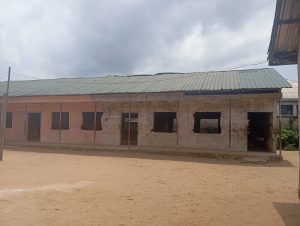
Before the renovation, the block had no roof, no desk, no student nor teacher. Its blockwork was defaced and its floor became sandy.
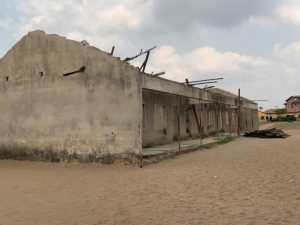
On Thursday, March 26, 2026, he accompanied by his wife, Ukamaka and some prominent church members moved in and commissioned the renovated classroom in the school that is in the heart of the state capital.
The school sited along Nwaniba Road, Uyo is adjacent to Dominic Utuk Avenue, a major artery that leads to Wellington Bassey Way end that bursts into Hilltop Mansion, the seat of power in the state.
The school is a child of changing circumstances having undergone undue metamorphosis in the hands of different managements and successive state governments.
Established in 1968 as Vocational College in the defunct South Eastern State, the name was changed to Industrial Trade Centre in 1975 in the then Cross River.
In 1979, it was changed to Government Technical School and in 1986 was Government Vocational School.
Eventually, the school was renamed Government Technical College, Ewet in 1999 and the name remains till date.
The school expected to train junior technicians to meet the middle manpower need of the state is a shocking irony of infrastructural decay despite its long years of establishment.
Again, the college is characterised by dilapidated buildings, collapsing roofs, and non-functional workshops.
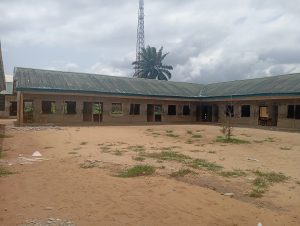
Straightnews team visited the school on Friday, 27 March to see the state of infrastructural decay in the school.
The once-glorious college with students population of more than 3,000 is an eyesore and is in ruins, considering the deplorable learning facilities and dilapidated classroom blocks adorning the compound.
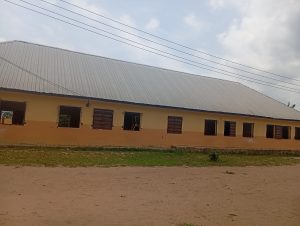
Classroom blocks of Junior Technical (JT 2 and 3) and Senior Technical (ST 2 and 3) including the school’s main assembly hall look like glorified village hall.
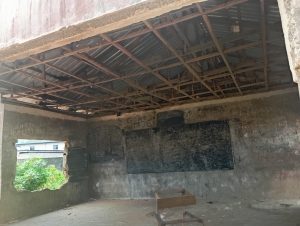
In all, the classrooms are bedevilled with broken floors, no window, no door and broken sometime dearth of desks and writing materials.
From the Principal, Vice Principals and some teachers, mum is the word. No one was ready to talk to the press for fear of losing his or her job or being demoted or being posted to a distant or remote school outside the metropolis, despite the unconducive teaching and learning environment in the school.
However, one teacher, who refused to mention his name for fear of being with hunted, volunteered to speak to us.
“The school has one diesel generator, but it was vandalised by thieves some years ago. Neither PTA nor the government is willing to repair it. Owing to high cost of diesel, the school could not power it. When there is no electricity, the compound is thrown into darkness. No provision of solar power facilities in the school to light everywhere when there is blackout,” he cried out.
“Apart from this,” he mentioned “dilapidated staff quarters is another problem. In the quarters, only three staff members lived there until the building became uninhabitable. The worsening aspect is that erosion menace is threatening the compound. Once it rains, the staff quarters is heavily flooded as there is no channel for the rain water to flow out. Initially, the water was channelled through the primary school, which parcel of land was severed from the school for construction of the primary section, thus forcing water to settle in a section of the school compound.”
A student who did not want his name in the print lamented the sufferings facing them in their studies.
“In most classes, the desks are insufficient. Some of us usually squat during lessons. As you can see, there are no windows and no doors in most classrooms in the school. During rainy or windy period, rain splashes into classes and wind blows out our writing materials, thus soaking us or our books.
“On the workshops, we have six in the school, but teaching and learning materials are lacking. During practical lessons, we go out to borrow tools from mechanics or electricians for use.
“At times, people hear that some of our students are stubborn or fight. Why will they not fight when they are idle and have no tools to use and study. The situation is unbearable. We hereby appeal to state government to come to our aid,” he added.
For the 2026 fiscal year, the Akwa Ibom State government initially proposed about ₦1.39 trillion but ₦1,584,271,856,630 was finally approved and signed into law.
This shows that Capital expenditure is ₦1.167 trillion or 75 per cent while Recurrent expenditure is ₦416.6 billion or 25 per cent.
For education sector, ₦31.6 billion or 2 per cent of the total budget was approved.
This figure covers education sub-sectors, including primary, secondary and tertiary institutions.
Most analysts saw the budgetary provision to education sector as grossly inadequate due to numerous challenges confronting schools in the state.
A visit to many secondary schools and technical colleges paints grim picture of deficit in infrastructure and makes the future look bleak when it comes to qualitative education.
For example, Akwa Ibom boasts of Government Technical College, Abak; Government Technical College, Ewet (Uyo); Government Technical College, Ikot Ubo (Nsit Ubium); Government Technical College, Ikot Osurua (Ikot Ekpene); Government Technical College, Oron; Union Technical College, Ikpa (Eket) snd Community Technical College, Ikot Akata (Mkpat Enin).
However, investigation shows that technical colleges in the state are “poorly funded” and lack adequate training facilities and equipment.
It is further discovered that many technical colleges are facing outdated or insufficient workshop equipment, dilapidated infrastructure in some schools, shortage of qualified technical instructors, and limited practical training opportunities (students often learn more theory than hands-on skills).
Consequently, technical and vocational skills training such as electrical work, mechanical trades, building construction, and related fields are in dearth.
Apart from Government Technical College, Ewet, other technical colleges are in dire straits prompting the a call for the state government to brace up to reviving technical education to enhance technological development in the state and the country at large.
