

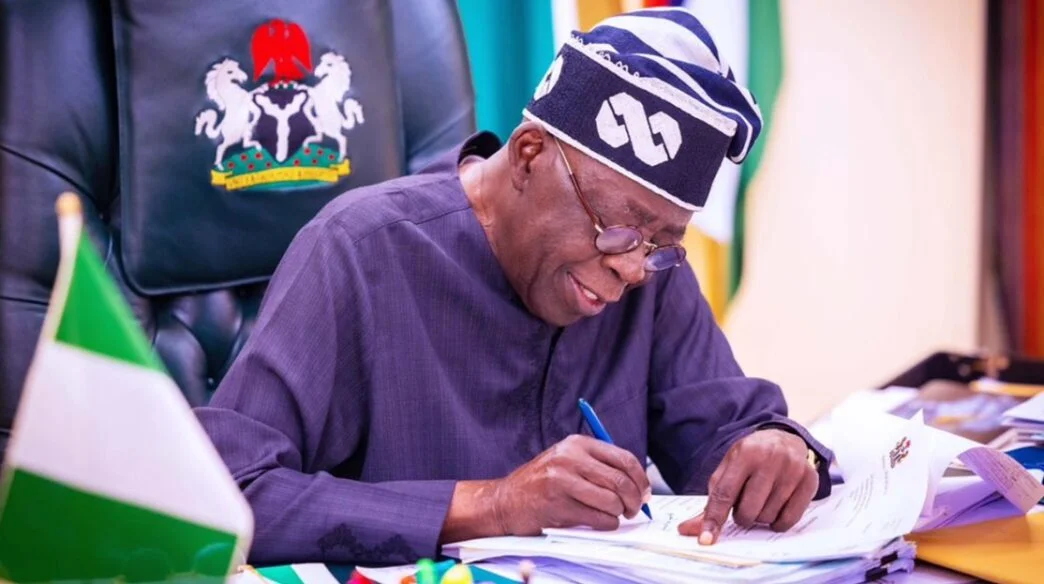
The Nigerian Government granted Presidential pardon to 175 persons for different grave offences.
However, pardon for prisoners convicted hard drugs, murder, fraud, misappropriation of funds, sedition, illegal mining and murder has drawn the ire of many.
Normally, the Prerogative of Mercy in Nigeria is a constitutional power, not a separate law with an enactment date as provided under the Constitution of the Federal Republic of Nigeria, 1999 (as amended), specifically: Section 175 – for the President (Federal offences) and Section 212 – for State Governors (State offences).
Also read: PDP Chieftain Slams Tinubu over Independence Day Parade, March past cancellation
Former Vice President Atiku Abubakar and the African Democratic Congress (ADC) shelled President Bola Tinubu for granting pardon to some persons serving prison terms for drug related offences.
They said the action was capable of emboldening criminals and increasing criminality in the country.
The ADC, in a statement by its interim national publicity secretary, Bolaji Abdullahi, said the President’s action undermines the country’s anti-drug efforts and encourages crime, as well as further tarnishes Nigeria’s image in the international community.
The Federal Government had, last week, announced presidential pardon for 175 convicts, serving various prison terms, including those convicted for drug trafficking and related crimes.
The ADC contended that the pardon amounted to abuse of the President’s prerogative of mercy to grant clemency to persons serving prison terms for drug related offences, especially when most of them have barely served two terms.
“The men and women in these agencies have laboured under enormous risk and pressure to protect the public from the scourge of addiction, trafficking and related crimes that carry some of the harshest penalties in Nigerian law, precisely because of their devastating impact on public health, youth development and national security.
“Granting clemency to individuals convicted under such laws, therefore, strikes at the very foundation of Nigeria’s legal and moral stance against narcotics and makes a mockery of the gallant efforts of officers fighting the battle against narcotics and illicit drugs,” the ADC stated.
Furthermore, it noted that, “these pardons also send reverberations beyond Nigeria’s borders. They undercut our standing among global partners in the fight against drug trafficking and give the unfortunate impression to the rest of the world that our country, under President Tinubu, has particular sympathy for drug dealers and that Nigeria is a risk-free jurisdiction for traffickers in narcotics.
“Make no mistake, with this mass clemency for drug dealers, President Tinubu and the APC are redefining the standard of morality in our country. They are gradually transforming Nigeria into a country where anything goes, where even the worst of crimes attract no punishment beyond a few months of inconvenience for the criminal to, by their assessment, show remorse.”
In the same vein, former Vice-President Atiku Abubakar has also stated that the President’s action is not only reckless but also emboldens criminality.
In a post on his social media platforms, Atiku said the development as expected has “provoked outrage across the nation.”
He argued that, “A presidential pardon is meant to symbolise restitution and moral reform. Instead, what we have witnessed is a mockery of the criminal justice system, an affront to victims, a demoralisation of law enforcement and a grave injury to the conscience of the nation.
“Clemency must never be confused with complicity. When a government begins to absolve offenders from the very crimes it claims to be fighting, it erodes the moral authority of leadership and emboldens lawlessness.
Grave Offenders
Herbert Macaulay
In 1913, Macaulay was tried and convicted by the British colonial authorities for misappropriation of funds from an estate for which he acted as executor.
He was sentenced to two years’ imprisonment.
The fairness of the trial has been questioned by historians: issues cited include that the prosecuting counsel may have had a personal vendetta (he was Macaulay’s tenant), that some processes were allegedly unjust (e.g. difficulties obtaining bail, assessors’ decisions), and that there was no complaint from the estate’s beneficiaries.
Macaulay was also convicted of sedition in 1928, related to his newspaper’s criticism during the Eleko of Lagos agitation.
Major s. A. Akubo
Major S. A. Akubo was convicted in 2009 and sentenced to life imprisonment at the Katsina Custodial Centre for illegally removing 7,000 assorted weapons.
In the recent clemency exercise by President Tinubu, his sentence was commuted to 20 years on account of good conduct and remorsefulness.
Maryam Sandra
She was convicted on 27 January 2020 by an FCT High Court of culpable homicide in the death of her husband, Bilyaminu Haliru Bello.
The event occurred on 18 or 19 November 2017, early morning (approx. 3:50 a.m.), at their residence in Wuse, Abuja. Maryam allegedly stabbed her husband with a broken bottle, leading to his death.
The defence argued alternative explanations: that the death was accidental (he tripped and fell on a broken shisha pot during an argument) and pointed to lack of certain direct evidence (e.g. absence of confession, no autopsy, etc.).
The doctrine of last seen was relied on by the judge — i.e., Maryam was the last person seen with the deceased.
The sentence of death by hanging was affirmed by the Court of Appeal.
In the pardon / clemency statement: Maryam Sandra, aged 37, had spent six years, eight months at Suleja Medium Security Custodial Centre. Her family’s plea and reasons cited for clemency included good conduct, remorse, the interests of her two children, and transformation in her conduct.
Drug Offenders Pardoned or Granted Clemency
| Name | Age / Details | Offence / Sentence / Notes |
| Aluagwu Lawrence (47) | – | Sentenced in 2015 for selling Indian hemp; pardoned. |
| Ben Friday (60) | – | 3 years or ₦1.3 million fine for marijuana (2023); pardoned. |
| Oroke Micheal Chibueze (21) | – | 5 years (cannabis sativa) in 2023; pardoned. |
| Kelvin Christopher Smith (42) | – | 4 years for importing cocaine (2023); pardoned. |
| Azubuike Jeremiah Emeka (31) | – | 5 years (or ₦3 million fine) for importing cocaine (2021); pardoned. |
| Akinrinnade Akinwande Adebiyi (47) | – | 3 years for dealing in Tramadol (2023); pardoned. |
| Ahmed Adeyemo (38) | – | 15 years for cannabis; had served 9 years 5 months at Kirikiri; pardoned. |
| Adeniyi Jimoh (31) | – | Sentenced in 2015 to 15 years for drugs; served about 9 years; pardoned. |
| Seun Omirinde (39) | – | Same as above: 15 years (2015) for drug offence; around 9 years served; pardoned. |
| Nweke Francis Chibueze (44) | – | Life sentence at Kirikiri for cocaine; pardoned. |
| – | Azubuike Jeremiah Emeka (31) years (or ₦3 million fine) for importing cocaine (2021); pardoned. |
| Akinrinnade Akinwande Adebiyi (47) | – | 3 years for dealing in Tramadol (2023); pardoned. |
| Ahmed Adeyemo (38) | – | 15 years for cannabis; had served 9 years 5 months at Kirikiri; pardoned. |
| Adeniyi Jimoh (31) | – | Sentenced in 2015 to 15 years for drugs; served about 9 years; pardoned. |
| Seun Omirinde (39) | – | Same as above: 15 years (2015) for drug offence; around 9 years served; pardoned. |
| Nweke Francis Chibueze (44) | – | Life sentence at Kirikiri for cocaine; pardoned. |
Drug Offenders Whose Sentences Were Reduced
| Name | Original Sentence / Offence | New Sentence / Reason
|
| Ifenna Kennechukwu (42) | 20 years for cocaine import (2015) | Reduced to 12 years (remorse, vocational skills). |
| Mgbeike Matthew (45) | 20 years for 3.10 kg cocaine import (2013) | Also reduced to about 12 years. |
| Patrick Mensah (40) | 17 years for drug trafficking | Reduced to 11 years. |
| Obi Edwin Chukwu (43) | 15 years for drugs (2017) | Reduced to 10 years. |
| Tunde Balogun (32) | 15 years for drugs (2015) | Reduced to 10 years. |
| Lima Pereira Erick Diego (27) | 15 years (or ₦20 million fine) for drug import (2017) | Reduced to 10 years. |
| Uchegbu Emeka Michael (37) | 15 years (or ₦20 million fine) for drug offence (2017) | Reduced to 10 years. |
| Salawu Adebayo Samsudeen (46) | 15 years for drugs (2016) | Reduced to 10 years. |
| Napolo Osariemen (61) | 15 years for 2 kg Indian hemp (2022) | Reduced to 7 years. |
| Odeyemi Omolaram (65) | 25 years for drugs (2017) | Reduced to 12 years. |
| Gabriel Juliet Chidimma (32) | 6 years for cocaine (2022) | Reduced to 4 years. |
| Dias Santos Marcia Christiana (44) | 15 years for cocaine import (2017) | Reduced to 10 years. |
Examples of Illegal Miners
A group of 40 individuals convicted in 2024 for unlawful mining (each given about 3 years) received mercy.
Specific names include Babangida Saliu (35), Adamu Sanni (39), Abdulkarem Salisu (30), Abdulaziz Lawal (18) among others.
Fraudsters / White‑Collar Convicts
Dr. Nwogu Peters, age 67: was serving a 17‑year jail term for fraud; sentenced in 2013.
Anastasia Daniel Nwaoba, age 63: had already served a sentence for fraud.
Barrister Hussaini Alhaji Umar, age 58: convicted and fined ₦150 million in an ICPC case.
Ayinla Saadu Alanamu, age 63: received a sentence for bribery in 2019 (seven years) and had served much of it.
Farouk M. Lawan, age 62: former lawmaker, sentenced in 2021 for corrupt practices.
