
Aniefiok Christopher
… as Akwa Ibom electricity consumers call on intervention of NERC and government
The House of Representatives, Wednesday, moved to investigate the Nigerian Electricity Regulatory Commission’s (NERC) Service-Based Tariff System and the classification of electricity consumers into Bands A to E, following allegations of discriminatory electricity supply practices by Distribution Companies (DISCOs).
The resolution followed a motion sponsored by Hon. Aluko Ahmed Yinka, who expressed concern that the electricity band classification system, introduced to align electricity tariffs with the number of hours of power supply, had created an inequitable electricity distribution regime across the country.
Moving the motion during the plenary, the lawmaker noted that although the policy was designed to improve service delivery by linking electricity charges to supply hours, its implementation had allegedly favoured affluent residential areas, commercial centres and high-profile consumers at the expense of low-income and rural communities.
Also read
- Labour To Picket NERC, DisCos Offices Over Electricity Tariff Hike
- Estimated bills: NERC Vows to collect N10b debt from DisCos
- PHED Flouts NERC’s Decision in Akwa Ibom- Report
He observed that despite assurances of improved electricity supply to consumers in higher tariff bands, many Band A customers still fail to receive the guaranteed 20 hours of electricity daily, while consumers in Bands B to E continue to experience prolonged outages and poor service delivery.
The lawmaker further noted that successive tariff increases had raised the cost of living and doing business, with little corresponding improvement in electricit/y supply.
According to him, some DISCOs have also allegedly engaged in discriminatory practices, including targeted load-shedding of lower-band communities, estimated billing and arbitrary migration of customers between bands without adequate consultation or proper metering.
The House noted that although the policy was introduced to align electricity tariffs with hours of power supply and improve service delivery, its implementation has raised serious concerns about fairness and equity.
The House noted that while affluent residential areas and commercial centres are perceived to enjoy preferential electricity supply, low-income earners and rural communities continue to endure prolonged outages despite paying for electricity.
It expressed concern that many Band A consumers do not receive the guaranteed 20 hours of daily electricity supply, while consumers in Bands B to E experience even longer outages.
This situation, compounded by rising electricity tariffs, has continued to increase the cost of living and doing business, particularly for small-scale entrepreneurs and vulnerable households.
Consequently, the House urged the Federal Ministry of Power and NERC to immediately review and suspend the existing Band Tariff Policy pending a comprehensive stakelholder review.
The House also mandated the House Committee on Power to investigate discriminatory electricity supply practices by DISCOs and report back within four weeks for further legislative action.
Meanwhile, Dr. Unyime Idem, the member representing Ukanafun/Oruk Anam Federal Constituency, writing in his Facebook page, said ‘‘Equally troubling are allegations of discriminatory load shedding by Distribution Companies (DISCOs), arbitrary migration of customers between bands, estimated billing and the persistent failure to provide prepaid meters to millions of Nigerians.
‘‘These practices undermine consumer confidence and deny electricity users the value for the payments they make.’’
According to him, ‘‘Importantly, this intervention by the House will provide an opportunity for the people of Ukanafun/Oruk Anam Federal Constituency to enjoy fairer and more equitable electricity supply, particularly following my ongoing efforts to rehabilitate electricity infrastructure and restore power to communities and villages across the constituency.
‘‘Having invested in addressing years of darkness through the provision and installation of transformers and other electricity interventions, it is equally important that our people receive commensurate value for the electricity services available to them.
‘‘I believe that access to electricity should not become a privilege reserved for the affluent. Every Nigerian, irrespective of economic status or geographical location, deserves access to affordable, reliable and equitable electricity.
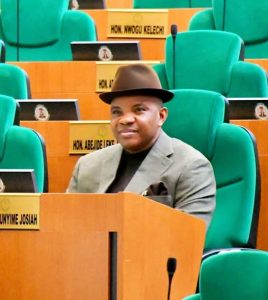
‘‘This is fundamental to economic growth, industrialisation, job creation and poverty reduction. Our electricity policies must therefore guarantee fairness, accountability and value for money for all consumers,’’ Idem added.
Electricity consumers seek Intervention of NERC and Akwa Ibom
The Concerned Electricity Consumers of Akwa Ibom have called on Nigerian Electricity Regulatory Commission (NERC) to intervene by ending illegal imposition of Band A tariff on Band B and C consumers in the state.
Under the title: DEMAND FOR IMMEDIATE CESSATION OF ILLEGAL BAND A TARIFF IMPOSITION ON BAND B AND C CONSUMERS IN AKWA IBOM STATE, the consumers drew attention of the State Government, the NERC, and the public, to the ongoing systematic billing exploitation perpetrated by the Port Harcourt Electricity Distribution PLC (PHED) across different communities.
‘‘Under clear NERC regulatory guidelines, the Band A tariff of ₦209.50/kWh is strictly reserved for feeders guaranteed a minimum of 20 hours of daily power supply.
‘‘In flagrant violation of this directive, PHED has arbitrarily placed numerous Band B and Band C communities on the Band A billing structure, forcing citizens to pay premium rates for severely deficient service often receiving far less than 16 hours of electricity daily, and in several instances enduring days or weeks of total blackout,’’ they alleged.
The consumers cited Etim Okon Usanga-Nwaniba Axis, Uyo, where consumers are subjected to the ₦209.50/kWh Band A rate via estimated billing, despite never receiving up to 16 hours of daily power supply.
They also mentioned Uso Lane, Ikot Ekpene: Residents are consistently billed at the ₦209.50/kWh Band A rate, yielding roughly 4.4 units for every ₦1,000 spent while actual power availability remains strictly within Band B or Band C thresholds.
Consequently, they called and the State Government to institute an independent billing audit of PHED’s billing records in Band A communities and mandate full energy credit refunds for all overbilled periods.
The consumers further called for an end to arbitrary estimated billing PHED must adhere strictly to NERC’s capping regulations on estimated billing and accelerate the deployment of prepaid meters to eliminate arbitrary charges.
In the Facebook page of Dr. Aniekan Udosen, a Communication expert, the electricity consumers said for immediate tariff reclassification, PHED must immediately charge appropriate tariffs on all affected feeders in Etim Okon Usanga-Nwaniba (Uyo), Uso Lane (Ikot Ekpene), and other similarly affected areas to their accurate service bands (Band B or Band C) in strict alignment with actual hours of supply.
On regulatory sanctions, they asked NERC to enforce appropriate penalties against PHED for deliberate non-compliance with service-level agreements and tariff orders.
‘‘Akwa Ibom citizens must not be subjected to financial exploitation under the guise of electricity distribution. We call on the State Government and federal regulatory bodies to intervene decisively and restore fairness, transparency, and accountability to power supply in Akwa Ibom State,’’ the consumers added.
