

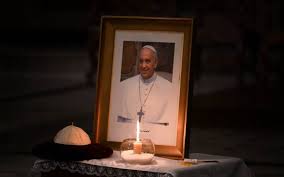
The death of Pope Francis marks the end of a transformative era—not just for the Catholic Church, but for the global conscience. Born Jorge Mario Bergoglio in Buenos Aires, he shattered centuries of precedent: the first Latin American pope, the first Jesuit to lead the Church, and the first to choose the name Francis, after the saint of poverty and peace.
He walked the talk, trading papal opulence for humility. He lived simply, washed the feet of prisoners and refugees, and made the Vatican a platform for the voiceless. In him, Catholics saw not a distant pontiff but a pastor.
Francis gave the Church a new moral vocabulary. With Laudato Si’, he made climate change a sacred cause, challenging both fossil-fuel economies and indifferent congregations. His encyclical did more than stir debate—it placed the survival of the planet at the heart of spiritual life.
Read also: Pope Francis buried At Santa Maria Maggiore Basilica
He also reached out to communities long marginalised. Though Church doctrine did not change, his pastoral approach to LGBTQ+ individuals, divorced couples, and non-Catholics softened centuries-old rigidity. His papacy suggested a Church less concerned with gatekeeping and more invested in grace.
Francis embraced diplomacy with quiet power. From mending US-Cuba relations to engaging Islam through historic visits and the Document on Human Fraternity, he saw dialogue not as a concession but as a commandment.
His vision was global and inclusive. He travelled to war zones and slums, embraced refugees, and consistently condemned the arms trade and economic injustice. In doing so, he reminded the world that silence in the face of suffering is not neutrality—it is complicity.
Yet, Francis’ legacy is not without blemish. He inherited a Church broken by sexual abuse scandals, and though he acted—defrocking abusers, simplifying trials, and apologising—his early mishandling of the Chilean abuse case revealed the limits of even his empathy.
His attempts to reform the Vatican’s entrenched bureaucracy were ambitious but incomplete. Resistance from within slowed progress, leaving his vision of a more transparent Church only partially fulfilled.
He was a polarising figure, not least among his own clergy. His critiques of capitalism, nationalism, and inequality angered conservative politicians and traditionalist bishops. His openness to liturgical diversity and regional autonomy stirred fears of doctrinal drift.
But for Francis, controversy was not a weakness—it was the price of relevance. He believed the Church must unsettle before it can heal.
For Nigeria, Francis’ legacy is more than symbolic—it is instructional. In a country scarred by corruption, tribalism, and religious extremism, his life offers critical lessons.
He modelled leadership not as domination but as service—something tragically absent in many corridors of Nigerian power. His insistence on dignity for all calls out to a society too often blind to the suffering of the poor, the displaced, and the silenced.
He proved that religion need not divide. His interfaith overtures offer a pathway through Nigeria’s combustible mix of faith and politics. He showed that moral courage, not money, is the true currency of leadership.
Pope Francis leaves behind not a perfect Church, but a more honest one. He challenged institutions to live their values and individuals to look beyond themselves. His papacy was less about dogma and more about daring—daring to listen, to welcome, to change.
As Nigeria stands at a moral and political crossroads, his life’s message could not be more urgent: that the only leadership worth following is that which bends low to lift others.
Let Nigeria take heed—before the next moral reckoning comes not from Rome, but from within.
