

Aniefiok Christopher
A groundbreaking bill to establish a 50-year National Economic Plan for Nigeria is before the House of Representatives, with key members advocating a binding framework to ensure policy continuity, economic stability, and long-term development.
The bill seeks to ensure long-term stability and predictability, promote sustainable development and intergenerational equity, reduce policy reversals and waste of public resources, align Nigeria with global best practices in long term practices, encourage domestic and foreign investment, among others.
Such countries as China, India, and Malaysia, as well as Rwanda, Botswana, and South Africa, have leveraged long-term planning frameworks to achieve sustained economic growth.
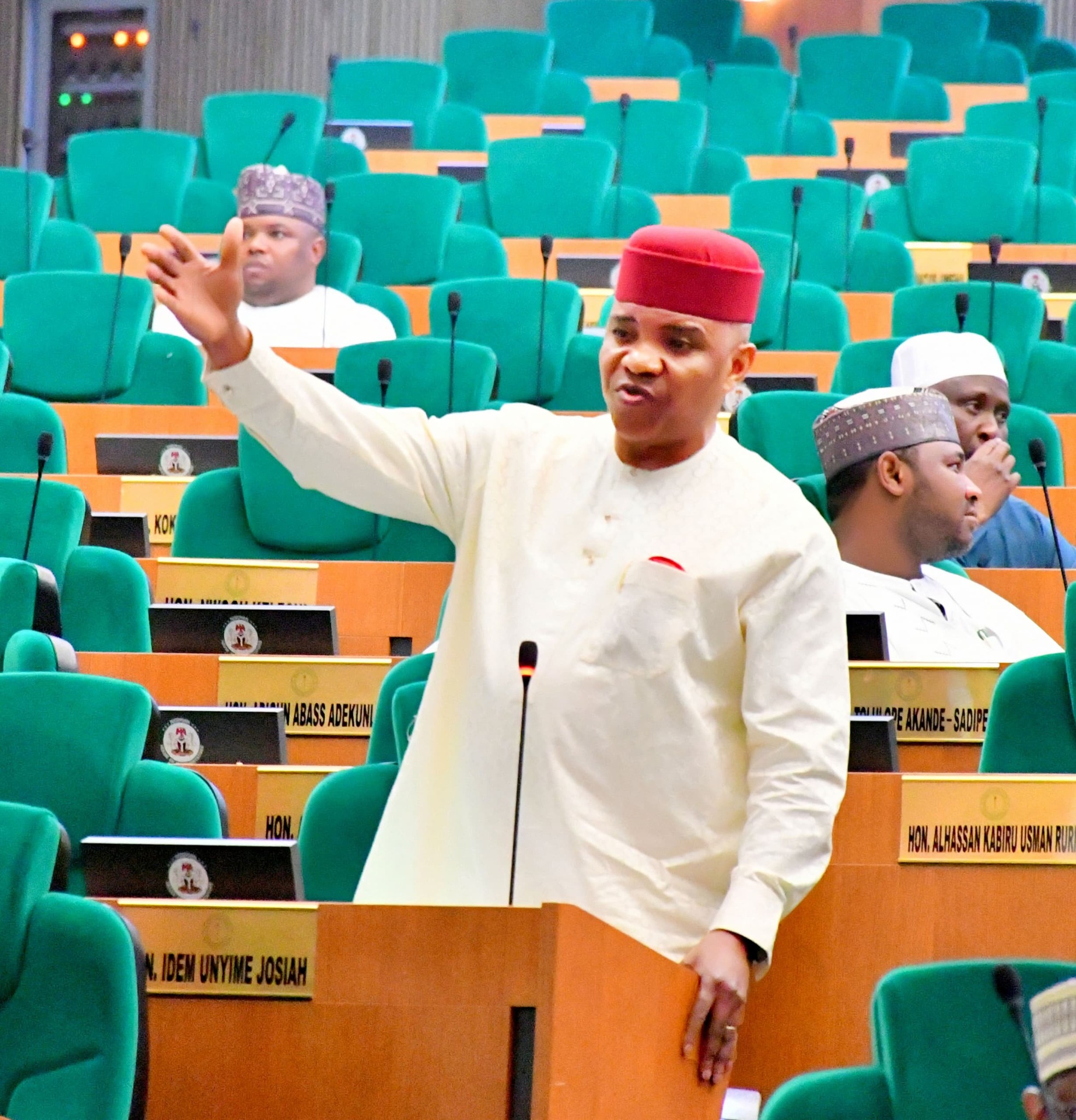
During the plenary on Wednesday, Dr. Unyime Idem threw his weight behind the Bill for the establishment of a 50-year National Economic Plan for Nigeria, as a binding framework for development.
Also read:
- Idem emerges Best Representative for 2022 in Nigeria
- How Rep Idem Facilitating More Jobs for His Constituents
Idem representing Ukanafun/Oruk Anam Federal Constituency in the House of Representatives noted that the legislative document, when made an Act, will create a stable economic direction that successive administrations can align with, helping investors and citizens plan with confidence.
Earlier, Hon. Amobi Godwin Ogah, member representing Isuikwuato/Umunneochi Federal Constituency of Imo State, had introduced the bill aimed at establishing a 50-year National Economic Plan for Nigeria.
The proposed legislation, titled “A Bill for an Act to Institute a Fifty-Year National Economic Plan for Nigeria (2026–2076) and Measures to Compel Compliance and for Related Matters (HB. 2488)”, is designed to fundamentally transform Nigeria’s economic trajectory by addressing one of its most persistent challenges policy inconsistency.
Presenting the bill before the House of Representatives, Ogah noted that while Nigeria has never lacked economic blueprints, the country has consistently failed at implementation and continuity.
He referenced previous development frameworks such as Vision 2010, Vision 20:2020, and the Economic Recovery and Growth Plan (ERGP), stressing that despite their ambitious outlook, they were undermined by weak institutional enforcement and frequent policy reversals.
According to him, the new bill seeks to correct these long-standing structural weaknesses by embedding economic planning into law—making it binding across successive administrations.
Hon. Ogah explained that a 50-year economic plan would provide Nigeria with a clear and stable fiscal and monetary direction, reducing uncertainty and boosting investor confidence.
He emphasized that long-term planning is critical for sectors that require sustained investment, including infrastructure, manufacturing, energy, and transportation.
“With a consistent framework, investors will have confidence to commit resources, knowing that policies will not change overnight,” he stated.
One of the major highlights of the proposed legislation is its focus on eliminating abandoned projects—a recurring issue that has plagued Nigeria’s development efforts.
Ogah noted that critical infrastructure such as roads, railways, power projects, and ports often suffer setbacks due to changes in government priorities.
The proposed 50-year plan, he said, would ensure continuity, making it difficult for successive administrations to abandon ongoing projects without justification.
The lawmaker further pointed out that several countries across the world have successfully adopted long-term economic strategies to drive development.
He added that the bill also aligns with the African Union’s Agenda 2063, positioning Nigeria to compete more effectively on the global stage.
The proposed legislation seeks to: describe the bill as a critical structural reform, Hon. Ogah urged his colleagues in the National Assembly to support the initiative as it progresses to the next legislative stages.
He maintained that Nigeria’s development must no longer be dictated by changing political interests but anchored on a long-term national vision that guarantees stability and growth.
“This is about the future of Nigeria. We must move from short-term thinking to long-term planning if we are serious about development,” he emphasized.
