

Akpandem James
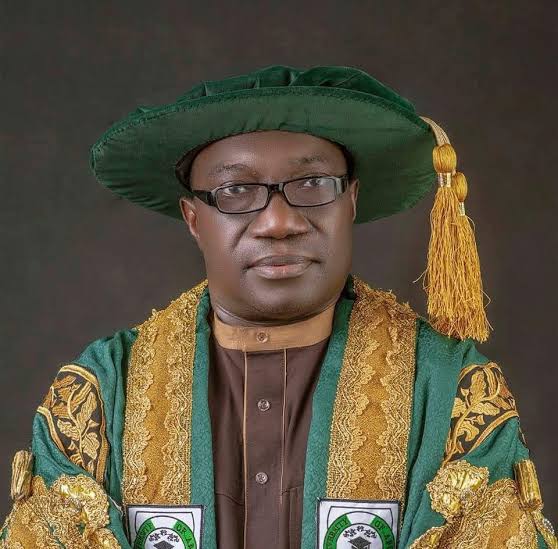
The pioneer Vice-Chancellor of the recently converted Akwa Ibom State University of Education, Afaha Nsit, Professor Philip Afaha, has pledged to turn the institution into a world-class centre of academic excellence, innovation and human-capital development.
Prof. Afaha made the commitment on Thursday, October 8, 2026, during the university’s first interactive session with members of its community. Until last month, the institution was a College of Education.
The university was established following the signing into law, on July 28, 2026, by the Akwa Ibom State Governor, Pastor Umo Eno, of legislation upgrading the former Akwa Ibom State College of Education, Afaha Nsit, to a university.
Also read
- CSO Urges Gov Eno To assent Akwa Ibom State University of Education Bill
- Akwa Ibom Approves N1b Wardrobe Allowance for Teachers in Public Schools
- Senator Ekong donates N210m to AKSU and Akwa Ibom South Law students
Describing the development as a historic milestone for the state, the vice-chancellor said the institution was evidence of the governor’s commitment to repositioning the education sector under the administration’s ARISE Agenda.
He said the establishment of the university had revived the vision of Akwa Ibom’s forebears, who promoted education and defied colonial restrictions to build schools and sponsor their children abroad. He added that by establishing the university, the governor is threading a noble path and has woven a lasting impression on the tapestry of human history.
The decision to establish a specialised university of education would influence the future development of the state and strengthen its capacity to produce highly skilled manpower, the VC said.
Prof. Afaha, who was announced as the institution’s pioneer vice-chancellor by the Governor during the state’s World Teachers’ Day anniversary celebration Tuesday, 6 October, 2026, said he viewed the appointment as a responsibility rather than a personal achievement.
“To me, this appointment is not a trophy to be carried; it is a responsibility,” he said, thanking the governor for the confidence reposed in him to lead the institution during its foundation stage.
The vice-chancellor said the university would focus on the traditional core mandates of teaching, research and community service, while also developing programmes in pedagogical sciences, humanities, management, natural sciences, social sciences, computing and emerging knowledge systems.
He urged members of staff to work collectively to ensure a smooth transition from a college of education to a university. “Our assignment is unique because we are expected to navigate a peculiar transition from a College of Education, raise the bar and hoist a world-class university,” he said.
Prof. Afaha declared an end to internal divisions, rancour and factionalism, urging staff members to place the interests of the university above personal differences.
“As your vice-chancellor, I declare a ceasefire and an immediate end to bickering and factions on this campus,” he said; reminding the staff that students were watching their conduct and learning from their actions as much as from formal classroom instruction.
The vice-chancellor identified academic excellence, institutional culture and infrastructural development as key priorities of his administration. “The university would align its curriculum with the benchmarks of the National Universities Commission while incorporating emerging knowledge systems and global best practices”, he stated.
According to him, the institution will seek to become a hub for pedagogical innovation by supporting research, commercialising research outputs and developing innovations capable of addressing societal and economic challenges.
“We are poised to prepare our students for the global workforce, especially in the education industry, producing innovative technologies, incubating entrepreneurial projects and producing scientific discoveries that are useful for the overall development of our fatherland,” he said.
Prof. Afaha also announced plans to promote collaboration with other universities in Akwa Ibom State and beyond in the areas of teaching, research and institutional development.
He said the university would also cultivate an academic culture through mentorship programmes, training, workshops, strategic engagements and the observance of established university traditions.
While promising fairness and justice in the administration of the institution, he said discipline would remain central to its operations.
The vice-chancellor said his administration would prioritise the upgrading of existing infrastructure and the development of facilities needed to support teaching, learning and research.
He appealed to entrepreneurs, development partners and corporate organisations to support the new university with classrooms, hostels, laboratories, vehicles, computers, internet connectivity and other equipment.
“A public university like ours belongs to the people, and people must take ownership for it to survive,” he said.
Prof. Afaha said the university would not rely solely on statutory government funding but would also explore partnerships and other interventions within and outside Nigeria.
Responding to concerns over the establishment university of education, Prof. Afaha said the institution was necessary to prepare young people for a rapidly changing global economy.
He cited developments in artificial intelligence, robotics, nanotechnology and genetic editing as areas that required a comprehensive rethinking of existing educational systems.
“How do we connect our growing youth population to the global workspace without a requisite pedagogical infrastructure for the traditional and new knowledge systems?” he asked.
He said the university would go beyond producing conventional job seekers, adding that it would train educationists, innovators and job creators capable of competing globally.
“This is not going to be an easy task, but with the right incentives, support and cooperation of my competent colleagues, there is a ground for this optimism,” he said.
Addressing the pioneer students, the vice-chancellor congratulated them on becoming the first students of the new university, describing their experience as unique because they enrolled in a college and found themselves in a university.
He, however, warned that the institution would not tolerate cultism, examination malpractice, sexual harassment or any conduct capable of damaging its reputation.
“The world is waiting for us to deliver tangible results to earn their applause,” he told the students.
Prof. Afaha also appealed to the students to put forward their best conduct as ambassadors of the university, while reaffirming his administration’s desire to make the institution a globally competitive and impactful university, capable of producing leaders in teaching, research and educational management.
