
Akakan Umoh
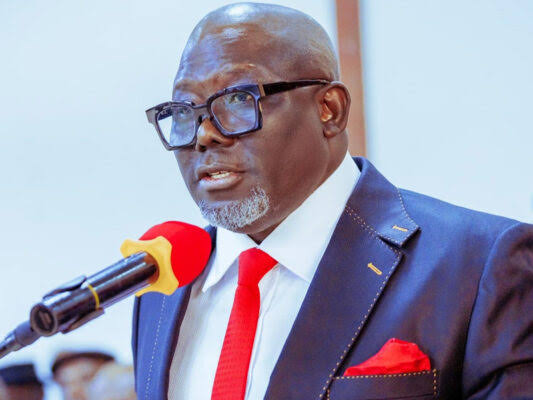
Delta State Government has unveiled a $100 million Viability Gap Fund, put at about ₦133 billion, to attract strategic investments and accelerate economic development across the state.
Governor Sheriff Oborevwori announced the initiative in a statement via the X handle of the state government on Monday, August 3, saying the fund is designed to reduce investment risks and encourage private sector participation in key development projects.
Oborevwori said the US$100 million (approximately ₦133 billion) Viability Gap Fund will provide investors with greater confidence by de-risking strategic investments while supporting projects capable of stimulating economic growth and improving livelihoods.
“Governor Sheriff Oborevwori has unveiled a US$100 million (approximately ₦133 billion) Viability Gap Fund to de-risk strategic investments, providing investors with greater confidence while supporting the delivery of impactful projects that will drive economic growth and shared prosperity in Delta State,” the state government tweeted.
The statement revealed that the initiative forms part of the governor’s administration’s efforts to create an enabling environment for investment, strengthen public-private partnerships and unlock the state’s economic potential.
He expressed confidence that the fund would enhance investor confidence and facilitate the execution of transformative projects that would promote inclusive growth and sustainable development across Delta State.
Shettima hails Tinubu for reforms in key sectors
Vice President Kashim Shettima hailed President Bola Tinubu’s administration for reforms in key sectors, attributing the rise in foreign reserves to the moves.
Shettima spoke on Monday at the Delta Economic and Investment Summit in Asaba, hailing Anambra State Governor Chukwuma Soludo for backing the reforms of the Tinubu administration.
“Professor Soludo, you have done a lot of things for the Federal Government, especially by informing Nigerians where we are coming from,” the vice president said at the event attended by political leaders, captains of industry and other dignitaries.
“From reserves of $3bn, when we were experiencing capital flight and capital scarcity. Now, we are experiencing capital inflows, so that our foreign reserves have gone up to about $52bn and counting in a turbulent world, mind you. I think the President deserves commendation and not condemnation.”
Addressing the gathering in the Delta State capital, Shettima said the rise in investment summits is a sign of healthy competition among states.
According to him, with more money coming to states, sub-nationals have a stronger foundation.
Nigeria has ingredients to become Nigeria’s next industrial hub, Ngozi Okonjo-Iweala
Director-General of the World Trade Organisation, WTO, Dr. Ngozi Okonjo-Iweala, Monday, said Delta State has the capacity to emerge as Nigeria’s next major industrial hub alongside Lagos, while endorsing the state’s over $100 million investment fund as a bold step towards attracting investors.
Also speaking at the Summit, Okonjo-Iweala said, “I am convinced that Delta possesses the ingredients to become Nigeria’s next great industrial hub, standing alongside Lagos as an engine of the national economy.
“The emergence of a new growth pole here in Delta State would be good for Nigeria as a whole.”
Backing Governor Sheriff Oborevwori’s investment initiative, she added: “The reason I came is because you take action. The fund you have just announced to de-risk investment is exactly the kind of thing that we need.”
According to her, changing global trade patterns have opened new opportunities for Delta and Nigeria.
“The world is looking for diversification. These opportunities were not available 10 or 15 years ago. The question is whether we will seize them or allow them to go elsewhere,” she said.
She urged the state government to make Special Economic Zones the centrepiece of its industrialisation drive.
“The World Bank has identified Special Economic Zones as one of the best available tools for governments with limited fiscal space. But successful zones require reliable electricity, roads, rail, water, digital connectivity and close collaboration with the Federal Government,” she stated.
Okonjo-Iweala also advised the state to prioritise a few value chains instead of spreading scarce resources.
“Identify two or three areas where Delta has strong comparative advantage. Focus on those and build the entire value chain—from production to processing, standards, finance and market access. That is how value is created.”
She identified the blue economy as another major opportunity, noting that “Nigeria imports about 573,000 metric tonnes of fish and fish products worth almost $866 million every year. Delta can become Nigeria’s blue economy hub. Build fisheries, cold chain facilities, port services and marine logistics.”
On the state’s fiscal position, she said: “Delta ranks among Nigeria’s best-performing states in debt sustainability. Keep the fiscal prudence because without it you will not be able to build the Delta State you want.”
Expressing confidence in the state’s future, she said: “Delta can transform itself from a resource-rich state into a diversified, inclusive and resilient economy.”
Nigeria macroeconomic stability, improving- Soludo
Anambra State Governor, Prof. Charles Soludo, on Monday said Nigeria’s improving macroeconomic stability had created fresh investment opportunities, urging state governments to work together to drive economic growth and create jobs.
Speaking at the Summit, Soludo said the country’s recent economic reforms had made Nigeria more attractive to investors by creating a more stable and predictable business environment.
“I am here in solidarity with my neighbour, Delta State, and with my friend, Governor Sheriff Oborevwori. This summit is very important, and I am delighted to be here,” Soludo said
Although invited to deliver a goodwill message, Soludo said the discussions at the summit highlighted critical issues about Nigeria’s economy and the role of sub-national governments in attracting investment.
He noted that recent reforms introduced by the Federal Government had strengthened macroeconomic stability, improved foreign exchange reserves and created a more predictable environment for local and foreign investors.
“From a macroeconomic standpoint, Nigeria has become more stable, and that is something we should celebrate because we know where we are coming from,” he said.
The governor recalled that shortly after assuming office, his administration withdrew Anambra State from a World Bank loan programme because of concerns over exchange rate risks.
According to him, although the loan initially attracted little or no interest, it would have become significantly more expensive following the depreciation of the naira.
“If you borrow in foreign currency and the exchange rate later doubles, the actual cost of that loan also increases significantly. That was why we decided to pull out,” he explained.
Soludo, however, said the situation had changed as Nigeria’s foreign exchange reserves improved and the exchange rate became more stable.
The governor, however, stressed that no state could achieve sustainable economic development in isolation.
He called for stronger collaboration among the Federal Government, state governments and local governments to ensure that ongoing economic reforms translated into better living conditions for Nigerians.
“The Second Niger Bridge has brought our states closer together. Delta and Anambra should now see themselves as twin economic centres and work more closely in areas of mutual benefit,” he said.
He said both states could collaborate in trade, industrialisation, infrastructure development and investment promotion.
Soludo stated that Anambra was developing a new commercial and industrial city powered by an aerotropolis, adding that both states could learn from each other’s development initiatives.
“I am happy to hear that this summit is not just another talk shop. What matters is the investment deals and partnerships that will emerge after the discussions,” he said.
He advised governments to make investment promotion a continuous process rather than organising investment summits without implementing their outcomes.
The Anambra governor also advocated greater support for locally made products as a strategy for creating jobs and strengthening the economy.
He lamented that many Nigerians still depended heavily on imported goods despite the country’s strong textile and fashion industry.
Using his attire as an example, Soludo said he now wears locally produced fabrics almost exclusively after discovering a fabric made in a community in Abia State.
According to him, the decision had helped increase demand for the product, creating more income and employment for local producers.
“If all Nigerians deliberately wore Made-in-Nigeria clothing, we could create millions of jobs across the country,” he said.
He suggested that future investment summits should encourage participants to wear locally made outfits to promote indigenous industries.
“I hope that at future summits, we can proudly showcase Made-in-Nigeria products because supporting local industries is one of the fastest ways to create jobs and grow our economy,” he said.
