

Israel Umoh
The lives of personnel of the Nigerian Police Force – both in active service and retirement – have come under intense scrutiny as concerned radio callers decried their plight and poor welfare packages.
Specifically, the radio callers who spoke during a live radio programme took a critical look at the Contributory Pensions Scheme (CPS) as it affects the police force, lamenting what they described as neglect, inadequate benefits and unfavourable working conditions.
The Scheme was implemented for the Nigerian Police Force following the passage of the Pension Reform Act of 2004, and signed into law in June 2004.
The callers who spoke on Passion 94.5 FM, Uyo Tuesday on a talk shop anchored on: Expectations and realities of the Nigeria Police Force, described the scheme as stifling, unjust and oppressive, and called on the Federal Government to phase out the Scheme for the Nigeria Police Force.
They urged the authorities to prioritise the comprehensive police welfare reforms to help the force in the performance of its assigned duties.
One Akpan who called from Uyo said the scheme was introduced and implemented by the administration of ex-Nigerian President Olusegun Obasanjo.
According to him, Obasanjo who introduced is a General in the Nigeria Army and yet he is enjoying full pensions as a General, describing this action as unfair to policemen and other staffers of Federal Ministries, Departments and Agencies (MDAs).
He cited a police officer who collects N30,000 monthly as pension, describing it as inadequate in the face of the harsh economic conditions, saying the amount could not afford him much due to the high inflationary trend.
He said after retirement, some Inspectors-General or Deputy Inspectors-General of Police become automatic billionaires. However, the rank and file officers are poor and wretched. Why can’t the IGs and DIGs who have connections with important personalities in government and in the society fight for improved welfare packages for the lowly paid officers?’’
‘’I want to advise government at all levels to prioritise the welfare of policemen in their employ. This will motivate them to serve diligently and patriotically,’’ the caller enjoined.
Another caller from Oruk Anam mentioned that he once visited Mkpat Enin and when rains fell heavily, he ran into a nearby police station.
‘‘Unfortunately, the rains fell on the roof of the station and the rooms were soaked. The police men could not find a comfortable place to stay. I was even more uncomfortable as the rains fell on my head. Some police stations are eyesore to behold,’’ he lamented.
Another caller blamed attitude of some police men. For example, how do you explain a situation where a policeman wears a patched shirt or stitched pair of shoes to office? How do you explain a situation where an edifice was commissioned and handed over to the police. Few months after, electric bulbs in the building went bad, yet the police could not use his money to replace the bulbs.’’
One Awah recalled that he had once joined the policemen to protest against poor welfare packages to them, though some of them were queried and others were dismissed for committing mutinous act.
He, therefore, called on the Federal Government to amend the Nigeria Police Act 2020 to enable the personnel of the Nigeria Police Force to form trade unions to canvass for their welfare reforms and packages.
Since the implementation of the scheme, police retirees have been crying over the paltry gratuity and pension making most of them to resort to begging and becoming financially helpless to foot bills during their retirement.
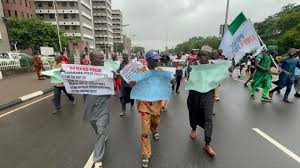
Retired Nigeria police officers have engaged in, or threatened, numerous protests against the Contributory Pension Scheme (CPS) over the past years, with significant demonstrations occurring in July 2025, November 2025, and heavily in April 2026.
These retirees consistently demand removal from the CPS, citing low pension payments and delayed, insufficient benefits.
