

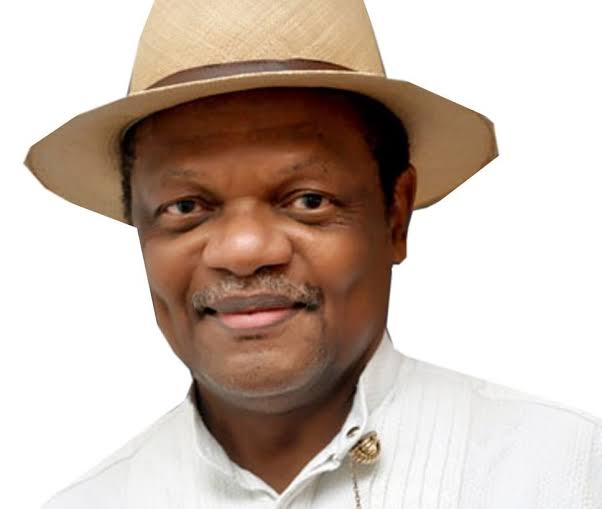
Aniefiok Christopher
Twelve states and the Federal Capital Territory in Nigeria are said to have recorded poverty rates below 50 per cent under the administration of President Bola Tinubu.
Speaking in an interview with ARISE NEWS on Monday, Founder of Stanbic IBTC Bank Plc and Anap Foundation, Atedo Peterside said unfortunately, most of the states are concentrated in the South-West, alongside Anambra in the South-East and Edo and Delta in the South-South.
According to him, the 12 states include Lagos (Southwest) – 3.7%; Edo (South-South) – 4.9%; Rivers (South-South) -7.2%; Ogun (Southwest) -7.5%; Ekiti (Southwest) – 9.5%; and Anambra (Southeast) -9.6%.
Also read
- World Bank’s Mockery of Nigeria’s Poverty Alleviation Efforts: A Wake-Up Call
- Poverty Alleviation: Presidency Saddened by World Bank’s Report, Rejects it
- Government is using poverty to suppress the people- Umanah
Others are Abia (Southeast) -12.3%; Imo (Southeast) -14.3%; Ondo (Southwest) -14.3%; Osun (Southwest) -14.6%; Delta (South-South) -15.6% and Akwa Ibom (South-South) -20.2%.
The economist noted that the regional differences in poverty levels could shape how Nigerians assess the impact of the government’s economic policies.
Peterside also suggested that policymakers might not fully understand the severity of poverty in some communities because they do not frequently visit the affected areas.
“High poverty in Nigeria is largely a zonal problem. It is a problem of the North-West, of the North-East, of the North-Central, and of the South-South,” he said.
He maintained that the absence of adequate social protection measures remains a major gap in the implementation of the government’s economic reforms.
The Founder of Stanbic IBTC Bank said President Tinubu’s economic reforms have benefited wealthy Nigerians while worsening living conditions for millions of low-income earners.
Peterside said while upper-middle-class Nigerians had recorded improvements in their investments and incomes over the past three years, poorer households were struggling to afford basic necessities.
He explained that the impact of the reforms differed significantly across income groups, noting that Nigerians with substantial savings and investments were better positioned to benefit from developments in the stock market.
“If you’re upper middle class, I can probably show on the blackboard investments in the stock exchange and all that stuff. I can show on the blackboard that you’re probably better off in the last three years,” he said.
“But if you’re a low-income worker, like somebody without much savings and struggling to eat — what 100 million Nigerians have to do, to eat two meals a day and struggling to pay your bills — I can show you that you’re a lot worse off.”
Peterside said the government failed to establish adequate social safety nets to protect vulnerable Nigerians from the economic difficulties associated with the reforms.
While citing 2025 data from TheCable Index, he highlighted significant regional disparities in poverty levels, identifying the North-West, North-East, North-Central and South-South as regions with high concentrations of poverty.
For states that record poverty rates above 50 per cent, he mentioned North-West (e.g., Sokoto, Jigawa, Kebbi, and others), North-East, North-Central, South-South (excluding Edo and Delta), South-East (excluding Anambra) and South-West (any exceptions falling above the line, though most are below).
