

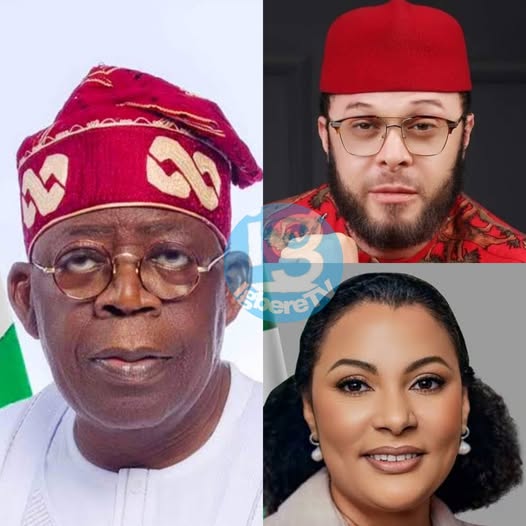
Until his nomination, Oyedele, an indigene of Ikaram in Akoko, Ondo State, served as Chairman of the Presidential Committee on Fiscal Policy and Tax Reforms, where he led the overhaul of Nigeria’s tax system as part of the administration’s broader fiscal reform agenda.
Oyedele, 50, is an economist, accountant and public policy expert with over two decades of experience spanning the public and private sectors.
He holds a Higher National Diploma (HND) in Accountancy and Finance from Yaba College of Technology and a Bachelor of Science degree in Applied Accounting from Oxford Brookes University.
The development comes exactly seven days after Hon. Alex Mascot Ikwechegh, member representing Aba North/Aba South Federal Constituency, confronted the Minister of Finance over ₦1.15 trillion over the unexplained disappearance of capital project funds—despite trillions of naira in loans and record-breaking revenues with undisbursed with capital projects across Nigeria sitting at zero percent execution.
· ₦1.15 trillion had been raised and specifically approved by the National Assembly to fund 30% of the 2025 capital budget
· Multiple loans had been secured, including:
· $1.2 billion for digital infrastructure
· $500 million for economic stimulus
· $500 million for MSMEs (approved December 2025)
· $500 million from the African Development Bank (November 2025) for economic governance and energy transition
· A recent executive request for $21 million, 15 billion Yen, and 4 billion Euros
Despite this avalanche of borrowed money and strong revenue performance by agencies like FIRS, Customs, and others, capital projects across Nigeria remain at zero disbursement.
Hon. Ikwechegh, visibly frustrated, walked the Minister through the figures with surgical precision:
“With all these funds put together… I want you to enlighten us on why the 2024 budget is yet to be fully implemented, and why the 2025 budget has only been funded 34%—most of which is recurrent expenditure.”
He then delivered the question that silenced the room: “I want you to enlighten us on why our capital projects still remain at zero. Talking about our country. This is our country. Are you not in Nigeria? Why the capital of the Nigerian government remains at zero in 2026?”
When pressed, Minister Wale Edun shifted responsibility to the Minister of State for Finance, Doris Uzoka-Anite, claiming she handled disbursements.
This deflection infuriated committee members. If the substantive Minister of Finance cannot account for ₦1.15 trillion approved for capital projects, who can?
The session became rowdy. Lawmakers shouted, demanding answers. Some called for the ministers to resign. The committee had no choice but to adjourn the hearing to Thursday, February 26th, summoning the Minister of State to provide the clarity the nation deserves.
Speaking after the heated exchange, Hon. Ikwechegh framed the issue in stark legal terms: “If this infraction is identified, it means there has been misappropriation of funds—which is a crime.”
His point is simple but devastating: funds were approved by the National Assembly. Funds were borrowed from international lenders. Funds were generated by revenue agencies. Yet those funds never reached the capital projects they were intended for.
Where did the money go?
For ordinary Nigerians, this is not abstract parliamentary procedure. It means:
· Roads in constituencies like Hon. Ikwechegh’s Aba remain unmotorable
· Hospitals lack equipment despite health sector allocations
· Schools remain unbuilt while contractors go unpaid
· Jobs are not created because infrastructure projects are stalled
When capital projects are at zero, development stops. When development stops, Nigerians suffer.
Wednesday’s performance cements Hon. Alex Mascot Ikwechegh’s reputation as one of the House’s most dogged advocates for transparency. Armed with facts, fortified by his position on the Aids and Loans Committee, and unafraid to confront powerful ministers, he demonstrated what legislative oversight should look like.
His constituents in Aba North/Aba South, a commercial hub crippled by infrastructural neglect—have found a champion willing to ask the hard questions at the highest level.
All eyes were on Thursday’s resumed hearing, where Minister of State for Finance, Doris Uzoka-Anite, was summoned to account for the missing ₦1.15 trillion.
At that hearing, Uzoka-Anite confirmed that ₦1.15 trillion was indeed approved for capital projects. However, she revealed that disbursement protocols require multiple sign-offs, and that certain “pre-disbursement conditions” had not been met by some ministries.
She argued that while the funds exist, they cannot be released until:
· Project documentation is complete
· Procurement processes are finalized
· Ministries submit required feasibility reports
But committee members, armed with the Health Minister’s earlier testimony that he received only ₦38 million of his ₦286 billion allocation, demanded to know: if protocols were the issue, why were some ministries given the runaround while others weren’t?
In what observers described as Thursday’s defining moment, Hon. Ikwechegh rose again and asked: “Mr. Chairman, can the minister tell this committee which specific ministry met all conditions and still did not receive funding? If none existed, why was ₦1.15 trillion approved when the government knew conditions weren’t met?”
The minister could not provide a single example.
The questions Hon. Ikwechegh has raised will not go away:
· If capital funds were approved, where are they?
· If they were misappropriated, who is responsible?
· If this is a crime, who will be held accountable?
Hon. Alex Mascot Ikwechegh has done what effective legislators do: followed the money, asked the tough questions, and refused to accept bureaucratic evasions.
