

Israel Umoh
The Federal Government is targeting the production of 850 million vaccine doses annually by upgrading the National Veterinary Research Institute (NVRI ) in Vom, Plateau State.
The institute that was abandoned would be turned a vaccine hub for West Africa.
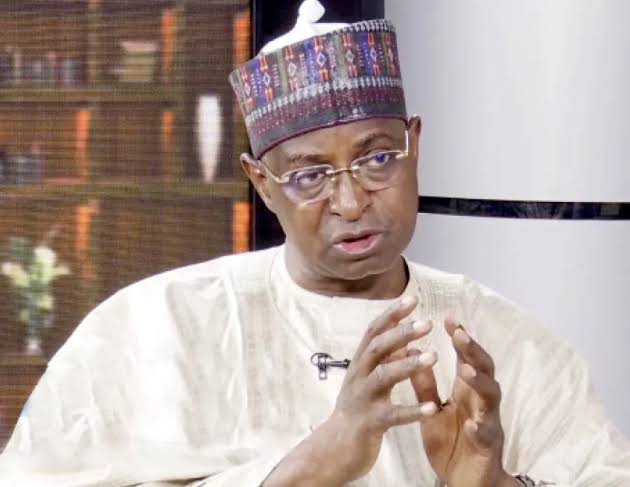
The Minister of Livestock Development, Dr Idi Maiha, who stated this in his address at the opening of the 62nd National Congress of the Nigerian Veterinary Medical Association(NVMA) spanning from October 26- 31, in Uyo, Akwa Ibom State,
Maiha added that the federal government was working to provide a mechanism for disease prevention and surveillance on animals brought into the country from such neighbouring nations as Burkina Faso, Mali and Sudan Chad.
Also read: Invest in Veterinary Services to Unlock $74bn for Nigeria – President Urges
According to him, animal and human health were critical, thus the federal government would liaise with the Economic Community of West African States (ECOWAS), Commission on Agriculture to strengthen check on imported livestock into the country.
The Minister reminded veterinary doctors to ensure that their work was well- documented, report disease outbreak promptly and to ensure community prevention of diseases and surveillance as well as leverage with partners for more cattle production.
He further stated that under the Livestock Growth Accelerated Strategy, the Federal Government has planned to raise livestock production from the present $32 billion (equivalent of over N43 billion) to $74 billion (equivalent of over N79 billion) in 2035.
The Minister noted that the projection was achievable with cattle chain value expecting to hit 398.9 within the period.
“The target is certain, and I must say that we have what it takes to achieve that figure in the next 10 years. We’ll do it, because I know I have you’re with me. We’re not scared that ambition is achievable,” Maiha said.
He added that the measure requires animals’ healthiness, reliable and competent business services, production value chain, confidence of investors market.
Maiha pointed out that a strong association attests to livestock excess which supports and safeguards farmers and consumers as well as the capacity to prevent and response to disease emergencies.
He hinted that the Ministry has evolved other measures aimed at achieving the target such as the launching of National Feed and Fodder Policy, which 70 per cent animal feeds are produced locally, in quality, and at large scale, with a framework developed to guide production, processing ,marketing and utilization feed.
On animal health, he said, in September, the Ministry was working to establish 40-million-dose solar-powered cold facility in each of the six geo-political zone of the country.
“Under L-PRES, the Minister said that for safety of livestock, every state and FCT must have functional veterinary medical centre, solar-powered vaccine cold storage and modern abattoir with veterinary supervision, functional vaccination unit at all local government areas for disease surveillance, information sharing, report of diseases, prevention and control.
Akwa Ibom Governor Pastor Umo Eno, who declared the Congress open, extolled the association for choosing Uyo as the host of the Congress, stressing that agriculture remains an integral part of his ARISE Agenda.
Represented by the Commissioner for Agriculture, Dr. Offiong Ofor ,he enumerated projects and programmes executed in the last three years of the administration under agriculture to include the development of Dakkada Global Oil Palm Limited and the Ibom Model Farm, Tree Crop Revolution Programme: oil palm and cocoa seedlings distribution, and AK-CARES and Food System Programme and grants excess as well as rural feeder road infrastructure.
Earlier, the National President of NVMA, Dr Moses Arokoyo, had said that the Congress came at a defining moment when technology, artificial intelligence, emerging and re-emerging diseases, climate change, antimicrobial resistance and changing production systems were reshaping the profession.
Our theme, Veterinary Practice in the 21st Century, the president noted that it was a call to reimagine the profession and prepare for the future through three interconnected priorities: the future of veterinary practice, professionalism and human capital development; innovation, digital transformation and technology-enabled veterinary services; veterinary medicine, one health and national economic development.
“FAO data indicate that Africa was the only major world region where the populations of all five major livestock species cattle, sheep, goats, chickens and pigs increased between 2013 and 2023.Yet, in 2024, more than 306 million Africans were undernourished, representing over 45 per cent of the global total.”
He said that almost 59 per cent of Africa’s population, approximately 893 million people, experienced moderate or severe food insecurity, while more than one billion people could not afford a healthy diet.
Arokoyo maintained that livestock sector was not a problem to be managed, rather an economic asset to be unlocked.
Citing the UNICEF figures which indicates that 100 children under five die every hour from malnutrition, he said this challenge the association to connect livestock resources more effectively to nutrition, food security and economic prosperity.
Besides, he stressed that with the Food and Agricultural Organization’s (FAO) report on livestock population in Nigeria at approximately 55 million cattle, 139 goats , 65 million sheep , and 685 poultry while the federal government statements put the total livestock population at over 910 million animals, contributing more than US$32 billion annually to the economy, the association must help Nigeria capture this opportunity through healthy animals, safe food, reliable surveillance, traceability and internationally and credible veterinary certification.
“Our veterinary schools must increasingly integrate digital technologies, artificial intelligence, data science, epidemiology, entrepreneurship and climate resilience. Our veterinary services must function from Federal and State institutions to local governments and livestock-producing communities, where disease surveillance, vaccination and early response are most urgently needed,” Arokoyo stated.
He also sought for support in creating an enabling environment for sustainable animal
health systems which includes stronger disease surveillance, routine vaccination, functional and diagnostic infrastructure, digital transformation, responsible antimicrobial use and public-private partnerships that improve access to quality veterinary products and services.
He reasoned that these were not merely requests for the profession but they investments in Nigeria’s food security, public health, employment, livestock productivity and economic future.
Arokoyo called on delegates to let the Congress renew their unity, strengthen professionalism and produce practical commitments that will advance animal health and national development.
“Together, let us innovate, collaborate and lead towards a veterinary profession that is professionally excellent, digitally enabled, One Health-oriented and economically impactful,” the president urged.
Highlight of the Congress was the bestowing of award of excellence to personalities who support the NVMA among whom were Akwa Ibom governor, Pastor Umo Eno, his Enugu counterpart, Dr Peter Mbah; a lecturer with the Nasarawa State University, Dr Anyiro Onyekachi and Dr Obot Obot, a renowned veterinarian.
It also featured the presentation of solar-powered refrigerator to Akwa Ibom, Abia and one other neighbouring state, while the remaining 33 states and the FCT , are all beneficiaries.
