

Israel Umoh
The Nigerian Veterinary Medical Association has called for investment in veterinary services as the critical national economic infrastructure to build the human capacity required to unlocking the country’s livestock ambition of over US$74 billion.
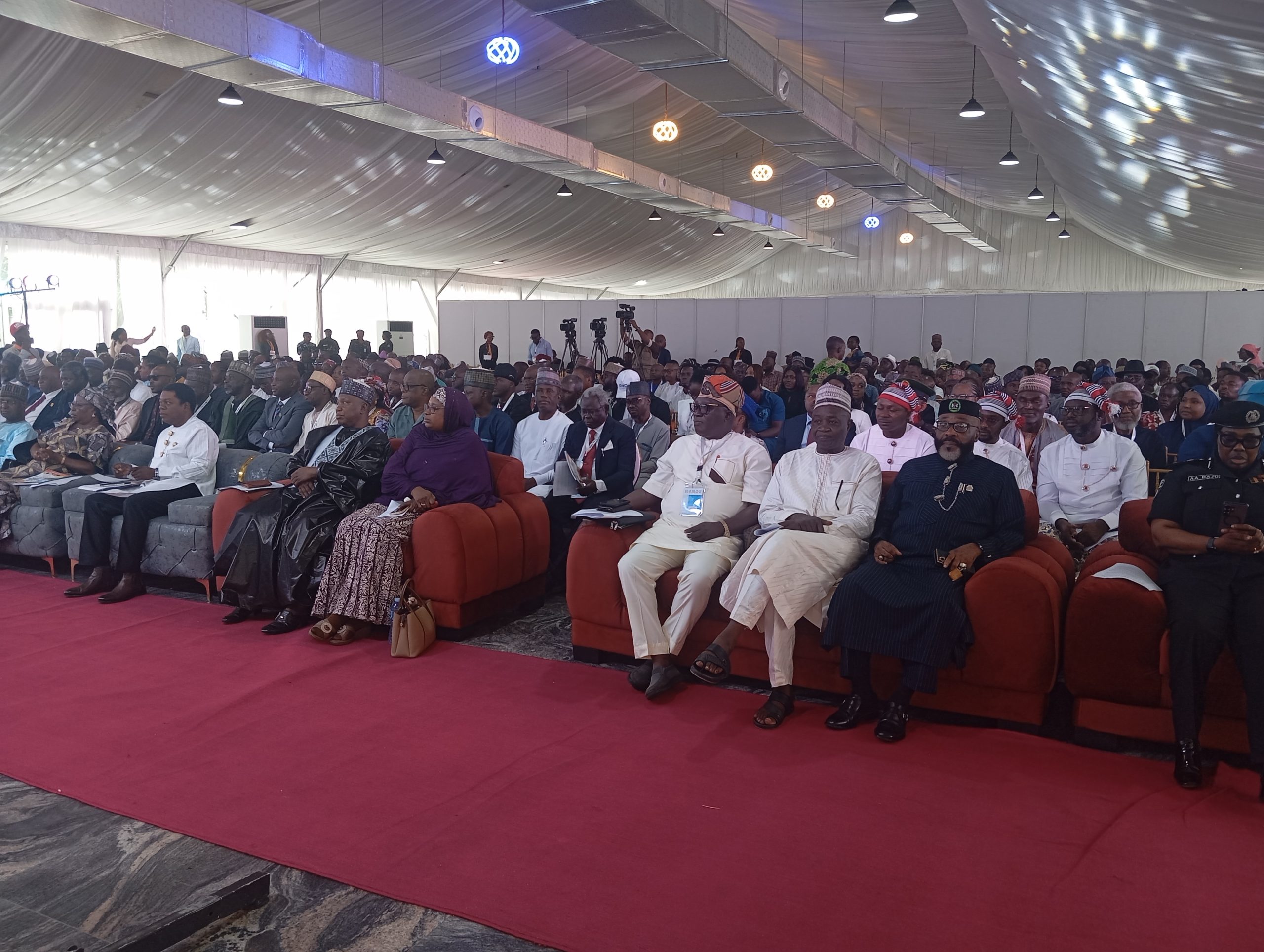
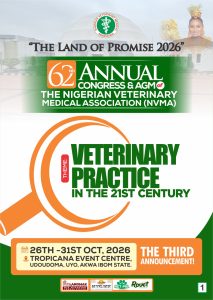
The President of the Nigerian Veterinary Medical Association (NVMA), Dr. Moses Arokoyo, who made the call at the opening of the 62nd Annual Congress and Annual General Meeting on Tuesday, 27 October in Uyo, said the investments would sustain Nigeria’s food security, public health, employment, livestock productivity and economic future.
‘‘We seek your support for strengthening the veterinary workforce, professional development and service delivery at Federal, State and Local Government levels,’’ Arokoyo.
Also read: Akwa Ibom Government to partner China in Agriculture and Education
The President further called for support in creating an enabling environment for sustainable animal health systems, which include stronger disease surveillance, routine vaccination, functional cold-chain and diagnostic infrastructure, digital transformation, responsible antimicrobial use and effective public-private partnerships that improve access to quality veterinary products and services.
He equally called on the Minister of Livestock Development to institutionalize structured engagement with the NVMA and the wider veterinary profession in livestock policy and national development.
‘‘We seek a deliberate role for veterinary professionals in policy formulation, programme implementation and monitoring, alongside support for veterinary education, research, innovation, entrepreneurship and youth participation.’’
According to him, the investments would sustain Nigeria’s food security, public health, employment, livestock productivity and economic future.
Arokoyo said the theme, “Veterinary Practice in the 21st Century,” calls for re-imagining the profession and preparing the future through three interconnected priorities: the future of veterinary practice, professionalism and human capital development, innovation, digital transformation and technology-enabled veterinary services, and veterinary medicine, One Health and national economic development.
He lamented that the livestock sector remains unrealized pointing out that AU-IBAR estimates that livestock contributes approximately 25% of agricultural GDP across sub-Saharan Africa, supporting about 268 million pastoral and agro-pastoral people.
‘‘FAO data indicate that Africa was the only major world region where the populations of all five major livestock species—cattle, sheep, goats, chickens and pigs—increased between 2013 and 2023.
Read too: Council of State Approves $1bn For Agriculture, Livestock Support For Herdsmen
‘‘Yet, in 2024, more than 306 million Africans were undernourished, representing over 45% of the global total. Almost 59% of Africa’s population, approximately 893 million people, experienced moderate or severe food insecurity, while more than one billion people could not afford a healthy diet.
‘‘UNICEF figures cited in our accompanying keynote indicate that 100 million children under five die every hour from malnutrition. These figures challenge us to connect our livestock resources more effectively to nutrition, food security and economic prosperity,’’
The President further stated ‘‘Nigeria’s opportunity is equally compelling. According to FAO, our livestock population includes approximately 55 million cattle, 139 million goats, 65 million sheep and 685 million poultry. Recent Federal Government estimates state that the total livestock population at over 910 million animals, contributing more than US$32 billion annually to our economy.
‘‘IFPRI’s 2026 analysis similarly estimates livestock’s contribution at approximately US$32 billion, about 5% of Nigeria’s GDP and roughly 17% of agricultural GDP, directly supporting the livelihoods of about 30 million Nigerians, including more than 15 million pastoralists. Approximately 40% of the protein consumed by Nigerians comes from animal sources.
‘‘The Federal Government’s ambition to grow the sector beyond US$74 billion within the next decade must become more than a target on paper. It must drive investment in animal health, veterinary education, disease prevention, infrastructure, processing, innovation and market access.
Describing inaction as enormous, Arokoyo said that ‘‘The animal disease burden is estimated to cost sub-Saharan Africa over US$9 billion annually. Diseases reduce productivity, compromise reproduction, threaten public health and restrict trade.
‘‘Meanwhile, AU-IBAR highlights the opportunity presented by an integrated African market of more than 1.4 billion consumers through AfCFTA. FAO estimates that approximately 300 million people work in African agrifood systems, with about 64.5% of total employment in Africa linked to agri-food systems. Our profession must help Nigeria capture this opportunity through healthy animals, safe food, reliable surveillance, traceability and internationally credible veterinary certification.
‘‘The Botswana example cited in our keynote—2.6 million people and 2.3 million cattle across 581,730 km²—reinforces the lesson that productivity and market orientation matter as much as livestock numbers. The cited keynote also projects that antimicrobial resistance could cause 39 million deaths by 2050, underscoring the urgency of responsible antimicrobial use and stronger One Health collaboration.’’
Also read: African entrepreneurs Get $1.5m Lifeline from Foundation
Acknowledging that the veterinarian of the 21st century must be more than a clinician, he enjoined ‘‘We must be epidemiologists, public health professionals, food-safety experts, entrepreneurs, researchers, business advisers and technology-enabled leaders.
‘‘Our veterinary schools must increasingly integrate digital technologies, artificial intelligence, data science, epidemiology, entrepreneurship and climate resilience. Our veterinary services must function from Federal and State institutions to local governments and livestock-producing communities, where disease surveillance, vaccination and early response are most urgently needed,’’ he added.
