
Edi Umoh
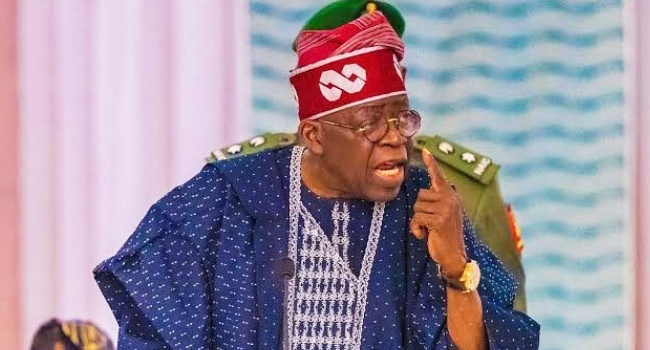
President Bola Tinubu has directed a comprehensive reform of Nigerian football following a major shake-up in the leadership of the Nigeria Football Federation (NFF).
Presidential spokesman Bayo Onanuga stating this in a statement issued on Thursday, explained that the move became necessary to overcome repeated failures to qualify for major regional, continental and world tournaments.
“The reform must respond to a longstanding need to strengthen governance, administration, stakeholder representation, development pathways, domestic competitions and accountability across Nigerian football,” quoted Tinubu.
Related news
- NFF Loses N13bn Bonus as Nigeria Crashes Out of 2026 World Cup Race
- Obi seeks NFF chiefs’ resignation after Super Eagles failed to qualify for 2026 World Cup
- Gusau replaces Pinnick as new NFF President
Tinubu said that while other sports had recorded meaningful progress since the reset of the sports sector under the re-established National Sports Commission (NSC), football has continued to struggle because of structural weaknesses within the system.
“Football, Nigeria’s most popular sport and the greatest beneficiary of public support, investment and national attention, has continued to struggle basically due to structural deficits within the system,” he said.
The president stressed that Nigerian football must begin to match the country’s exceptional talent, passion and resources with stronger institutions and sustained performance.
The former Lagos State governor directed the Chairman of the National Sports Commission, Shehu Dikko, to work with the NFF Secretariat and relevant football stakeholders to ensure continuity in essential football administration and facilitate a broad, consultative reform process.
According to him, the process will include appropriate engagement with FIFA and CAF while safeguarding Nigeria’s obligations within the international football framework.
The president asked football stakeholders and Nigerians to support the transition and work together to build a stronger, more accountable and successful football system.
Thursday’s move came hours after the President of the NFF, Ibrahim Gusau, resigned from his position.
The NFF chief said the decision to quit is to give other Nigerians the opportunity to contribute to the development of football in the country.
Mass resignations hit NFF
The NFF is said to be facing a fresh leadership crisis following the reported resignation of its President, Ibrahim Gusau, and eight other members of the federation’s 13-man board.
The mass resignation comes amid mounting scrutiny over the management of Nigerian football and allegations surrounding the utilisation of ₦17 billion Federal Government’s intervention fund released to the federation.
The fund was approved in 2024 to settle outstanding financial obligations involving Nigeria’s national teams, including players’ salaries and bonuses.
However, NFF’s handling of the money reportedly attracted the attention of security agencies, with the Department of State Services (DSS) to examine documents relating to how the funds were utilised.
The Super Eagles have missed consecutive FIFA World Cup tournaments, while the Super Falcons recently failed to qualify for the 2027 FIFA Women’s World Cup, ending Nigeria’s record of appearing at every edition of the competition since its inception in 1991.
The Falcons’ World Cup hopes were dealt a major blow after a 1-0 defeat to Cameroon in the quarter-finals of the 2026 Women’s Africa Cup of Nations. Nigeria later lost 2-1 to South Africa’s Banyana Banyana in the qualification playoff.
The reported exit of Gusau and eight other board members means more than half of the NFF’s executive committee may no longer be in office, raising questions over the federation’s leadership and the conduct of its scheduled September 27 elections in Lafia, Nasarawa State.
The NFF had already been under pressure over what critics described as poor management and a series of disappointing results involving the country’s national teams.
With the federation now facing a leadership shake-up alongside scrutiny over the ₦17 billion intervention fund, attention is expected to turn to the outcome of the investigation and the next steps for the administration of Nigerian football.
