

Prince Ukpong Idiong Jr.
The cost of domestic air travel in Nigeria has become an issue that deserves serious public attention. For many travellers departing from Victor Attah International Airport in Uyo, Akwa Ibom State to Lagos or Abuja, the dream of convenient and affordable air transportation is gradually giving way to frustration as ticket prices continue to climb.
At a time when many households and businesses are struggling with rising living costs, the aviation sector must not become another burden beyond the reach of ordinary Nigerians.
Perhaps, the clearest indication of this growing concern is the increasing number of travellers from Akwa Ibom and neighboring Abia State who now choose to begin their air journeys from Margaret Ekpo International Airport in Calabar, Cross River State. What once appeared to be an occasional alternative has evolved into a deliberate travel strategy driven almost entirely by economics.
The reason is straightforward. Travellers naturally gravitate toward destinations where they obtain greater value for their money. When two airports serve nearly the same catchment area but one consistently offers significantly lower fares, market forces inevitably influence passengers’ behavior.
Also read
- Ibom Air, Air Peace and others deny international lessors’ Blacklist
- Govt seeks Aviation Ministry’s partnership for expansion of Ibom Air
- Ibom Airline Set To Carry Out Proven Flights
Current airfare comparisons illustrate this reality. Flights from Lagos to Calabar on some airlines are commonly available between ₦114,000 and ₦123,000, while flights from Abuja to Calabar are often priced from about ₦132,000, depending on the day of travel and flight schedule. In comparison, flights into Uyo are frequently advertised within the range of ₦162,000 to ₦200,500. For families, business owners, students, and public servants who travel regularly, these differences represent substantial savings.
The improvement of the Calabar–Itu Road under Bola Tinubu administration has further strengthened this changing travel pattern. What was once considered an inconvenient journey has become considerably easier, faster, and more reliable, making the road connection between Akwa Ibom and Cross River a practical option for many travellers.
Investigations and feedback from frequent passengers suggest that an increasing number of people from Akwa Ibom now prefer to drive to Calabar to board their flights. For many, the savings realised on airfare more than compensate for the additional road journey. This is no longer an isolated occurrence but an emerging travel trend that deserves careful attention from airlines operating within the South-South region.
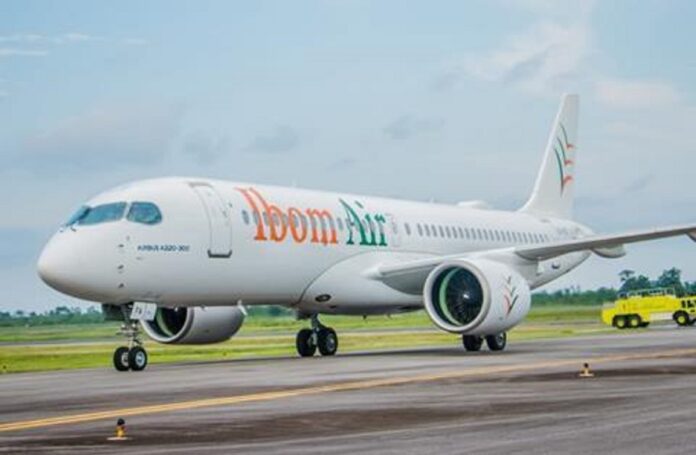
No responsible consumer ignores an opportunity to reduce expenses without sacrificing quality. This is the foundation of every competitive market. When passengers discover better pricing elsewhere, loyalty alone is rarely enough to keep them paying significantly higher fares.
The anticipated completion of the Lagos–Calabar Coastal Highway, particularly the Uyo–Calabar corridor, could further accelerate this shift. Improved road infrastructure will shorten travel times between the two cities, making Calabar Airport even more accessible to residents of Akwa Ibom and surrounding states.
This development should not be viewed as a threat but as a catalyst for healthy competition. Around the world, competition has consistently driven airlines to improve service delivery, introduce more attractive fares, increase efficiency, and place greater emphasis on customer satisfaction.
Airlines operating from Victor Attah International Airport therefore have an opportunity to reassess their pricing models. Competitive fares do not merely attract new passengers—they also preserve customer confidence and long-term loyalty.
Affordable air transportation extends beyond commercial profitability. It is a critical component of economic development. When transportation becomes accessible, businesses expand, tourism flourishes, investments increase, and regional integration becomes more meaningful.
Students pursuing education, entrepreneurs seeking new markets, professionals attending business engagements, patients requiring specialist medical care, and families maintaining important social connections all depend on transportation that is reasonably priced. Air travel should facilitate these opportunities rather than restrict them.
Equally important is the need to continue developing complementary transportation infrastructure across the South-South region. The revival and modernisation of seaports, together with improved highways and efficient airports, would create an integrated transportation network capable of stimulating commerce, industrial growth, and regional prosperity.
While road transportation has become more attractive because of better infrastructure, security concerns still make air travel the preferred option for many Nigerians. Aviation remains the fastest and, in many cases, the safest means of long-distance transportation. This makes the issue of affordability even more important.
The purpose of this intervention is neither to criticise nor to diminish the achievements of any airline. Rather, it is to encourage reflection on a changing marketplace in which consumers now have greater mobility and more choices than before. Every business thrives when it listens to its customers.
Healthy competition ultimately benefits everyone. It encourages innovation, rewards efficiency, improves service quality, and ensures that consumers receive fair value for their money. As transportation networks continue to expand across Southern Nigeria, airlines must position themselves to compete not only on service but also on affordability.
The growing migration of passengers to neighboring airports should serve as a constructive signal rather than a cause for concern. By reviewing airfare structures and adopting more customer-friendly pricing, airlines can strengthen public confidence, retain passenger loyalty, and contribute meaningfully to regional economic growth.
The future of aviation in Southern Nigeria should not be defined by high fares but by accessibility, competitiveness, and service excellence. That is the kind of progress that benefits passengers, airlines, and the nation’s economy alike.
Prince Idiong Jr. is a public affairs analyst based in Abuja, Nigeria.
