

Israel Umoh
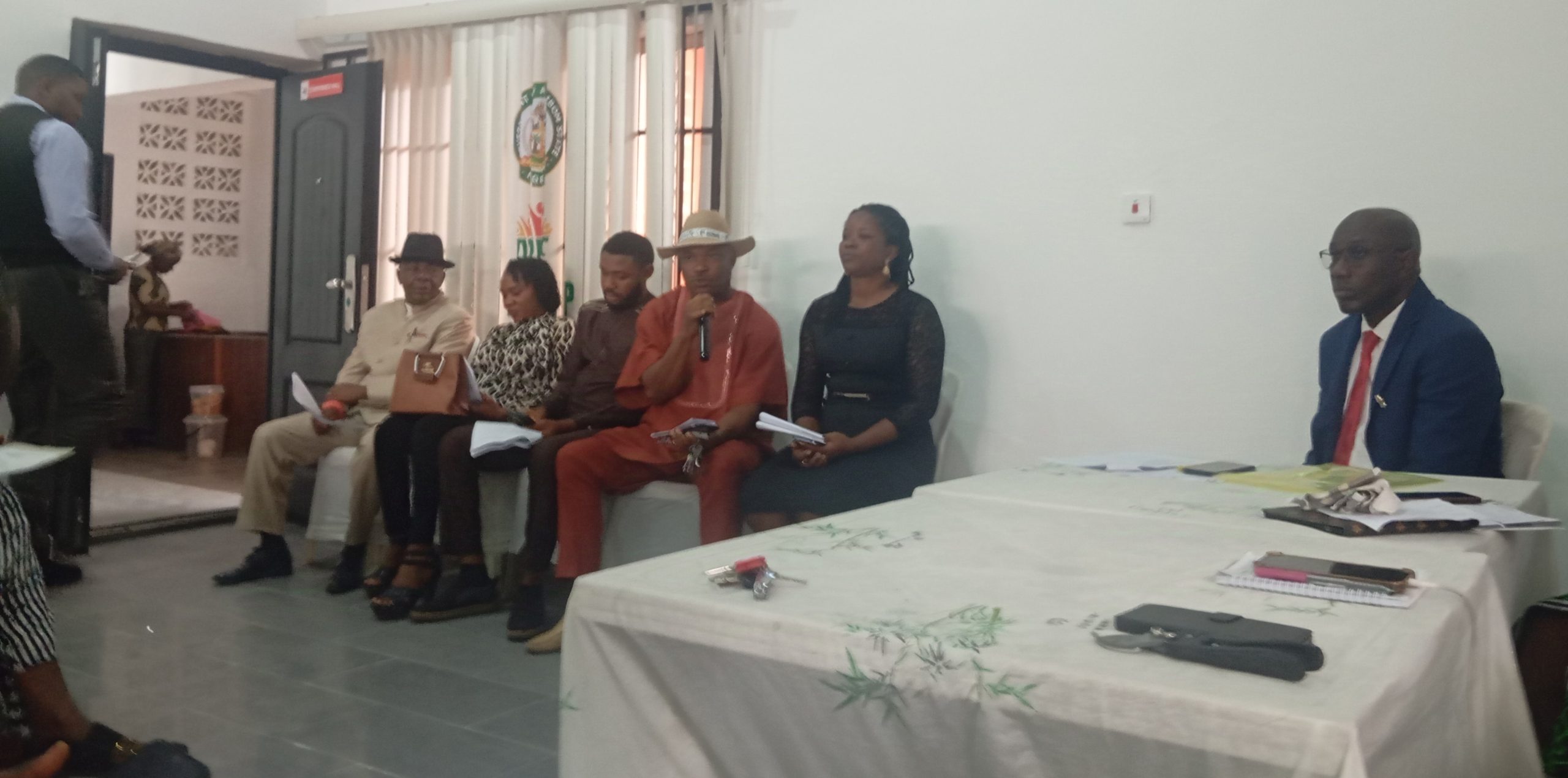
Participants at the one-day seminar in Uyo have urged the Akwa Ibom Government to mainstream Agroecology by integrating sustainable agricultural practices into the state’s agricultural policies, programmes and extension systems.
This resolution, which was part of a communiqué, also called for increase investment in agricultural extension services through the recruitment, training and deployment of additional extension officers, expansion of subsidy programmes to improve farmers’ access to quality seeds, fertilizers, organic inputs and climate-smart technologies.
The seminar, organised by Akwa Ibom State Committee on Agriculture and Food Security, in collaboration with the Akwa Ibom Agricultural Development Programme (AKADEP), Clement Isong Foundation (CIF) with financial support from ActionAid Nigeria under the Strategic Partnership Agreement II (SPA II), was convened under the Stakeholder Dialogue on Advancing Agroecology for Sustainable Food Systems was held on Wednesday, 29 July.
Acknowledging that the State Government has made significant investments in agriculture under the ARISE Agenda, the participants also called for an urgent need to sustain the resilience and competitiveness of the State’s food systems through complementary approaches that restore soil health, improve farmer livelihoods, strengthen climate resilience and promote environmentally responsible agricultural practices.
They also stressed the need for the government to facilitate Public-Private Partnerships (PPP) for bulk procurement and distribution of agricultural inputs to reduce production costs, support the establishment of agro-processing and aggregation centres to strengthen agricultural value chains and provide reliable off-takers for farmers.
The participants further called for expansion of the Ibom Equipment Leasing Scheme by providing additional tractors, implements and transport trailers to reduce transportation costs and post-harvest losses, strengthening of quality control mechanisms to reduce the circulation of adulterated and substandard agricultural inputs and promotion of greater investment in youth and women-led agribusinesses as drivers of green jobs and sustainable food systems.
To local government councils, the participants enjoined them to mainstream agroecology into Local Government agricultural development plans and annual budgets, support Directors of Agriculture to establish demonstration farms and farmer learning centres in their respective LGAs and develop Local Government agricultural calendars to improve planning and timely access to agricultural services.
They equally urged AKADEP to conduct continuous farmer education by stepping down trainings across the 31 local government areas, establish demonstration farms to showcase practical agroecological technologies and sustainable farming practices, integrate locally developed organic inputs into extension demonstrations and farmer advisory services as well as strengthen collaboration with research institutions, farmer Organizations and development partners to improve knowledge sharing and innovation.
To Farmers’ Organizations and the Private Sector, the participants empahsised the need for the sector to promote farmer cooperatives to strengthen aggregation, processing and market access, and increase investment in local production of certified organic agricultural inputs.
Others are strengthening market linkages that connect farmers to processors, buyers and financial institutions and promotion of sustainable land management practices, including reduced bush burning, composting, mulching, crop rotation and integrated soil fertility management.
However, the participants requested Akwa Ibom State Committee on Agriculture and Food Security to present the outcomes and recommendations of the Dialogue to the Akwa Ibom State Government for policy consideration and to continuously provide leadership for multi-stakeholder coordination on agroecology and sustainable food systems.
They advised Directors of Agriculture in the 31 LGAs to conduct step-down trainings for farmers in their respective areas, establish agroecology demonstration farms across the state, and advocate inclusion of agroecology in Local Government agricultural budgets and programmes.
The participants also enjoined Farmers Association of Nigeria (AFAN) to champion agroecology among its membership, advocate stronger agricultural value chains, processing hubs and improve market opportunities for farmers.
To the Small-Scale Women Farmers Organization in Nigeria (SWOFON), they called for continuous promotion of agroecological farming practices among women farmers and collaboration with stakeholders in farmer education and community sensitization.
Cassava Producers Association was tasked to encourage cassava farmers to adopt sustainable soil management and agroecological practices.
Ibom Equipment Leasing Limited (IELL) was charged to strengthen collaboration with farmer organizations and improve access to subsidized mechanization services, while Clement Isong Foundation was asked to continue to provide technical support, policy engagement, research, capacity building and coordination for scaling agroecology in the state.
Highlights of the occasion were a panel discussion on The Agricultural Input System in Akwa Ibom State: Current Realities, Challenges and Opportunities anchored by Amos Udom, Chief Executive Officer of CEO Amrex Ventures, technical presentations on sustainable agricultural inputs, agroecological transition and agricultural mechanization as well as interactive and breakout sessions involving the Directors of Agriculture and key agricultural stakeholders.
The meeting was attended by representatives of the Akwa Ibom State Committee on Agriculture and Food Security, AKADEP, Directors of Agriculture from the 31 local government areas, Agricultural Input Dealers from the 31 LGAs, farmers’ associations, and Farmers Association of Nigeria (AFAN).
The rest were Small-Scale Women Farmers Organization in Nigeria (SWOFON), Young Farmers Network Nigeria, Cassava Producers Association, Ibom Equipment Leasing Limited (IELL), development partners, civil society Organizations, academia and private sector actors.
