

Prince Ukpong Idiong Jr.
Rainfall is one of nature’s greatest blessings. It nourishes the earth, sustains agriculture, replenishes rivers and streams, and provides the foundation for human survival. Yet, when rainfall becomes excessive and persistent, its blessings can quickly transform into environmental disasters, economic hardship, and public health emergencies.
The question, therefore, is not whether rainfall is good or bad, but whether governments and communities are sufficiently prepared to manage its consequences.
According to the Nigerian Meteorological Agency (NiMet), Akwa Ibom State is among the states that record some of the highest volumes of annual rainfall in Nigeria. While this climatic advantage supports agriculture and maintains the state’s rich ecosystem, it also places enormous pressure on infrastructure, public health, and the livelihoods of thousands of residents.
Also read:
- Beyond Political Rhetoric: Recalibrating Akwa Ibom’s Development Architecture
- Economic Emergency: Why Akwa Ibom Must Import Opportunities, Not Export Talents
- Need for Competition to Curb Sky-high Airfares in Southern Nigeria
Across many communities in the state, the impact of prolonged rainfall is becoming increasingly severe. Hospitals continue to record cases of malaria, respiratory infections, waterborne diseases, and other illnesses associated with damp environments.
Young children remain particularly vulnerable to cold-related illnesses, while elderly citizens and persons with underlying health conditions face heightened risks.
The economic implications are equally alarming. Traders, artisans, commercial transport operators, fishermen, farmers, and other citizens who depend on daily earnings often find themselves unable to carry out their businesses because of persistent rainfall and flooding. The result is reduced household income, increased hardship, and, for many families, growing food insecurity.
Agriculture has not been spared. Excessive rainfall leaves farmlands waterlogged, washes away fertile topsoil and valuable nutrients, damages crops, and reduces agricultural productivity. These losses not only affect farmers but also contribute to rising food prices across the state, placing additional pressure on already struggling households.
Environmental degradation has become another visible consequence. Soil erosion, collapsing roads, blocked drainage systems, and recurring floods continue to threaten both rural and urban communities. Inadequate drainage infrastructure and indiscriminate disposal of refuse into waterways further worsen the situation.
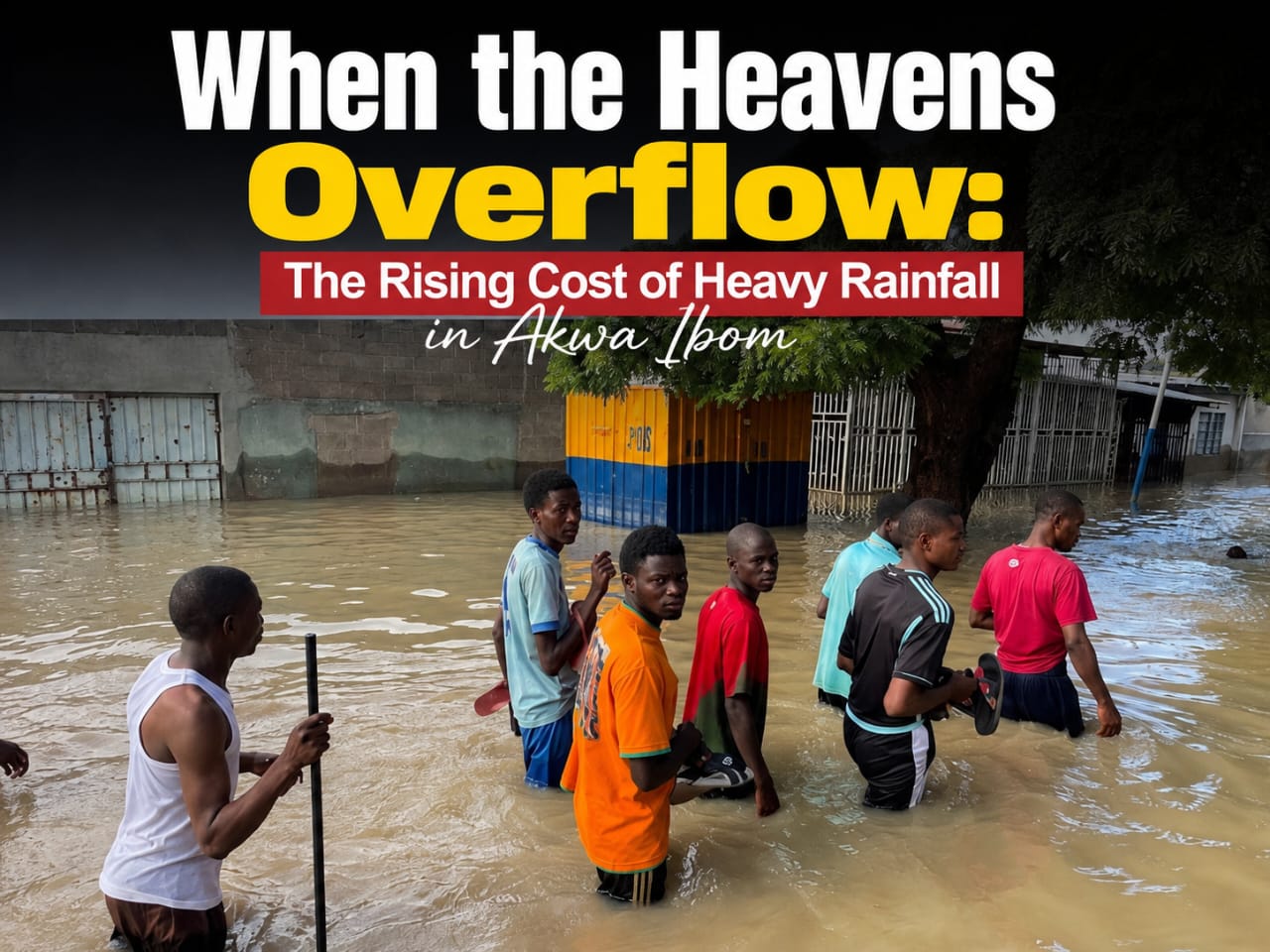
The burden is particularly heavy in the riverine communities of Oron, Eket, Ikot Abasi, Eastern Obolo, and neighbouring coastal areas, where flooding, shoreline erosion, and tidal surges frequently disrupt livelihoods, damage homes, and isolate communities from essential services.
Beyond these well-known hotspots are the painful stories emerging from flood-affected neighbourhoods across the state. Residents living on a street off Abak Road, close to Spring Road in Ikot Ekpene Local Government Area, have endured repeated flooding that has damaged homes, destroyed household property, and exposed families to health hazards. Similar experiences have been reported by residents along Ikot Ekpene Road in Uyo, where overflowing drains and stagnant floodwater have disrupted movement and daily economic activities. These communities represent only a few of the many locations where citizens continue to bear the burden of seasonal flooding.
Their stories should not merely attract sympathy; they should compel decisive government action. Families who have lost property, livelihoods, and peace of mind deserve timely humanitarian assistance, temporary relief where necessary, and long-term engineering solutions capable of preventing future occurrences. Government intervention should therefore extend beyond emergency response to include rehabilitation, compensation where appropriate, and sustainable flood-control infrastructure.
One commendable initiative of the Akwa Ibom State Government is the monthly environmental sanitation exercise, observed on the last Saturday of every month. This policy plays an important role in promoting environmental cleanliness, clearing blocked drainage channels, removing refuse from waterways, and reducing the risk of flooding. It deserves continued public support and stronger enforcement, as environmental sanitation remains one of the most effective preventive measures against urban flooding.
However, sanitation exercises alone cannot completely solve the problem. Government must institutionalise continuous evaluation of the impact of heavy rainfall on citizens. Regular assessments should identify vulnerable communities, monitor flood-prone areas, evaluate the condition of drainage infrastructure, assess public health risks, and provide data for informed policy decisions.
Such evaluations would enable government to deploy resources more effectively, strengthen emergency preparedness, improve infrastructure planning, and implement climate adaptation strategies that protect lives and property. Communities at greatest risk should receive priority attention through improved drainage systems, erosion control projects, flood forecasting, and early-warning mechanisms.
Farmers should equally benefit from targeted interventions, including climate-smart agricultural support, improved seedlings, extension services, and assistance for those whose farmlands have suffered extensive damage due to excessive rainfall. Protecting agricultural productivity is essential to ensuring food security across the state.
Ultimately, rainfall is neither the enemy nor the problem. The true challenge lies in the ability of society to prepare for its consequences. As climate change continues to intensify extreme weather events around the world, Akwa Ibom must strengthen its resilience through sound environmental policies, strategic infrastructure investments, and responsive governance.
The skies may continue to pour, but the suffering of citizens should never become a recurring seasonal experience. With continuous government evaluation, effective environmental management, sustained sanitation campaigns, and timely support for affected communities, Akwa Ibom State can turn one of nature’s greatest gifts into a source of lasting prosperity rather than recurring hardship.
Prince Idiong Jr. is based in Abuja, Nigeria.
